
Moving house is often cited as one of life's most stressful events, but with careful planning, it can be an exciting transition into a new chapter. A comprehensive plan transforms a chaotic scramble into a series of manageable, clear steps. This ultimate moving into a new home checklist is designed to guide you through every phase of the process, from the initial purge of your old space to the final, satisfying moment you settle into your new one. We’ll provide actionable insights and pro tips to ensure nothing is overlooked, covering everything from decluttering and booking movers to managing utilities and organising your new space from day one.
This detailed breakdown serves as your project plan, covering pre-move preparations, moving day logistics, and post-move settlement. We will detail how to strategically prepare your belongings, handle the administrative tasks of changing your address, and ensure a smooth transition of services like internet and electricity. For those seeking a high-level overview before diving into the specifics, our 7-step guide for moving house offers a great starting point.
By following this structured guide, you'll be well-prepared to handle the complexities of relocation, whether you're a homeowner planning a local move, an apartment dweller, or a business coordinating an office transition. Our goal is to equip you with a clear, step-by-step framework that minimises stress and maximises efficiency, helping you turn the challenge of moving into a seamless and successful experience. Let’s get started on your blueprint for a smooth move.
One of the most impactful steps in any successful moving into a new home checklist is to thoroughly declutter and inventory your belongings well before moving day. This process involves systematically sorting through everything you own and deciding what to keep, donate, sell, or discard. By reducing the volume of items you move, you not only simplify the unpacking process but can also significantly lower your transportation and labour costs.

Creating a detailed inventory alongside this process is crucial. It acts as a personal record, helping you track valuables and ensuring everything arrives safely at your new address. For example, a collector moving antiques would photograph each piece for insurance records, while a family downsizing could host a garage sale to offload unwanted furniture, turning clutter into cash.
A strategic approach makes decluttering feel less overwhelming and more productive. Start this process at least 6-8 weeks before your move to avoid last-minute stress.
A crucial part of any smooth transition in a moving into a new home checklist is securing your professional moving service well in advance. This step involves researching reputable removalists, obtaining detailed quotes, and booking your preferred date, especially during peak seasons like summer months or school holidays. Early booking ensures you get the company and schedule you want, preventing last-minute logistical chaos and allowing you to budget accurately.
Obtaining multiple quotes allows for a clear comparison of services, rates, and insurance coverage. For example, a Perth family moving during the busy Christmas period would book months ahead to secure a reliable team like Emmanuel Transport, while a business relocating its office would compare quotes based on after-hours availability to minimise operational downtime. It’s about finding the right fit for your specific needs, whether that involves specialised handling for antiques or dismantling and reassembling bulky furniture.
A proactive and organised approach to booking your movers will set the tone for the rest of your relocation. Aim to start this process 4-6 weeks before your moving date, or even earlier if moving during a peak period.
A critical component of any moving into a new home checklist is updating your address with all relevant organisations. This administrative task is vital for ensuring a seamless transition of services, preventing missed mail, and maintaining accurate legal and financial records. Failing to notify providers can lead to service interruptions, late payment fees, or even identity theft risks if sensitive documents are sent to your old address.
This step goes beyond just utilities; it includes government bodies, financial institutions, healthcare providers, and even subscription services. For instance, a homeowner must inform their insurance company to ensure their policy correctly covers the new property, while a student needs to update their address with their university to receive important academic correspondence. Proactively managing these changes is key to a smooth post-move experience.
Begin this process at least 2-3 weeks before your moving date to give organisations ample time to process the changes. A methodical approach ensures no one is missed.
A cornerstone of any successful moving into a new home checklist is ensuring your belongings are packed securely for transit. This involves either sourcing high-quality packing materials for a DIY approach or engaging professional packing services. Proper packing is the first line of defence against damage, protecting everything from fragile glassware and electronics to bulky furniture and valuable artwork.
Engaging professionals is particularly beneficial for those with time constraints or high-value items. For instance, a business relocating specialised equipment would benefit from custom crating, while a family can save countless hours by having a team efficiently pack their entire household. Similarly, collectors often rely on experts to handle delicate antiques, ensuring they arrive in pristine condition.
Begin organising your packing strategy at least four to five weeks before your move to ensure you have everything you need without a last-minute rush.
Strategic packing is a cornerstone of an efficient moving into a new home checklist, transforming chaos into a streamlined process. This method involves organising your packing efforts by room and item type, ensuring that everything is grouped logically. By doing this, you protect fragile items, make essential belongings easily accessible, and create a clear, systematic plan for unpacking in your new home.
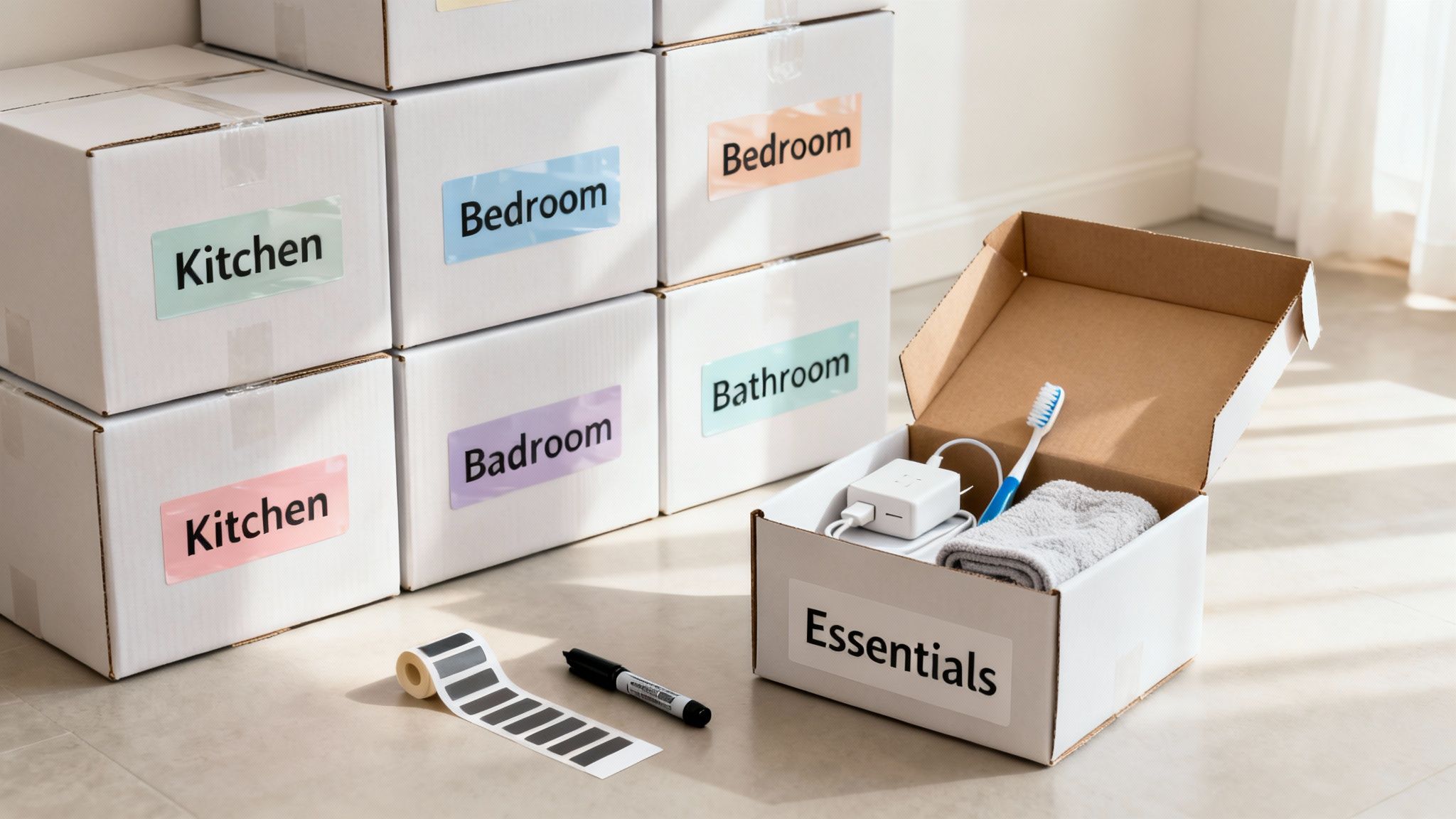
This approach prevents the common moving day frustration of searching through dozens of mystery boxes for a single item. For instance, a family can use a colour-coded sticker system, assigning one colour to each room so movers know exactly where to place boxes. Similarly, an office relocation can be organised by department, ensuring that critical files and equipment are delivered to the correct area, minimising business downtime.
Begin packing at least 4-6 weeks before your move, starting with non-essential rooms like guest bedrooms or storage areas. This staggered approach keeps the process manageable and your daily life uninterrupted.
A critical task in any moving into a new home checklist is managing the seamless transfer of your utilities and internet. This involves coordinating the disconnection of services like electricity, gas, water, and internet at your old residence and activating them at your new one. Proper timing is key to avoid paying for services at two properties simultaneously or, worse, arriving at your new home to find no power or internet connection.
This step ensures a smooth transition, allowing you to settle in comfortably from day one. For instance, a family might schedule their electricity disconnection for the day after they move out to allow for final cleaning, while arranging for power and internet to be active at the new house a day before they arrive. This foresight prevents disruptions and unnecessary stress during an already busy period.
A proactive and organised approach is essential for a successful utility transfer. Begin this process at least 2-3 weeks before your move to give providers adequate notice and secure your preferred dates.
A crucial but often overlooked item on any moving into a new home checklist is organising dedicated care for children and pets. The chaos of moving day, with open doors, heavy furniture, and busy workers, creates a hazardous environment. Arranging for childcare and pet care ensures their safety, minimises their stress, and allows you to focus entirely on the logistical demands of the relocation without distraction.
This step is about more than just convenience; it's a safety measure. For example, a family might enrol their toddler in daycare for the day, while another hires a trusted babysitter to watch older children in a quiet, designated room at the new property. Similarly, pet owners may book their dog into a familiar kennel or arrange for a pet-sitter, preventing the risk of an animal escaping through an open door or getting injured underfoot.
Proactive planning is essential to securing reliable care and making the transition smooth for every member of your family, including the furry ones. Book services at least 4-6 weeks before your moving date.
A crucial part of any comprehensive moving into a new home checklist involves creating a specialised plan for high-value, delicate, or irreplaceable items. Standard packing procedures are often insufficient for things like antiques, artwork, collectibles, and sensitive electronics. Developing a bespoke strategy ensures these possessions are protected against damage, loss, and are adequately covered by insurance.
Properly handling these items is non-negotiable for preserving their value and condition. For example, a collector moving vintage audio equipment would use anti-static bags and custom-fit foam inserts to prevent internal damage, while someone transporting a valuable painting would opt for a climate-controlled vehicle to avoid warping or cracking. This focused attention mitigates risks that general moving services might overlook.
Begin documenting and preparing your special items at least four to six weeks before your move. This provides ample time for appraisals, acquiring correct materials, and arranging specialised transport if needed.
An essential final step in any comprehensive moving into a new home checklist is conducting a meticulous walkthrough and cleaning of your old property after all furniture has been removed. This procedure is your last chance to ensure nothing is left behind, document the property's condition to secure your bond or deposit, and leave the space in a respectable state for the next occupants. It serves as a final quality check, preventing future disputes and financial penalties.
This process is non-negotiable for renters aiming to get their full bond back, as it allows them to address any issues before the landlord's inspection. For homeowners, it’s a professional courtesy that ensures a smooth handover. For instance, a family might use their original move-in photos to compare with the move-out condition, proving they have left the property as they found it, minus reasonable wear and tear.
A systematic approach ensures you don't miss any critical details during this final inspection. Aim to complete this after your movers have departed but before you hand over the keys.
The final, crucial stage in any moving into a new home checklist is to establish and organise your new space. This step transforms an empty house into a functional, comfortable home by systematically unpacking, assembling furniture, and personalising your environment. A strategic approach to this phase ensures you can settle in quickly, reducing the chaotic feeling of living amongst boxes and creating a sense of order from day one.
This process is about more than just emptying boxes; it's about setting up the foundations for your new life. For instance, a family might prioritise setting up the children's bedrooms and the kitchen first to restore routine and comfort. Similarly, a business relocating to a new office would focus on assembling desks and connecting IT infrastructure to minimise operational downtime.
A methodical unpacking and organisation plan can make settling in feel efficient and rewarding. Tackle this process with a clear strategy to avoid feeling overwhelmed.
A crucial but often overlooked part of any moving into a new home checklist is preparing a "first-night" essentials box. This is a clearly labelled container filled with everything you'll need for your first 24 hours in the new property, preventing a frantic search through countless boxes after an exhausting day. By setting this box aside and moving it yourself, you guarantee immediate access to necessities, making the transition significantly smoother and less stressful.

This box acts as a survival kit for the chaotic initial period of unpacking. For instance, a family arriving late at night will appreciate having pyjamas, toothbrushes, and breakfast supplies readily available. Similarly, having a toolkit with a box cutter, Allen keys, and a screwdriver means you can assemble beds or other essential furniture without delay, ensuring a comfortable first night's sleep in your new home.
Begin assembling your essentials box in the final week leading up to your move, adding items as you think of them. Keep it in a safe, accessible spot.
| Item | Complexity 🔄 | Resources ⚡ | Expected results 📊 | Ideal use cases 💡 | Key advantages ⭐ |
|---|---|---|---|---|---|
| Declutter and Inventory Your Belongings | High — room-by-room, time-intensive | Low–moderate: time, boxes, storage, photos, possible appraisal | Fewer items to move; lower costs; accurate tracking | Downsizing, long-distance moves, preparing estate items | Reduces costs; speeds unpacking; improves insurance/claims |
| Book Your Moving Service and Obtain Quotes | Moderate — coordination and comparison | Moderate: time, research, potential deposit | Secured booking; clear budget; professional service access | Peak-season moves; commercial relocations; specialty-item moves | Guarantees availability; transparent pricing; reduces physical risk |
| Notify Essential Service Providers and Update Your Address | Moderate — many contacts, documentation | Low–moderate: time, forms, verification | Continuous services; avoids missed bills and fraud | Any move where mail/services must follow you | Prevents service disruption; maintains legal/financial records |
| Arrange for Packing Materials and Professional Packing Services | Moderate — sourcing or scheduling pros | Moderate–high: materials, professional fees | Better protection; efficient truck loading; simpler unpacking | Valuable/fragile items, limited time, full-service moves | Minimizes damage; optimizes space; speeds loading/unloading |
| Prepare and Pack Boxes Strategically by Room and Category | High — detailed labeling and organization | Moderate: boxes, labels, time, inventory lists | Faster unpacking; easier item location; damage reduction | Family homes, office relocations, staged unpacking | Streamlines unpacking; improves inventory control; aids movers |
| Disconnect and Reconnect Utilities and Internet Services | Moderate — multiple providers and timing | Low–moderate: scheduling, connection fees | Minimized downtime; avoids double billing; safety checks | Moves with tight timing or immediate occupancy needs | Ensures services active on arrival; prevents billing overlaps |
| Arrange Childcare and Pet Care During the Move | Low–moderate — booking and coordination | Moderate: service fees, supplies, instructions | Safer environment; fewer distractions; smoother move day | Families with young children/pets or busy moving schedules | Protects vulnerable family members; reduces accidents and stress |
| Handle Special Items: Antiques, Electronics, and Valuables | High — specialized packing, appraisal, insurance | High: custom crating, climate storage, expert handlers | Lower damage risk; proper insurance coverage; documented condition | Art collectors, dealers, high-value household items | Preserves irreplaceables; supports claims; professional expertise |
| Conduct a Final Walkthrough and Cleaning | Moderate — thorough inspection and documentation | Low–moderate: cleaning supplies, time, photo documentation | Ensures nothing left; supports bond/ deposit return; documents condition | Rentals, property sales, commercial handovers | Protects deposit; reduces disputes; documents condition |
| Establish and Organize Your New Home | High — staged unpacking and setup | Moderate: tools, time, possible assembly help | Rapid habit formation; functional living space; early comfort | Any move aiming for quick settling, families, businesses | Faster comfort and functionality; organized long-term setup |
As the last box is unpacked and the echo of footsteps fades, the true journey of settling in begins. This comprehensive moving into a new home checklist has guided you through the logistical labyrinth of relocating, from the initial decluttering phase and securing reliable removalists to the critical tasks of updating addresses and managing utilities. You have navigated the complexities of packing strategically, caring for special items, and conducting that all-important final walkthrough. The core of this process is about more than just moving possessions; it is about methodically transferring your life from one space to another with minimal stress and maximum efficiency.
By following a structured plan, you've sidestepped common pitfalls that turn an exciting new chapter into a frantic, disorganised ordeal. The value of such a detailed approach cannot be overstated. It transforms a monumental task into a series of manageable, actionable steps. You didn’t just move boxes; you orchestrated a seamless transition, ensuring that from day one, your new residence started to feel functional and familiar.
The most significant takeaway from this journey is the power of preparation. Mastering the pre-move, moving day, and post-move phases ensures your energy is reserved for what truly matters: transforming four walls and a roof into a sanctuary. The practical steps are now behind you, but the most personal and rewarding work is just beginning. This is where the house truly becomes your home.
Your next steps are less about logistics and more about lifestyle. This is the time to:
Key Insight: A successful move isn't measured by how quickly you unpack, but by how thoughtfully you transition into your new life. The checklist provides the structure, but you provide the soul.
Ultimately, the purpose of a meticulous moving into a new home checklist is to clear the path, removing obstacles so you can focus on the excitement of this new beginning. You’ve done the hard work, laid the foundation, and now you have a blank canvas. Take a deep breath, look around at the space you’ve created, and savour the profound satisfaction of being home. Congratulations on your new chapter.
Ready to make your next move in Perth the smoothest one yet? Let the experts handle the heavy lifting while you focus on the excitement of your new home. For a seamless, professional, and stress-free relocation experience, contact the team at Emmanuel Transport and discover how their tailored removalist services can make all the difference.