When you're getting ready to move, bubble wrap is more than just a packing material—it’s the crucial buffer between your treasured belongings and the inevitable bumps and jolts of relocation. This simple sheet of air-filled pockets is designed to absorb shock and fend off scratches, making it an absolute must-have for a smoother, less stressful move.
From your most delicate glassware to the corners of bulky furniture, its effectiveness is undeniable.
Why Bubble Wrap Is Your Best Defence Against Moving Damage

A moving day in Perth, whether you're heading across the suburbs or just down the road, has its share of hurdles. Navigating tight corners, dealing with uneven footpaths, and simply carrying boxes up stairs—every single movement introduces a risk to your possessions. This is where bubble wrap stops being just another supply and becomes your most valuable protective tool.
The genius of bubble wrap lies in its simple design. Each trapped air pocket acts as a tiny, individual shock absorber. When a box gets jostled in the truck, that impact energy is spread across hundreds of these bubbles instead of being transferred directly to your fragile items. It’s often the difference between a family heirloom arriving in one piece and opening a box full of disappointment.
The Real-World Impact of Proper Packing
This isn't just about wrapping things for the sake of it; there's a real science to protecting your belongings. When we're on a job, we don't just use bubble wrap—we understand the physics behind it. By creating a snug, cushioned layer, we make sure items can't shift and knock against each other during transit. It's that internal movement that causes most of the damage.
And the results speak for themselves. Proper packing with bubble wrap can reduce the likelihood of damage by up to 40% during a standard Australian house move. It’s so crucial that the demand, fuelled by both movers and e-commerce, has turned bubble wrap into a significant local industry.
Making Smart Choices Before You Start
To get the most out of your bubble wrap, you need to choose the right tool for the job. Different items need different levels of cushioning, and using the wrong size bubble can be almost as bad as using none at all. A tiny bubble wrap won't do much for a heavy lamp, and a huge one is overkill for a teacup.
If you’re planning your packing strategy, it’s also a good time to think about the bigger picture. Our Perth removals and storage services are designed to work hand-in-hand with careful packing, ensuring everything gets from A to B safely.
Choosing Your Bubble Wrap at a Glance
To help you get started, here’s a quick-reference table to match the right bubble size to your items. Think of it as your cheat sheet for the packing supply store.
| Bubble Size | Best For | Example Items |
|---|---|---|
| Small (10mm) | Preventing scratches & wrapping small, delicate items. | Glassware, plates, photo frames, small trinkets. |
| Medium (20mm) | All-purpose cushioning for medium-sized items. | Vases, kitchen appliances, electronics, decorative items. |
| Large (32mm) | Filling empty space in boxes & protecting large, bulky items. | Lamps, sculptures, antique furniture corners, large art pieces. |
Getting this choice right from the beginning will save you a lot of time and potential heartache later on. It’s the first step to packing like a pro.
Choosing the Right Bubble Wrap for Your Valuables
Picking the right bubble wrap for moving might seem like a small detail, but getting it right is the difference between your valuables arriving in one piece or in a dozen. It’s less complicated than you think. Really, it all comes down to the size of the bubbles.
Think of it this way: you wouldn't use the same tool for every job around the house. The same logic applies here. Your choice is usually between small bubbles and large bubbles, and each has a specific job to do. Match the bubble to the item, and you're already halfway to a damage-free move.
Small Bubbles for Surface Protection
Small-bubble wrap, the kind with bubbles around 10mm across, is your best friend for anything delicate that needs protection from surface damage. It’s flexible and wraps snugly around items, creating a tight shield against scratches, scuffs, and annoying little dings.
This is the stuff you’ll want for:
- Dinner plates and saucers, wrapping each one individually to stop them from chipping against each other.
- Picture frames and mirrors, protecting both the glass and the finish on the frame.
- Small electronics and gadgets that need a form-fitting layer of protection.
- Collectables and figurines, especially those with fine details that could easily snap off.
What's great about small-bubble wrap is that it adds protection without adding a lot of bulk. You can wrap several items and pack them neatly into a box, which helps prevent them from rattling around—a major cause of breakages.
Pro Tip: When packing glassware or anything with a delicate finish, I always wrap it in a layer of packing paper first. This stops the plastic from potentially sticking to the surface. Then, I add a layer of small-bubble wrap for that essential cushioning.
Large Bubbles for Cushioning and Void Fill
Now, when you’re more worried about absorbing a big knock than preventing a small scratch, it’s time to bring out the large-bubble wrap. With bubbles 20mm or even bigger, this type offers serious, heavy-duty cushioning. It’s perfect for your bigger, heavier items that need a bit more padding to survive the journey.
Large-bubble wrap is the hero when you need to:
- Fill empty spaces in boxes. This stops everything inside from shifting and crashing into each other on the truck.
- Cushion large, hollow items like big vases, lamps, or decorative bowls.
- Protect the corners of furniture like tables, entertainment units, and bookshelves.
It’s basically a shock absorber. Picture packing a large ceramic lamp; you’d wrap the lamp itself in a generous layer of large bubbles and then stuff more into any gaps in the box. This creates a kind of floating effect, isolating it from any bumps along the road. For more great ideas like this, check out these expert tips for safely packing and moving fragile items.
Specialty Wraps for Specific Needs
Beyond the standard clear stuff, you’ll sometimes see a pink-tinted bubble wrap. This is anti-static bubble wrap, and it’s a non-negotiable for packing your sensitive electronics. Standard plastic can create a static charge that can fry the delicate internal components of computers, TVs, or sound systems. Always grab the anti-static roll for these items.
Wondering how much you'll need? Don't leave it to guesswork. Our packing calculator is a handy tool to help you figure out exactly how many rolls to buy.
Wrapping Techniques the Professionals Use
There's a right way and a wrong way to use bubble wrap. Having moved countless Aussie homes, I can tell you that knowing the right wrapping techniques is just as important as picking the right bubble size. These aren't industry secrets; they're just practical, time-tested methods for making sure everything from a dinner plate to a flat-screen TV arrives without a single scratch.
The biggest rookie mistake? Taping bubble wrap directly onto an item’s surface. This is a huge no-no, especially for timber furniture, painted canvases, or electronic screens. The adhesive can leave a stubborn residue or, even worse, strip the finish right off. Always wrap the item first, then tape the bubble wrap to itself.
The Crockery Wrapping Method
The kitchen is often where the most breakage happens. Plates, bowls, and glasses are notoriously fragile, so they need a bit of extra care to prevent chips and cracks. The trick is to make sure no two pieces can clatter against each other in transit.
Here’s how we handle plates and bowls:
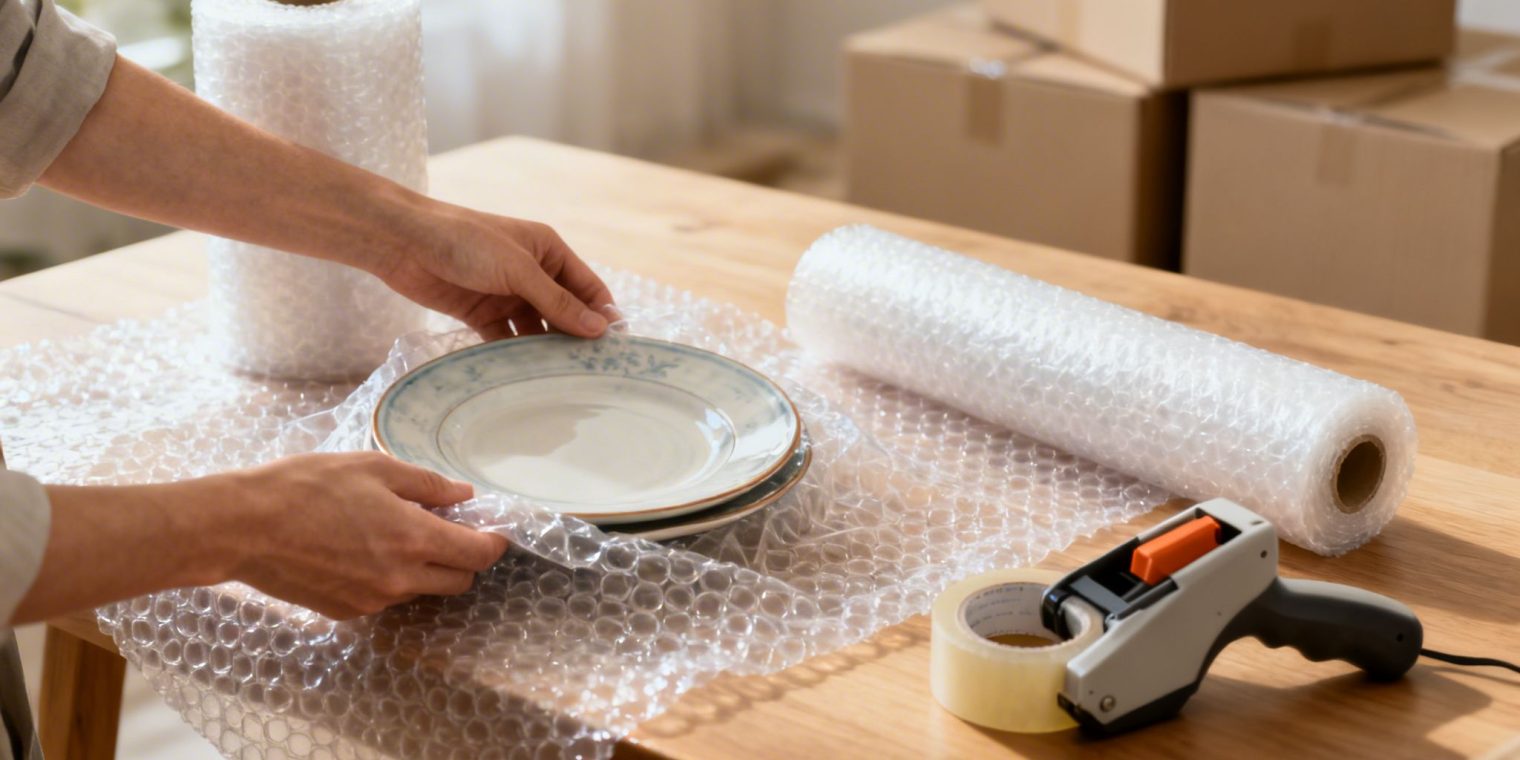
- Lay a sheet of small-bubble wrap on a flat surface.
- Place one plate in the centre and fold the wrap over it completely.
- Stack the next plate on top and do the same, creating a cushioned bundle.
- Keep your stacks small—no more than three to four plates each.
- Finally, wrap the entire stack in another layer of bubble wrap and tape it up securely.
For glassware, wrap each piece individually. I always recommend gently stuffing some packing paper inside the glass first to give it internal support. Then, wrap the outside with a layer or two of small-bubble wrap. This double-up approach prevents both crushing and surface scratches.
This handy flowchart breaks down how to choose the right bubble wrap for any item you're packing.

As you can see, it's pretty straightforward: small bubbles are your go-to for delicate items prone to scratching, while the larger bubbles are perfect for cushioning bigger things and filling empty spaces in boxes.
Securing Your Electronics Safely
Electronics are tricky because you’re not just protecting them from bumps, but also from static electricity. For things like computer monitors, gaming consoles, and TVs, you absolutely must use anti-static bubble wrap. It’s usually pink and designed to dissipate static charge, safeguarding all those sensitive internal components.
When wrapping a flat-screen TV or monitor, I like to create a custom sleeve. Cut a piece of anti-static wrap big enough to cover the screen and fold over the back. Secure it around the edges, but be sure to leave any vents uncovered. You can then add extra padding to the corners using folded-up bubble wrap or proper cardboard corner protectors.
Protecting Artwork and Furniture Corners
Large, awkwardly shaped items need a special strategy. With framed art or mirrors, the corners are always the most vulnerable. You can make your own corner protectors by folding a square of bubble wrap into a triangle and taping it over each corner. Once the corners are secure, you can wrap the entire piece.
For incredibly fragile or valuable items, we use what’s called the "floating method". After wrapping the item in bubble wrap, you place it inside a much larger box. Then, you fill all the surrounding space—top, bottom, and all four sides—with packing peanuts or more bubble wrap. This suspends the item in the centre of the box, completely isolating it from any bumps the box might take.
Learning from those with years of experience is the best way to ensure your belongings are packed with care. You can find more expert tips on packing that the pros rely on for safe transport.
Of course, if packing just isn't for you, there's no shame in calling in the experts. You can always explore our professional packing services and let us handle the wrapping for a completely stress-free move.
Common Packing Mistakes (And How to Dodge Them)
When it comes to using bubble wrap for moving, knowing what not to do is just as important as knowing the right way to wrap. Over the years, we’ve seen just about every packing mistake in the book—from small slip-ups to ones that lead to heartbreaking damage. A little foresight can save you a whole lot of stress and protect your belongings.
The number one mistake? Being stingy with the bubble wrap. A single, flimsy layer might stop a scratch, but it won't do a thing to cushion your items from the inevitable bumps and jostles of a move. Don't be shy with it, especially for your fragile things. You're aiming for a real cushion, not just a thin plastic skin.
Another classic blunder we see all the time is wrapping with the bubbles facing out. It might feel right, but it's actually backwards.
The little pockets of air are your shock absorbers. To get the most out of them, they need to be facing inward, pressing right up against your item. The flat side should face out, giving you a nice, smooth surface to tape shut.
It’s such a simple change, but it makes a huge difference in how well your things are protected.
Misjudging Weight and Balance
It's tempting to cram as much as possible into one box, but creating a mini black hole of weight is a recipe for disaster. Packing a huge stack of ceramic plates together, for example, not only makes the box a nightmare to lift but also puts immense pressure on the items at the bottom.
Here's how to get the balance right:
- Spread the Load: Heavy items belong in smaller boxes. Keep the weight manageable, aiming for under 20 kilograms per box.
- Heavy on the Bottom: Always pack your heavier things first, then layer the lighter, bubble-wrapped items on top.
- No Wiggle Room: Fill every gap. Use scrunched-up paper, extra bubble wrap, or even soft linens to stop things from shifting around.
For a complete A-to-Z plan on your entire move, our ultimate guide to moving house is packed with tips.
Forgetting That Different Items Have Different Needs
You can't wrap a ceramic vase the same way you wrap a computer monitor. A particularly costly mistake is wrapping up electronics when they're still warm. If you’ve just turned off your TV or laptop, wrapping it in plastic straight away traps heat and moisture, creating condensation that can fry the internal parts.
The fix is easy: Just let your electronics sit and cool down to room temperature for at least an hour before you touch them with bubble wrap. A little bit of patience here can prevent a very expensive problem later.
What to Do with Bubble Wrap After the Move

A great move isn't just about getting your belongings from A to B safely; it's also about what you do with all the packing materials afterwards. While bubble wrap for moving is a lifesaver for protecting fragile items, it pays to think about its environmental impact once everything is unpacked.
The easiest and best thing to do is give your bubble wrap a second life. If it’s still in good shape with most of the bubbles unpopped, hang onto it. It's perfect for storing Christmas decorations or protecting things you're stashing away in the garage.
Even better, offer it up for free on your local community Facebook group or Gumtree. You’d be surprised how many people are about to move and would be grateful to save a few dollars on packing supplies.
Eco-Friendly Alternatives to Bubble Wrap
If you're keen to cut down on plastic from the get-go, there are some fantastic eco-friendly alternatives that still offer brilliant protection. I've seen these work just as well on countless jobs.
- Corrugated Cardboard Wrap: This stuff is basically flexible cardboard. It’s made from recycled paper, cushions well, and can go straight into the recycling bin when you're done.
- Reusable Packing Blankets: A must-have for big-ticket items like your fridge, washing machine, or timber furniture. These thick, padded blankets are the gold standard for preventing dings and scratches and can be used over and over again.
- Packing Paper: For everyday items like mugs and books, good old-fashioned packing paper does the trick. Just scrunch it up to create a protective buffer and fill in any gaps inside your boxes.
These options are a win-win—they're effective at protecting your gear and are much kinder to the planet.
Every move is a chance to make smarter, more sustainable choices. By reusing what you can and recycling properly, you’re doing your bit to reduce landfill. It might seem like a small act, but it all adds up.
How to Recycle Bubble Wrap in Perth
When your bubble wrap is finally at the end of its road, please don't throw it in your yellow-lidded kerbside bin. It’s a soft plastic, which means it can’t be processed by regular household recycling facilities and can actually jam the machinery.
The correct way to dispose of it in Perth is to take it to a dedicated soft plastics drop-off point. You'll find these collection bins at the front of most major supermarkets like Coles and Woolworths as part of the REDcycle program.
Just make sure the bubble wrap is clean and dry, bundle it up with any other soft plastics you have, and drop it in the bin on your next trip to the shops. From there, it gets turned into useful new products like park benches and bollards.
When to Call in the Pros for Packing
There’s a genuine satisfaction that comes from taping up a perfectly packed box, I get it. But let's be honest, sometimes the smartest move you can make is to put down the tape gun and pick up the phone. Knowing how to use bubble wrap for moving is one thing; applying it with a professional touch is a whole different ball game, especially when your most prized possessions or a stressful deadline are on the line.
Take a good look at your own situation. Are you trying to pack up a sprawling family home filled with a decade's worth of memories and clutter? Or maybe you're the custodian of priceless antiques where one clumsy moment could be catastrophic. In these cases, calling in a team of professional removalists isn't an indulgence—it's a smart investment in your own sanity and the safety of your belongings.
When Professional Expertise Is a Must
Some moving scenarios just scream for a professional touch. If you've got a tight settlement date breathing down your neck or you're managing a complex office relocation, there is absolutely no margin for error. We've seen it all. Professionals bring tested systems, access to commercial-grade packing materials, and the sheer muscle to get a massive job done right—and on time.
This is doubly true when you're dealing with specialty items. A grand piano, for instance, isn't just a heavy piece of furniture; it's a delicate instrument. The same goes for large-scale sculptures or a collection of fine art. At Emmanuel Transport, our team has honed specific techniques for crating and wrapping these unique pieces, ensuring they travel without a scratch.
Plus, we’re fully insured. That provides a safety net and a level of accountability that you just don't get when you're doing it all yourself. You can see exactly how our professional removalists in Perth deliver this kind of specialised service.
Here's a number that speaks for itself: for high-stakes moves like office relocations, professional packing services can slash damage claims by a whopping 25-35%. That's the difference expert material handling makes.
Ultimately, the decision to hire an expert team isn't just about saving a few hours. It’s about preventing expensive, heartbreaking damage and ensuring your entire move is smooth and stress-free from the very first box to the last.
Got Questions About Bubble Wrap? We've Got Answers
To wrap things up, let's go through some of the most common questions we get about using bubble wrap for moving. Getting these details right can be the difference between a smooth move and a box full of broken keepsakes.
Here’s the practical advice we give our clients every day.
How Much Do I Need For a 3-Bedroom House?
For a typical 3-bedroom home, we usually recommend starting with two or three large rolls of bubble wrap, the ones that are about 100 metres long. This is generally enough to handle the kitchen, fragile decorations, and a few electronics.
That said, if your home is filled with a lot of glassware, art, or delicate collectibles, you’ll definitely want to grab an extra roll. It’s always better to have a little too much than to run out mid-pack.
Bubble Wrap or Packing Paper For Plates?
This is a classic question, and the answer is simple: use both! From years of experience, we can tell you this combination method is foolproof.
First, wrap each plate individually in packing paper. This stops them from scratching against each other. Then, create a small stack of three or four wrapped plates and wrap the entire stack in small-bubble wrap. This gives you the cushioning you need to absorb any bumps on the road.
The paper acts as a scratch-proof barrier, while the bubble wrap provides the essential shock absorption. It's a professional technique that ensures your dinner set arrives ready for your first meal in the new home.
Can I Reuse Old Bubble Wrap?
Absolutely! Reusing bubble wrap from packages you’ve received is a fantastic way to cut down on costs and waste.
The only thing to check is that the bubbles haven’t all been popped. As long as it's clean, dry, and still has plenty of air-filled pockets, it's good to go.
What Is Anti-Static Bubble Wrap?
You've probably seen that pink-coloured bubble wrap before. That’s anti-static bubble wrap, and it’s specifically designed to protect your sensitive electronics.
Things like your computer, TV, or gaming consoles have delicate internal components that can be fried by the static electricity that regular bubble wrap can create. If you're packing anything with a circuit board, investing in a roll of anti-static wrap is a must for true peace of mind.
When you need a hand with the heavy lifting and expert packing, Emmanuel Transport is here to help make your move seamless. Learn more about our professional removalist services.