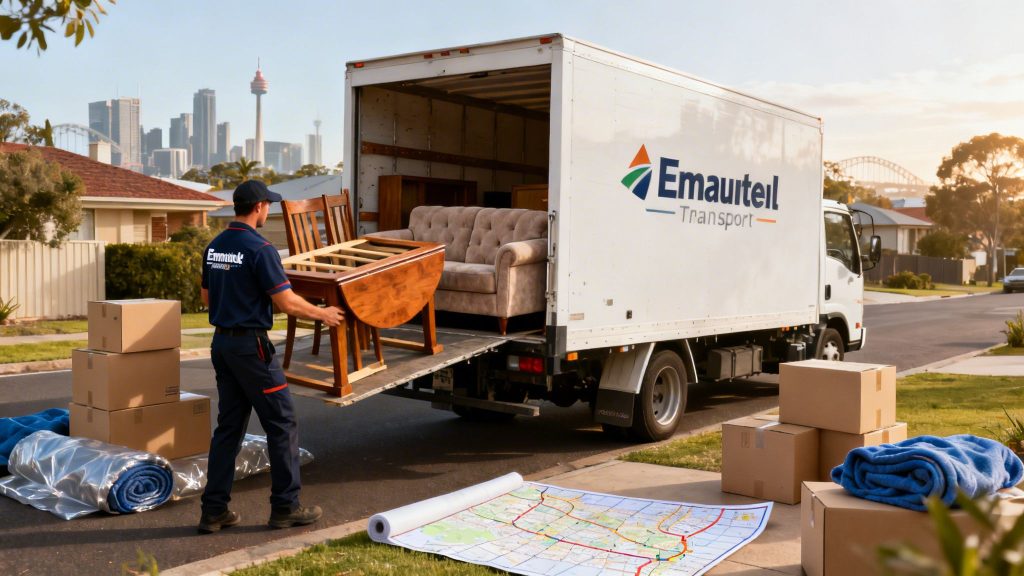
Moving house is a significant life event, often ranked as one of the most stressful. Whether you're relocating across a Perth suburb, moving from a Sydney apartment, or undertaking a full-scale interstate move, a well-structured plan is the key to a seamless transition. This comprehensive timeline-based guide is designed specifically for Australians, addressing the unique logistics, regulations, and opportunities down under.
Forget generic advice that leaves you with more questions than answers. This guide provides actionable, detailed steps organised from eight weeks out to the final settled-in sigh of relief. By following this ultimate checklist moving house Australia, you can transform a daunting task into a manageable project. It's your roadmap to a smooth, organised, and stress-free journey into your next chapter.
We will navigate the entire process, including:
- Securing the right removalist and comparing quotes.
- Managing the critical admin of address changes with Australian services.
- The finer points of protecting antiques and fragile items during transit.
- Ensuring your new house feels like home from day one with post-move tasks.
This checklist is your practical companion, built to prevent common moving-day pitfalls and ensure nothing is overlooked. From booking permits for your removalist truck in a busy Melbourne laneway to knowing the right time to switch your NBN connection, every step is covered. Let’s get started on making your next move your best one yet.
1. 8+ Weeks Out: Obtain Free Quotes and Compare Removalist Services
Kicking off your moving process eight or more weeks in advance by sourcing and comparing removalist quotes is the most critical first step in any successful house move in Australia. This is not just about finding the cheapest price; it's about securing a reliable, insured, and professional service that matches the specific needs of your relocation, whether you're moving across Perth or interstate. Acting early gives you the power of choice before reputable companies are fully booked, especially during peak moving seasons like summer or school holidays.
Why It's the First Step on Your Checklist
Securing your removalist early sets the entire timeline and budget for your move. It’s the largest logistical piece of the puzzle, and locking it in allows all other planning, from utility disconnection dates to packing schedules, to fall into place. Delays in this first step can lead to a frantic last-minute search, often resulting in higher costs and fewer choices.
Actionable Tips for Getting Accurate Quotes
To get the most precise and comparable quotes, follow these steps:
- Be Detailed: When you contact potential removalists, provide a thorough inventory. Specify the number of bedrooms, large furniture items (like pianos or pool tables), the approximate number of boxes, and any items requiring special care.
- Disclose Access Issues: Inform them about potential challenges at both your current and new properties. Mention staircases, narrow driveways, lift access restrictions, or difficult parking situations. This prevents surprise fees on moving day.
- Request an Itemised Breakdown: A quality quote should clearly separate costs for labour (per hour), truck fees, packing materials, and any additional services like furniture disassembly or storage.
- Check Licensing and Insurance: Only consider removalists who are fully licensed and insured. Ask for proof of their public liability insurance and transit insurance. This protects you if your belongings are damaged during the move.
Key Insight: Price variations of 15-30% are common for the same move. Comparing at least three detailed, written quotes is essential to ensure you're getting fair value and not just the lowest price, which might hide exclusions. For an initial estimate, a moving cost calculator can provide a useful budget baseline before you start making calls.
2. Declutter and Sort Your Belongings
Once you have a removalist in mind, the next pivotal stage in your moving house checklist is to declutter and sort everything you own. This is not just a tidy-up; it's a strategic process to reduce the volume of your belongings, which directly cuts down on removal costs, packing time, and the labour required on moving day. In Australia, where moving expenses are often calculated by volume (cubic metres) and weight, a thorough declutter can lead to significant savings.

Why It's a Top Priority on Your Checklist
Decluttering forces you to make decisions about every single item before it goes into a box, ensuring you only move what you truly need and love. This step simplifies the entire packing process and makes unpacking in your new home far more organised and less overwhelming. It also presents an opportunity to make some extra cash or contribute to the community through donations. As you embark on this task, especially if you're also selling your current property, consider valuable guidance on how to effectively declutter your home for sale to attract potential buyers.
Actionable Tips for Effective Decluttering
To streamline your sorting process, start four to six weeks before your move and follow these steps:
- Establish Clear Zones: In each room, create four distinct areas or use labeled boxes: Keep, Sell, Donate, and Discard. This system prevents you from moving items back and forth.
- Use the 'One-Year Rule': For non-sentimental items like clothes, kitchen gadgets, or books, if you haven’t used them in the past 12 months, it’s a strong signal to let them go.
- Sell Valuables Online: Take clear photos of items in good condition and list them on platforms like Facebook Marketplace or Gumtree. This can generate funds to offset moving costs.
- Schedule Donations Early: Contact charities like Salvos or Vinnies well in advance to book a collection for larger furniture items. Keep any donation receipts, as they may be useful for tax deductions.
- Check Council Collections: Look up your local council’s schedule for bulky waste or hard rubbish collection for items that cannot be sold or donated.
Key Insight: Many Perth households find they can reduce their total moving volume by up to 25% through a dedicated decluttering effort. The average family can also generate between $300 and $1,000 by selling unwanted furniture, electronics, and household goods online.
3. 6 Weeks Out: Arrange Time Off Work and Notify Relevant Parties
Synchronising your move by formally arranging time off work and notifying all key parties is a fundamental step in your moving house checklist for Australia. This is about more than just booking a day off; it involves a series of official communications that prevent legal issues, service interruptions, and logistical chaos. With Australian tenancy laws requiring specific notice periods and removalists booking out weeks in advance, especially during the peak summer season, timely notifications are crucial for a smooth transition.
Why It's a Foundational Step on Your Checklist
This step serves as the official starting gun for the practical phase of your move. Notifying your landlord or real estate agent legally begins the process of ending your tenancy, while informing your employer ensures you have the dedicated time needed for packing and the move itself. Failing to provide adequate notice can result in financial penalties, such as paying extra rent, or the stress of having to move without sufficient personal time allocated.
Actionable Tips for Notifying All Parties
To ensure all your bases are covered without any last-minute surprises, follow this notification process:
- Review Your Lease: Before contacting your landlord, check your residential tenancy agreement for the exact notice period required. In Victoria, this is typically 28 days, while NSW requires 30 days. Always provide this notice in writing and keep a copy for your records.
- Secure Your Moving Dates: Request time off from your employer at least 4-6 weeks before your move. This gives them ample time to arrange cover and ensures you won't be scrambling for leave. Confirm your approved leave in writing.
- Create a Notification List: Compile a master list of everyone who needs your new address. This includes your bank, insurance providers, car registration authority, the Australian Electoral Commission (AEC), and any subscription services.
- Schedule Utility Connections: Contact your electricity, gas, and internet providers to schedule disconnection at your old address (ideally a day after you move out) and connection at your new home (ideally a day before you move in).
Key Insight: The period from November to February is the peak moving season across Australia, particularly in cities like Perth. Removalists can be fully booked 4-6 weeks in advance. Lock in your moving date and book your removalist before you formally give notice to your landlord to avoid being caught without a mover after committing to a vacate date. A comprehensive moving planner can help track these critical dates and communications.
4. 4 Weeks Out: Update Address with Government Agencies and Service Providers
Around the four-week mark, it’s time to tackle the administrative side of your move. Updating your residential address with key government bodies and private companies is a vital task in any checklist for moving house in Australia. This ensures you continue to receive important correspondence, maintain legal compliance for things like your driver's licence, and avoid service interruptions or missed bills that can affect your credit history.
Why It's a Foundational Step on Your Checklist
Failing to update your address can have significant consequences, from missing a final utility bill and incurring late fees to invalidating your car insurance policy. Government agencies like the Australian Electoral Commission (AEC) and the Australian Taxation Office (ATO) require your current address by law. Proactively managing these changes prevents logistical headaches and potential legal issues after you’ve settled in.
Actionable Tips for a Smooth Address Update Process
To ensure a seamless transition, systematically work through your list of contacts:
- Create a Master List: Begin by listing every organisation that has your address. Categorise them into groups like Government (ATO, AEC, Centrelink, Medicare), State-based (Driver's Licence/Vehicle Registration), Financial (banks, superannuation, credit cards), and Services (insurance, subscriptions, online stores).
- Prioritise Government Bodies: Start with the most critical updates. Your driver's licence must legally be updated within 14 days in most states. The AEC and ATO are also top priorities to ensure you remain on the electoral roll and receive tax documents.
- Use Digital Services: Many updates can be done online. For example, you can link services like the ATO, Centrelink, and Medicare to a myGov account to update them simultaneously. Similarly, state-based portals like Service NSW or VicRoads offer online address changes.
- Set Up Mail Redirection: As a safety net, arrange for Australia Post's Mail Redirection service. This will forward mail from your old address to your new one for a set period, catching any correspondence you may have missed.
Key Insight: Don't forget your insurance providers. Your home and contents insurance premium is calculated based on your address, so failing to notify your insurer of a move could void your policy. Similarly, your car insurance premium is affected by where the vehicle is garaged overnight. Update these details before moving day to ensure continuous coverage.
5. Arrange Professional Packing and Protection Services
While many people opt to pack themselves, engaging professional packing services is a game-changer for protecting your belongings, particularly for fragile items, antiques, and high-value possessions. Professional packers bring specialised materials like industrial-grade bubble wrap, custom-built crates, and purpose-designed boxes. They apply proven techniques to minimise the risk of damage during loading, transit, and unloading, which is especially important in Australia given the long distances and variable road conditions, even across Perth's sprawling metropolitan area.

Why It's a Key Part of Your Checklist
Packing is the most time-consuming and often stressful part of any move. A professional service not only saves you dozens of hours but also provides peace of mind. Their expertise in wrapping, padding, and boxing items correctly significantly reduces the chance of breakages. This step is a crucial part of any comprehensive checklist for moving house in Australia, as improperly packed boxes can lead to costly damage that standard removalist insurance may not cover.
Actionable Tips for Professional Packing
To ensure you get the most out of a professional packing service, follow these guidelines:
- Be Specific with Valuables: Clearly identify and point out all fragile items, artwork, mirrors, and antiques. Request special care for anything valued over $500 to ensure it gets the attention it needs.
- Request Furniture Wrapping: Even if you pack your own boxes, ask for a service that includes professionally wrapping large furniture items in protective blankets. Experts in the field, like Emmanuel Transport, note this simple step can reduce the risk of scratches and dents by over 95%.
- Schedule Smartly: Arrange for the packing team to come in one or two days before your moving day. This separates the tasks and prevents a chaotic, rushed environment on the day of the actual relocation.
- Document Everything: Before they start, take detailed photographs of your high-value items. Ask the packing team to provide an inventory list of the packed boxes, which is invaluable for both unpacking and any potential insurance claims. Explore our detailed packing services to see how a professional inventory is created.
Key Insight: Professional packing isn't an all-or-nothing decision. You can book a partial packing service to handle only the most difficult items, like your kitchen glassware, electronics, and artwork. This hybrid approach offers a great balance between cost-saving and asset protection.
6. 4 Weeks Out: Confirm Utilities Disconnection and Connection Dates
Coordinating the transfer of your utilities is a time-sensitive task that is fundamental to a smooth transition into your new home. Around the four-week mark, you should be actively scheduling the disconnection of services like electricity, gas, water, and internet at your old property and their connection at the new one. Properly managing this part of your moving house checklist for Australia prevents service gaps, avoids paying for utilities at two locations, and ensures you have power and water from the moment you arrive.
Why It's a Critical Mid-Point on Your Checklist
Failing to organise utilities in advance can leave you without essentials like lighting, hot water, or internet for days after you move in. Each provider, from energy retailers like Synergy to internet providers like NBN Co., has its own lead time for processing requests. Arranging these services four weeks out provides a comfortable buffer to secure connection appointments, especially for services like the NBN, which can take 5-10 business days to activate after an application is lodged.
Actionable Tips for a Seamless Utility Transfer
To ensure a flawless switch-over, follow this organised process:
- Create a Master List: Document all your current utility providers, including account numbers and contact details. This includes electricity, gas, water, internet, phone, and any pay-TV subscriptions.
- Schedule in Tandem: When you call to schedule a disconnection, arrange the connection at your new address in the same conversation if possible. Aim for disconnection on the day after you move out and connection on the day before you move in.
- Document Everything: After each call, note the confirmation numbers, appointment dates, and the name of the representative you spoke with. Take photos of the final meter readings on moving day as indisputable proof for your final bill.
- Check New Property's Status: Confirm with the real estate agent or previous owner what services are connected. For instance, in Western Australia, you'll need to know if the property is connected to the Western Power grid and the Water Corporation network to set up your accounts.
Key Insight: Don't assume utilities will be active when you arrive. Schedule your electricity and water connection for the day before your move-in date. This guarantees the power is on for your removalists and you can use the kettle or clean up immediately, avoiding major first-night frustrations. It's a small detail that makes a huge difference.
7. Plan Moving Day Logistics and Route Optimization
Developing a detailed moving day plan is more than just knowing your new address; it's about strategising the entire journey to save time, money, and stress. This involves coordinating vehicle routes, considering traffic patterns, and pre-arranging parking. In a sprawling city like Perth, which stretches from Joondalup in the north to Rockingham in the south, efficient route planning by a professional removalist can directly reduce your final bill by minimising travel time and avoiding costly delays.

Why It's a Key Part of Your Checklist
A well-optimised route is a cornerstone of an efficient move and a vital part of any moving house checklist in Australia. Without a clear plan for logistics, you risk falling victim to peak-hour traffic jams, discovering the removalist truck can't park near your home, or facing unexpected access issues. These problems don't just add hours to your day; they can also add hundreds of dollars to your invoice if you're paying an hourly rate.
Actionable Tips for Smooth Moving Day Logistics
Follow these steps to ensure your moving day runs like a well-oiled machine:
- Confirm Access at Both Ends: Before moving day, visit both properties to confirm parking arrangements and access points. Measure doorways, hallways, and stairwells to ensure large furniture will fit without issue.
- Book an Early Start: Request a 7-8am start time for your move. This helps your removalist load the truck and get on the road before the worst of the morning peak traffic, especially on major arteries like Perth's Kwinana or Mitchell Freeways.
- Provide Detailed Directions: Give your removalist team precise directions, including any gate codes, building entry instructions, or notes about tricky turns. Don’t assume Google Maps tells the whole story.
- Arrange Parking Permits: If either property has restricted street parking, contact the local council well in advance to arrange a parking permit for the removalist truck. This can save 30+ minutes of loading time.
Key Insight: The difference between a planned and unplanned route can be significant. A move from Joondalup to South Perth, for example, can be executed far more efficiently by timing the journey to avoid peak Kwinana Freeway congestion. Professional removalists use their local knowledge to make these time-saving decisions, often shaving 30-60 minutes off the transit time for cross-city moves. Using a truck size calculator also ensures the vehicle itself is appropriate, preventing multiple trips.
8. Prepare and Settle Into New Home (Cleaning, Inspections, Unpack & Organise)
The final, crucial stage of your move is transitioning from an empty property to a functional, comfortable home. This involves a two-part process: pre-move-in preparation to ensure the new house is clean and safe, followed by a systematic unpacking strategy. This combined approach is a vital part of any moving house checklist in Australia, as it prevents the stress of moving into a dirty or unsafe environment and speeds up your return to normal life.
Why It's a Critical Step on Your Checklist
Thoroughly inspecting and cleaning your new home before the removalist truck arrives is non-negotiable. It allows you to document the property's condition for your rental bond or sales agreement and address any issues, like faulty appliances or pests, without furniture in the way. A methodical unpacking process then builds on this clean slate, turning a house full of boxes into an organised living space efficiently.
Actionable Tips for a Smooth Transition
Follow these steps to prepare your new home and settle in with minimal stress:
- Pre-Move Inspection and Cleaning: Before your moving day, conduct a detailed inspection. Test all light switches, taps, and power points. Check that all appliances included in the tenancy or sale are working. Take extensive photos and videos to document the property’s condition for your records.
- Professional Services: Schedule professional carpet cleaning if necessary, which can cost between $100-$300, to remove allergens and residue from previous occupants. If you spot any signs of pests, arrange for a pest control treatment before your furniture arrives.
- Prioritise Unpacking: Don't try to unpack everything at once. Focus on essential areas first: the kitchen (so you can prepare meals), the bathrooms (for hygiene), and the bedrooms (to ensure a good night's sleep from day one). Assemble beds and major furniture before unpacking the boxes for that room.
- Secure Your Home: Once you've moved in, enhancing your new home's security with reliable residential locksmith services to rekey or change the locks is a crucial step for peace of mind. Introduce yourself to your new neighbours to start building a community connection.
Key Insight: The condition report is your most important tool, especially for renters. Fill it out meticulously, noting every scratch, stain, or malfunction, and return it to the agent or landlord within the legally required timeframe (typically 3-7 days in Australia). This document is your primary evidence for getting your full bond back. For more detailed guidance, our post-move planner checklist can help you organise these final tasks.
9. Secure Appropriate Insurance Coverage for the Move
Relying solely on a removalist's basic liability is a common and costly oversight in any Australian house move. Securing appropriate insurance coverage protects your financial investment in your belongings during transit. While removalists in Australia carry professional indemnity and public liability insurance, this often only covers a minimal, predetermined value per item or total consignment, which may be insufficient for your actual possessions. Proper insurance bridges this gap, ensuring you're covered for accidental damage, breakage, or loss.
Why It's a Non-Negotiable on Your Checklist
Mistakenly assuming your home and contents policy automatically covers your goods in transit can lead to significant financial loss if something goes wrong. Arranging specific transit insurance or confirming your existing policy's terms is a critical risk management step. It provides peace of mind, knowing that from the moment your items leave your old home until they are placed in your new one, their value is protected against unforeseen events.
Actionable Tips for Securing Coverage
To ensure your belongings are fully protected during your move, follow these practical steps:
- Clarify Removalist Insurance: Before booking, request a copy of the removalist’s insurance policy in writing. Understand their liability limits, what's excluded, and the process for making a claim. Most standard policies cap single-item claims at a low figure, often insufficient for electronics or furniture.
- Document High-Value Items: Create a detailed inventory of your valuables, particularly anything worth over $5,000. Take clear, dated photographs or videos and gather any receipts or professional valuations. Provide this list to both your removalist and your insurance provider.
- Review Your Contents Policy: Contact your home and contents insurer (like AAMI or Westpac) to ask if your policy includes "goods in transit" cover. Check the specific terms, coverage limits, and if it applies when using a professional removalist.
- Arrange Additional Cover: If your existing policy is inadequate or you have high-value items like art, antiques, or collectibles, purchase specific transit insurance. Specialist providers offer policies that cover the actual replacement value, which might add 2-5% to your removalist costs but provides complete protection.
Key Insight: Standard removalist liability often covers items based on weight or a set amount, not their actual replacement value. For instance, a damaged antique dresser might be valued at just a few hundred dollars under a basic plan, whereas a dedicated transit insurance policy would cover its true market worth. This makes it an essential part of any comprehensive checklist for moving house in Australia.
10. Conduct Final Walkthrough and Property Handover
Once the last box is loaded onto the truck, performing a thorough final walkthrough of your vacated property is a vital step in your moving house checklist in Australia. This is your final opportunity to ensure the property meets the required condition for handover, directly impacting the return of your rental bond. It involves a systematic inspection to confirm everything is clean, undamaged (beyond fair wear and tear), and in line with your initial property condition report.
Why It's the Final Step on Your Checklist
This final inspection is your last line of defence against potential disputes and deductions from your security bond. Australian tenancy laws protect tenants from charges for normal wear and tear, but landlords can claim costs for cleaning or damage. A detailed, documented walkthrough provides irrefutable evidence of the property's condition at handover, safeguarding your bond and ensuring a clean break from your old lease.
Actionable Tips for a Smooth Handover
To protect your bond and ensure a seamless handover, follow these steps:
- Use the Official Checklist: Your real estate agent or landlord should have provided an initial property condition report. Use this document as your guide to check every room, fixture, and inclusion against its original state.
- Document Everything with Photos/Video: Take time-stamped photos and a continuous video of every room, wall, and appliance. Pay close attention to areas prone to disputes like ovens, carpets, and bathroom grout. This visual evidence is invaluable if a claim is made against your bond.
- Record Final Meter Readings: Photograph the electricity, gas, and water meters after everything is turned off. Provide these readings to your utility companies to prevent being charged for the next occupant's usage.
- Return All Keys and Remotes: Gather every key, access fob, and garage remote. Hand them over directly to the agent or landlord and get a signed receipt confirming their return.
Key Insight: Property managers in Australia typically conduct their outgoing inspection within 1-2 business days of you vacating. By providing your own detailed, time-stamped visual evidence from your final walkthrough, you significantly strengthen your position to dispute any unfair claims for cleaning or damage, maximising your bond return.
10-Point Moving House Checklist Comparison
| Item | Complexity 🔄 | Resources ⚡ | Expected Outcomes 📊 | Ideal Use Cases 💡 | Key Advantages ⭐ |
|---|---|---|---|---|---|
| Obtain Free Quote and Compare Removalist Services | Medium — multiple contacts and detailed info 🔄 | Low–Medium — time, internet/phone, property details ⚡ | Clear cost estimates and service comparisons 📊 | Budget planning; selecting licensed removalists 💡 | Competitive pricing, transparent inclusions, insurance confirmation ⭐ |
| Declutter and Sort Your Belongings | Medium–High — room-by-room decisions and coordination 🔄 | Time‑intensive (weeks), storage/collection logistics ⚡ | Reduced volume and moving costs; easier unpacking 📊 | Downsizing, cost reduction, fresh-start moves 💡 | Lower fees, resale income, streamlined unpacking ⭐ |
| Arrange Time Off Work and Notify Relevant Parties | Medium — scheduling and legal notice compliance 🔄 | Administrative time; employer/landlord/utility communications ⚡ | Secured move date and minimized work disruption 📊 | Tenants; employed movers with fixed schedules 💡 | Legal compliance, service availability, reduced stress ⭐ |
| Update Address with Government Agencies and Service Providers | Medium — multiple organisations, some in-person steps 🔄 | Time, identification/documents, online forms ⚡ | Continued mail/service delivery and legal compliance 📊 | All movers requiring uninterrupted services and records 💡 | Prevents missed notices, maintains insurance/records, reduces fraud risk ⭐ |
| Arrange Professional Packing and Protection Services | Low–Medium — scheduling specialists and access 🔄 | Higher cost; professional materials, labour and time ⚡ | Lower damage risk; faster, documented packing process 📊 | Fragile/high‑value items; time‑constrained moves 💡 | Expert protection, insurance support, significant time savings ⭐ |
| Confirm Utilities Disconnection and Connection Dates | Medium — coordination with multiple providers 🔄 | Calls/forms, scheduling windows; possible fees ⚡ | Avoids overlap charges and ensures utilities at new address 📊 | Moves requiring continuous services; rental transitions 💡 | Prevents outages/extra charges; smoother move-in process ⭐ |
| Plan Moving Day Logistics and Route Optimization | Medium–High — route, parking, access and timing planning 🔄 | Planning time, mapping tools, possible permits ⚡ | Reduced transit time, fewer delays, lower costs 📊 | Long metro moves; properties with access constraints 💡 | Time/fuel savings, fewer access problems, predictability ⭐ |
| Prepare and Settle Into New Home (Cleaning, Inspections, Unpack & Organize) | High — multiple tasks and staged activities 🔄 | Time, cleaning/inspection services, physical effort ⚡ | Ready, documented, and organized home faster 📊 | New tenancies, families, those needing condition records 💡 | Protects bond, resolves issues early, comfortable move-in ⭐ |
| Secure Appropriate Insurance Coverage for the Move | Low–Medium — policy review and valuations 🔄 | Extra premiums, documentation, item valuations ⚡ | Financial protection against loss/damage during transit 📊 | High‑value items, antiques, long-distance moves 💡 | Financial security, claims support, peace of mind ⭐ |
| Conduct Final Walkthrough and Property Handover | Medium — detailed inspection and documentation 🔄 | Time, checklist, photos/videos, meter readings ⚡ | Maximised bond return and fewer disputes 📊 | Rental vacates; bond-sensitive departures 💡 | Evidence-based protection, dispute prevention, proper handover ⭐ |
Your Next Chapter Awaits
You've made it. The boxes are in, the keys have been handed over, and the echo of an empty home is now a memory. Standing in your new space, you've successfully navigated one of life’s most significant projects. By diligently working through this detailed checklist for moving house in Australia, you transformed a potentially chaotic process into a series of manageable, conquerable steps. The feeling of being overwhelmed has been replaced by a sense of accomplishment and control.
The true value of this structured approach isn't just about avoiding a moving day disaster; it’s about setting the foundation for your new life. Each ticked-off item, from securing the right removalist weeks in advance to arranging the final utilities connection, was a deliberate act of building a stress-free beginning. You didn't just move boxes; you orchestrated a smooth transition that allows you to focus on what truly matters: turning this new property into a genuine home.
Recapping Your Blueprint for a Successful Move
Let's revisit the core pillars that guided you here. The success of your move hinged on a few critical principles that are worth remembering for any future relocation:
- Early Organisation is Everything: Your journey began more than eight weeks out for a reason. Securing a reputable removalist, especially one with local expertise like those familiar with Perth's unique suburbs, and decluttering your life well in advance were the most impactful actions you took. This foresight prevented last-minute price hikes and logistical nightmares.
- Administration is Non-Negotiable: The "boring" tasks, such as notifying Australia Post, the ATO, and your bank, are what ensure your life continues without a hitch. A seamless transfer of services and mail means no missed bills or important documents, giving you complete peace of mind.
- Protection Provides Peace: You recognised that your belongings are more than just items; they are memories and investments. Arranging adequate transit insurance and entrusting fragile possessions to professional packers were not expenses, but investments in security. The final walkthrough and property condition report protected you legally and financially, closing the loop on your old chapter responsibly.
Key Takeaway: A successful move is a direct result of proactive planning, not reactive problem-solving. This checklist serves as your blueprint, proving that with methodical preparation, you can sidestep the common pitfalls that plague many Australian movers.
From House to Home: Your Next Steps
The physical move might be complete, but the journey of settling in has just begun. Now is the time to shift your focus from logistics to living. Unpack with intention, not in a frantic rush. Decide where each item will live in its new environment. Take the time to deep clean before you fully unpack, and familiarise yourself with your new community’s essentials, like the local council’s bin collection days and the best spot for a morning coffee.
This is your reward for all the meticulous planning. Because you followed a comprehensive checklist for moving house in Australia, you now have the mental and emotional bandwidth to enjoy this process. You can explore your new neighbourhood, meet the neighbours, and start creating new memories without the lingering stress of a disorganised move. You've earned this calm beginning. Welcome home.
Ready to start your move with a team that understands the importance of a detailed plan? Emmanuel Transport offers expert removalist services across Perth and Western Australia, ensuring every step of your relocation is handled with professionalism and care. Get your free, no-obligation quote today and experience a move built on reliability and expertise. Visit Emmanuel Transport to make your next move your best one.