
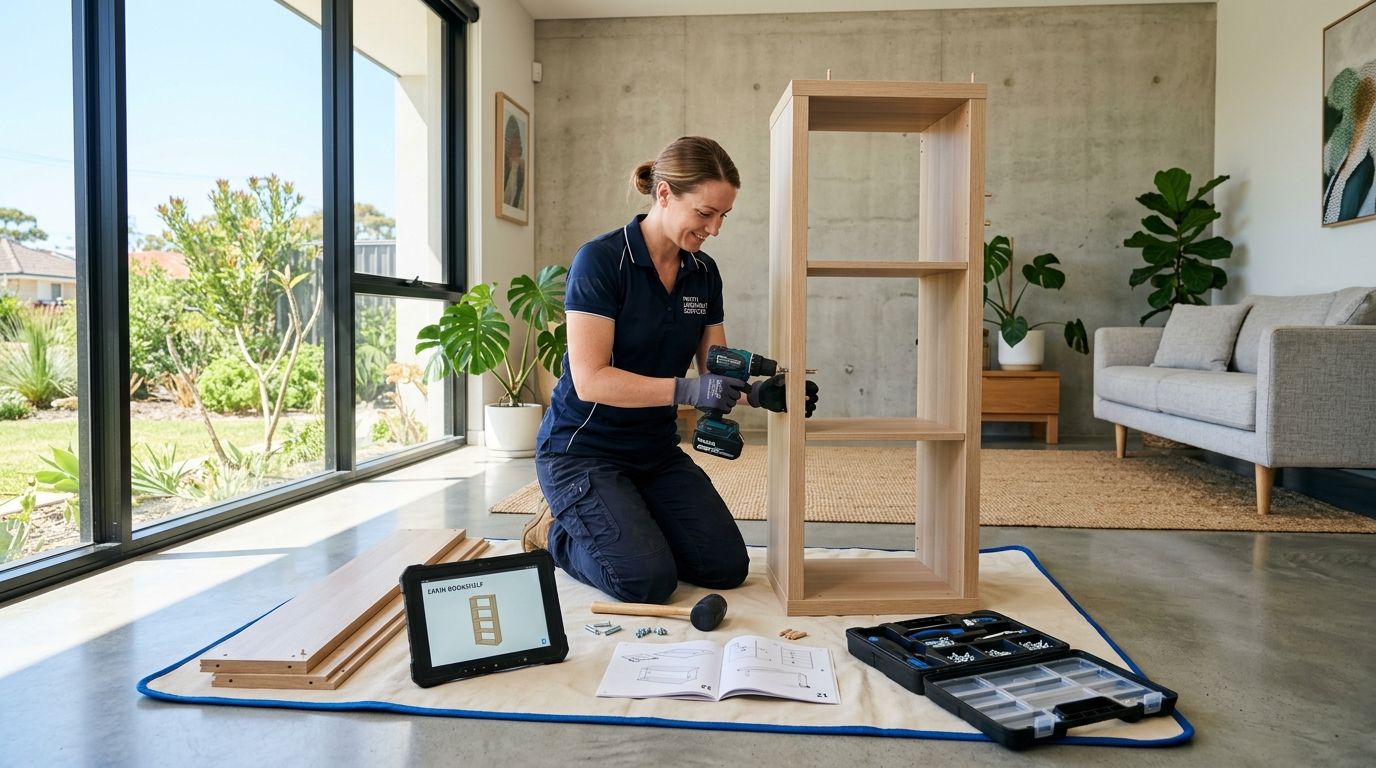
You’ve probably done this before. The boxes are in the hallway, the Allen key is already missing, and what looked simple in the showroom now covers the floor in boards, cams, dowels, and plastic bags of screws. Then the problem starts. One panel goes on backwards, a drawer runner ends up on the wrong side, and suddenly a Saturday afternoon turns into an argument.
That’s why furniture assembly services have become part of the moving and setup process for so many Perth households. It’s not only about building a new BILLY bookcase or putting a MALM bed together. In real homes, the harder jobs are often the ones people don’t think about until moving day. Taking apart an existing wardrobe without damaging it. Reassembling a dining table so it doesn’t wobble. Working out whether a family heirloom should be dismantled at all.
Good assembly work saves more than time. It protects the furniture, reduces stress, and prevents the common mistakes that make a move harder than it needs to be.
Table of Contents
- The Hidden Hassle of Modern Furniture
- What Professional Furniture Assembly Really Includes
- Decoding the Costs of Furniture Assembly in Perth
- DIY Assembly vs Hiring a Professional
- How to Choose the Right Assembly Service in Perth
- Frequently Asked Questions and Booking Tips
The Hidden Hassle of Modern Furniture
New furniture usually arrives with good intentions. You want the guest room finished, the home office usable, or the kids’ room sorted before school starts. Then you open the carton and realise you haven’t bought a chair or a wardrobe yet. You’ve bought a project.

In Perth homes, the same pattern comes up again and again. People underestimate how long flat-pack takes. They assume the instructions will be clear, that all holes will line up, and that “some assembly required” means an hour, not most of the day. It rarely stays that tidy. A simple bookshelf can turn frustrating when one side panel is reversed. Beds and wardrobes are worse because they’re bulkier, heavier, and less forgiving if you get a step wrong.
The frustration isn’t limited to flat-packs either. During a move, older furniture causes different problems. A tallboy that went into the house in one piece may not come out the same way. A desk that survived three rentals might split if someone tries to drag it through a doorway without dismantling it first.
Practical rule: If the item is heavy, awkward, or likely to be taken apart and rebuilt more than once, rushed assembly usually costs more than careful assembly.
That’s why many households stop treating assembly as an afterthought and start treating it as part of the move itself. If you’re already organising Perth removals and storage support, it makes sense to think about what will need dismantling, wrapping, rebuilding, and positioning before the truck arrives.
For larger workspaces, the same principle applies. A business fit-out isn’t just “putting desks together”. Good planning around expert office furniture installation shows how much smoother the job goes when placement, access, and final setup are handled properly from the start.
What Professional Furniture Assembly Really Includes
When people hear furniture assembly services, they often think of one thing. A technician turning a flat-pack carton into a usable piece of furniture. That’s part of it, but in practice the job is much broader.

The service category itself is growing. The global market is projected to reach $22.6 billion by 2034, driven by ready-to-assemble furniture, and the same source notes that in Australia four-in-ten people would rather pay a professional than deal with the frustration and arguments of DIY assembly, according to DataIntelo’s furniture assembly services market report.
New furniture is only one part of the job
For new purchases, a proper assembly service usually includes more than tightening screws. The team should sort panels and hardware, follow the manufacturer sequence, level the item, check drawer action and door alignment, and position the piece where it will be used.
That matters with items like:
- Bedroom furniture, including bed frames, bedside tables, and drawer units
- Storage systems, especially modular wardrobes and shelving
- Office furniture, where desk layout and monitor position affect how the room works
- Wall-mounted items, such as shelves or televisions that need secure placement, not guesswork
Some jobs also involve cleanup and removing packaging, which sounds minor until you’re left with a pile of cardboard, foam, and offcuts after the build.
A quick visual helps show the broader scope:
The difference between basic assembly and move-related assembly
Move-related assembly is a different trade-off. It starts before the truck. The team has to decide whether an item should stay intact, be partially dismantled, or come apart fully. That decision affects how safely the piece moves, how much room it takes in the vehicle, and whether it can be rebuilt without weakening joints or damaging finishes.
The hardest jobs are often existing furniture, not brand-new furniture. An older timber bed can have swollen joints. A wardrobe may have been assembled years ago with extra glue or replacement hardware. Antique pieces often need careful handling rather than fast dismantling.
Taking apart old furniture isn’t the reverse of assembly instructions. In many cases, there are no instructions left, and the piece has already been altered by age, repairs, or previous moves.
That’s the point many homeowners miss. A general handyman may be fine with a basic flat-pack desk. But dismantling, moving, and reassembling a valuable sideboard or a full bedroom suite takes a removal mindset as well as assembly skill. The work has to account for transport, wrapping, access through tight hallways, floor protection, and how the item will stand once it’s rebuilt in the new room.
Decoding the Costs of Furniture Assembly in Perth
A quote can look reasonable until the job starts. Then the assembler finds a staircase that was never mentioned, a wardrobe that needs to come apart before it can leave the old house, or missing fixings from a bed frame that has already been moved twice. That is usually where the actual cost sits in Perth. Not in the box itself, but in the labour around it.
Assembly pricing usually falls into three models. Hourly rates suit mixed jobs and anything involving existing furniture. Per-item pricing suits standard flat-packs with clear product names and no surprises. Half-day or full-day bookings make more sense when you are fitting out several rooms or combining assembly with move-day dismantling and reassembly.
How pricing is usually structured
Per-item pricing sounds simple, and sometimes it is. A basic bookcase, bedside table, or desk is easy to identify and estimate before arrival. The trouble starts when the booking includes older furniture, wall anchoring, tight access, or pieces that were not assembled correctly the first time.
Hourly pricing is often the fairer method for move-related work because the unknowns are real. A timber bed that should take 30 minutes to dismantle can take much longer if bolts are stripped or the frame has shifted over time. A large wardrobe may need doors removed, shelves labelled, hardware bagged, panels wrapped, then everything rebuilt and adjusted at the new address so the doors sit square again.
That is why cheap quotes often drift upward later. The original scope only covered assembly, not the extra handling around it.
If you are comparing providers, ask for itemised removalist quotes in Perth that separate assembly labour, dismantling, transport-related prep, and any call-out or minimum booking charge.
What usually changes the price
The price moves up or down based on labour, risk, and access more than brand name.
- Type of furniture. Flat-pack drawers are predictable. Large wardrobes, entertainment units, bunk beds, and modular systems take more setup, more alignment, and more room to work.
- New assembly versus reassembly. Existing furniture often costs more because parts may be worn, swollen, glued, or missing.
- Access at both properties. Stairs, apartment lifts, narrow hallways, and small bedrooms slow the job and sometimes force partial dismantling.
- Condition of hardware. Damaged cam locks, non-original screws, and stripped threads add time fast.
- Finishing work. Levelling, door adjustment, anti-tip anchoring, and final placement are labour, not freebies.
Anchoring is a good example. Some clients assume it is part of standard assembly. Some providers treat it as a separate task because wall type matters, fixings differ, and liability changes once you start drilling. If you are also planning shelves or other mounted pieces, these floating shelf installation tips show why wall work needs a different level of care than freestanding furniture.
The cost people miss during a move
The expensive part is often dismantling and reassembling furniture you already own.
A new flat-pack comes with a manual, clean hardware, and unused panels. Older furniture comes with history. Joints may be tighter than they should be. Previous repairs may have changed the way parts come apart. Instructions are often gone. On move day, that means slower work, more careful handling, and a higher chance that the job needs problem-solving rather than just tools.
Family pieces are the clearest example. A tallboy that has been in the house for twenty years may need careful dismantling to get through a doorway, but every extra turn of a screwdriver carries some risk to timber, veneer, and old fixings. Paying more for that job can save money compared with cracking a rail, losing hardware, or rebuilding it loosely so it starts wobbling a month later.
The best quote is not the lowest one. It is the one that makes the scope clear, includes the awkward parts people forget to mention, and prices the job before those surprises become your problem.
DIY Assembly vs Hiring a Professional
DIY isn’t always the wrong choice. Sometimes it’s sensible. A small shelf, a basic bedside table, or one simple chair can be worth doing yourself if you’ve got the patience, the floor space, and the right tools.
The problem is that people often judge the decision by purchase price instead of risk. A cheap item can still become expensive if it’s assembled badly, damaged during a move, or rebuilt so loosely that it fails early. That’s where the essential comparison lies.
Where DIY still makes sense
DIY usually works when the job is low consequence. You can take your time, the furniture isn’t too heavy, and a small mistake won’t affect the rest of the move.
It’s also easier when:
- The item is simple and the instructions are short
- You’ve assembled similar products before
- The piece won’t need moving soon
- You can work without rushing, interruptions, or limited space
Even then, one caution matters. Wall-mounted pieces are in a different category. If you’re thinking about shelves rather than freestanding furniture, practical floating shelf installation tips are worth reading because fixing into the wrong part of the wall creates a very different problem from a wonky flat-pack drawer.
When a professional is the cheaper decision
The Australian market gives a clear clue about behaviour. Many Australians spend hundreds outsourcing flat-pack assembly to avoid domestic arguments, and the same discussion points out a market gap around transparent pricing for dismantling and reassembling pre-owned furniture, according to this Yahoo Finance Australia report on outsourced flat-pack assembly.
That second point matters during a move. New assembly is visible. Dismantling old furniture often isn’t quoted clearly until the job gets complicated.
Here’s the quick comparison:
DIY vs Professional Assembly a Quick Comparison
| Factor | DIY (Do-It-Yourself) | Professional Service |
|---|---|---|
| Time | Can take most of a day for complex items | Usually faster because the process is familiar |
| Tools | You supply everything | Tools are usually brought to the job |
| Risk of mistakes | Higher, especially on wardrobes and beds | Lower when the team works with these items regularly |
| Move-day coordination | Harder if dismantling, transport, and reassembly all depend on each other | Easier when assembly is planned as part of the move |
| Heavy lifting | Falls on you and whoever helps | Managed by people used to handling awkward loads |
| Hidden costs | Damaged panels, stripped screws, repeat work | Higher upfront spend, but fewer avoidable mistakes |
| Best use case | Simple, low-risk items | Complex builds, large pieces, or existing furniture being moved |
If the furniture matters, the assembly matters. That includes sentimental value, not just the retail price.
How to Choose the Right Assembly Service in Perth
A good booking starts before anyone picks up a drill. Most problems come from poor scope, not poor effort. The provider thinks they’re assembling a bed. The customer also expects dismantling, upstairs delivery, packaging removal, and wall safety checks. That mismatch is where stress starts.

What to do before the team arrives
A little prep saves a lot of labour time. Clear the room, move loose items out of the way, and decide where the finished piece will sit. If there are multiple cartons, get them into the correct room first if you can. Moving unopened boxes from one end of the house to another eats time.
Use this pre-arrival checklist:
- Check the cartons. Make sure all boxes for the item have been delivered.
- Keep instructions handy. Printed manuals, app guides, or order details help confirm the exact model.
- Protect the work area. Remove fragile décor, lamps, rugs that slip, and anything children can trip over.
- Decide on final placement. Large wardrobes and beds often shouldn’t be built in the wrong spot and shuffled later.
- Mention access issues early. Tight stairs, apartment lifts, or limited parking affect the job.
Questions worth asking before you book
Not every service handles the same kind of work. Some are set up for straightforward flat-packs only. Others are experienced with move-related dismantling and more delicate furniture.
Ask these questions plainly:
- Do you assemble only new flat-packs, or do you also dismantle and reassemble existing furniture?
- What exactly is included in the quote?
- Do you handle wall anchoring or mounting if needed?
- What happens if hardware is missing or damaged?
- Have you worked with older timber, custom furniture, or fragile pieces before?
- Are there extra charges for stairs, parking, or longer carry distances?
A reliable local provider should answer those without dodging. If the quote is vague, the invoice often won’t be.
For households comparing options, it helps to look at established moving companies in Perth that already understand access conditions, apartment timing, and the practical side of dismantling and reassembly during a move.
The best quote isn’t the lowest one. It’s the one that tells you exactly what will happen on the day.
Frequently Asked Questions and Booking Tips
The final details are usually what make the day smooth or messy. These are the questions people tend to ask once the boxes arrive or the moving date gets close.
Do I need to be home for the job
For most bookings, yes, at least at the start. Someone should confirm what’s being assembled, where each item is going, and whether there are any special instructions. After that, it depends on the provider and the access arrangements.
If the job involves existing furniture, being available helps even more. You may need to decide whether a piece should be fully dismantled, partially dismantled, or left intact.
What if parts are missing
Stop before forcing a workaround. Don’t substitute random screws or leave out stabilising hardware just to get the item standing. A missing cam lock or bracket can affect the whole structure.
Good practice is simple:
- Open and check the hardware early, not when the assembler is already on site
- Keep the order details, so replacement parts can be requested quickly
- Photograph damaged panels or missing packets, especially if the carton arrived compromised
How to check insurance for antiques and high-value items
This is one of the most important questions in Perth moves, and it’s often skipped. A common unanswered question in the Australian market is how to verify whether a furniture assembly service is insured for high-value or antique items during a move. Many ads focus on new flat-packs, but checking liability protection for irreplaceable pieces is a step homeowners often overlook, as noted in this AU guidance on verifying insurance for antique-item handling.
Ask for direct confirmation in writing. Not a vague “yes, we’re covered”. Ask what kind of items the coverage applies to, whether dismantling and reassembly are included, and what the claims process looks like if damage occurs.
Look for clear answers to these points:
- Does the coverage apply to antiques, collectibles, or heirlooms?
- Does it cover dismantling and reassembly, not only transport?
- Is there any exclusion for pre-existing wear, veneer, glass, or delicate joinery?
- What documentation should you provide before the move?
If a piece can’t be replaced, don’t accept verbal reassurance. Get written confirmation of the liability position before booking.
Booking tips that make the day run better
Photos make quotes better. Send clear images of the item, the room, access points, and any stairs. If it’s existing furniture, include close-ups of joints, legs, hinges, and any existing damage.
Also do these three things:
- Bundle related work together. If you need dismantling, moving, and reassembly, book it as one scope.
- Be honest about complexity. A “wardrobe” can mean a simple two-door unit or a full fitted system.
- Flag sentimental items early. A family cabinet, antique dresser, or custom table deserves a slower plan.
The smoother jobs usually aren’t the easiest furniture. They’re the jobs where everyone knows the scope before the first tool comes out.
If you want help with the full process, not just the flat-pack stage, Emmanuel Transport handles Perth moves with the practical extras that matter: dismantling and reassembling furniture, careful handling of antiques and delicate items, packing support, and clear quotes without hidden surprises. For homeowners planning a move, that makes the day simpler from the first box to the final room setup.
