

Moving day can feel like a whirlwind of boxes, decisions, and last-minute chaos. But with a structured approach, it can be a smooth, organised transition into your next chapter. This comprehensive moving day checklist is designed to eliminate guesswork and prevent the common, often costly, pitfalls that derail even the best-laid plans. It serves as your detailed blueprint, transforming a potentially stressful ordeal into a manageable and efficient process.
We’ve broken down the 10 most critical tasks that ensure nothing is overlooked. From the crucial final confirmation call with your removalist to conducting that all-important final walkthrough of your old property, each step is laid out with actionable advice. This guide provides the practical details needed to coordinate logistics, prepare your belongings, and secure both your old and new homes effectively.
Whether you're moving a small apartment across town, relocating an entire family home, or shifting an office, these steps provide the clarity and control required for a successful day. We'll cover everything from preparing major appliances and managing utilities to packing a non-negotiable "essentials box" that will save your sanity on the first night. By following this checklist, you can confidently navigate the complexities of the day, ensuring all your valuables, from furniture to fragile electronics, arrive safely and are accounted for. Let’s get started on making your move a seamless one.
1. Confirm Final Moving Details with Your Removalist
One of the most critical steps in any moving day checklist is a final confirmation call to your removalist. This simple action, performed 24-48 hours before the scheduled move, prevents costly miscommunications and ensures a seamless start. It’s your last chance to verify that your expectations align perfectly with the service provider's plan, heading off potential delays before they can disrupt your day.
This call isn't just about confirming the time; it's a comprehensive review of the entire logistical operation. You are ensuring the crew size, vehicle type, and agreed-upon services match your booking details. This is especially vital for complex situations, such as office managers in Perth's CBD verifying a large crew for a multi-floor relocation or a homeowner in a gated community like Joondalup confirming the removalist has the necessary access codes.
Key Confirmation Points
To make the most of this call, have your booking reference number and a list of questions ready. Here are the essential details to lock down:
- Arrival Window: Confirm the exact arrival time or window and clarify the company’s policy if they are running late.
- Crew and Vehicle: Double-check the number of movers assigned and that the truck size is appropriate for your home’s volume.
- Special Items: Reiterate any special handling instructions for fragile items, such as antiques or artwork, ensuring the team is prepared.
- Access and Parking: Discuss the best place for the truck to park and provide any specific instructions for navigating your building or street.
Pro Tip: For moves within the Perth metro area, it’s wise to ask providers like Emmanuel Transport if they have accounted for any suburb-specific traffic or routing challenges to ensure an efficient journey.
This final check-in provides peace of mind and sets a professional, organised tone for the day. For more guidance, exploring the 11 essential questions to ask when hiring a removalist can help you prepare for this important conversation.
2. Prepare Your Home and Clear Pathways
A crucial, yet often overlooked, part of any moving day checklist is preparing the physical space for the removalists. Clearing pathways throughout your home is not just about tidiness; it's a strategic move that directly impacts the safety, speed, and cost-effectiveness of your relocation. By ensuring all hallways, staircases, and doorways are completely free of obstacles, you create a seamless and efficient workflow for the moving crew.
This proactive step prevents accidents, protects your belongings from scratches and dings, and safeguards your property from damage. Imagine Mount Hawthorn homeowners removing a narrow hallway door from its hinges to allow a large sofa to pass through without issue, or an office manager in the Perth CBD ensuring stairwells are clear for moving dollies. This preparation is fundamental to a smooth and damage-free moving day.

Key Preparation Points
To ensure your home is ready for the removalist team, focus on creating unobstructed, safe routes from every room to the exit. This simple action can dramatically reduce moving time.
- Create Clear Routes: Move any remaining small furniture, plants, or decor out of high-traffic areas like hallways, entryways, and landings.
- Protect Surfaces: Lay down protective coverings like cardboard sheets, old blankets, or plastic runners on floors, especially in high-traffic zones. Apartment dwellers in high-density suburbs can avoid damage charges by taking this step.
- Widen Doorways: If necessary, remove doors from their hinges to create extra space for bulky items like fridges, wardrobes, and sofas.
- Ensure Safe Access: Clear any outdoor paths, driveways, or verandas of pot plants, tools, or children's toys to provide a clear and safe path to the truck.
Pro Tip: Before the movers arrive, take photos of the cleared pathways and any pre-existing damage to walls or floors. This provides clear documentation that can be valuable for insurance purposes or resolving any disputes with building management later.
By dedicating time to this task before the truck arrives, you empower the moving team to work at maximum efficiency. This preparation not only protects your belongings and your home but also helps keep your final moving costs down by minimising labour time.
3. Pack Clearly and Label All Boxes
A systematic packing and labelling strategy is the cornerstone of an organised move. By clearly marking every box with its designated room and contents, you transform a potentially chaotic unpacking process into a streamlined operation. This crucial step on your moving day checklist empowers your removalists to place everything in its correct spot, saving you hours of searching and heavy lifting later.
This isn't merely about writing "Kitchen" on a box; it's a comprehensive inventory management system. For a family in a multi-bedroom home in a suburb like Canning Vale, a colour-coded system can instantly differentiate between children's rooms, the master bedroom, and the study. Similarly, an office manager overseeing a CBD relocation can use a numbered inventory system to track hundreds of boxes, ensuring every file and piece of equipment arrives at the right desk.

Key Labelling Points
To implement an effective labelling system, consistency is key. Gather your supplies-permanent markers, packing tape, and coloured stickers-before you begin.
- Label Multiple Sides: Mark boxes on the top and at least two sides. This ensures labels are visible even when stacked.
- Be Specific: Instead of just "Kitchen," write "Kitchen – Pots & Pans" or "Kitchen – Daily Crockery." Add "FRAGILE" in large letters for delicate items.
- Colour-Code by Room: Assign a unique colour sticker to each room (e.g., blue for the master bedroom, green for the living room) and place a matching sticker on the door of the corresponding room in your new home.
- Create an Inventory: For valuable or complex moves, number each box and maintain a master inventory spreadsheet detailing the contents of each numbered box.
Pro Tip: Keep a separate box clearly marked "ESSENTIALS" or "OPEN FIRST." This should contain items you'll need immediately upon arrival, such as toiletries, basic tools, kettle, coffee, phone chargers, and important documents.
A clear labelling system significantly reduces stress and brings order to your new space from the moment you arrive. For a deeper dive into best practices, our guide on how to pack for movers offers comprehensive tips to ensure your belongings are secure and well-organised.
4. Disconnect and Prepare Appliances and Electronics
A crucial but often overlooked task in any comprehensive moving day checklist is the proper disconnection and preparation of your appliances and electronics. Addressing this the day before the move prevents damage during transit, ensures the safety of both your items and the moving crew, and dramatically simplifies the reconnection process at your new home. This step is about more than just unplugging a cord; it’s a systematic process of securing valuable and sensitive equipment for a safe journey.
From a homeowner in a Perth suburb carefully documenting a complex home theatre system to an office manager organising the safe shutdown of servers, this preparation is vital. For apartment dwellers, correctly disconnecting built-in appliances like dishwashers is often a requirement of their rental agreement. Taking the time to do this properly means your refrigerator, washing machine, and computer systems will arrive ready for a seamless setup, saving you time and frustration.
Key Preparation Points
To ensure your electronics and appliances are handled safely, follow a clear, organised process. Have your camera, labels, and any necessary tools ready before you begin.
- Document Connections: Before unplugging anything, take clear photos of the back of your electronics showing how all the cables are connected.
- Label Everything: Use painter's tape or cable labels to mark what each cord connects to (e.g., ‘HDMI – TV to Sound System’).
- Drain and Defrost: Fully drain washing machines and dishwashers. Defrost refrigerators and freezers at least 24 hours in advance and keep them unplugged for several hours before transport to allow internal parts to settle.
- Secure and Pack: Use original boxes where possible. If not, use sturdy boxes with plenty of packing material. Bundle cables neatly and pack them with their corresponding device.
Pro Tip: Secure loose parts like washing machine drums using the manufacturer-provided transit bolts. If you no longer have them, consult your manual, as moving the appliance without them can cause significant damage.
By systematically preparing your electronics and appliances, you protect your investments and lay the groundwork for a quick and easy setup, helping you feel settled in your new space much faster.
5. Defrost and Clean Your Refrigerator
A commonly overlooked task on any moving day checklist, preparing your refrigerator 24-48 hours in advance is essential to prevent water damage, mould growth, and unpleasant odours. A properly defrosted and cleaned fridge is lighter, safer for removalists to handle, and ensures it arrives at your new home ready for immediate use. Neglecting this step can lead to a messy and unhygienic start in your new kitchen.
This process involves more than just emptying the contents; it's a crucial preventative measure. Whether it's a large family in a Perth suburb like Canning Vale preparing their main kitchen appliance or an office manager organising the move of a break-room fridge, the principles are the same. A clean, dry appliance prevents moisture from damaging other items inside the moving truck and ensures it remains in pristine condition during transit.
Key Preparation Points
To ensure your refrigerator is move-ready, start the process at least a day before the removalists arrive. This gives it ample time to defrost and dry completely.
- Timing is Key: Unplug the refrigerator 24-48 hours before the move. Lay old towels around the base to absorb any water from the melting ice.
- Thorough Cleaning: Once defrosted, clean all interior surfaces. For a comprehensive guide, learning how to clean your fridge thoroughly can make it spotless and eliminate bacteria.
- Dry Completely: Wipe down every shelf, drawer, and compartment. Leave the door propped open to air-dry completely, using a small fan to speed up the process if necessary.
- Secure Components: Remove any loose shelves and drawers, wrap them in towels or bubble wrap, and pack them in a clearly labelled box.
Pro Tip: After cleaning, place a handful of dry coffee grounds or a small open box of baking soda inside the empty refrigerator and close the door. This will absorb any lingering odours during the move.
By properly preparing your refrigerator, you safeguard your appliance and other belongings from potential damage. Informing your removalist that the unit is clean, dry, and ready for transport allows them to handle it with maximum efficiency and care.
6. Notify Utility Companies and Change of Address
One of the most overlooked yet critical tasks on any moving day checklist is managing your utilities and formal change of address notifications. This administrative step ensures a seamless transition of essential services and prevents important mail from being lost. Arranging disconnections and new connections well in advance prevents the stress of arriving at a new home with no power or internet, or discovering overdue bills weeks after you’ve moved.
This process involves more than just calling your electricity provider; it’s a systematic update of your life’s administrative details. For families moving from a Mount Hawthorn property to a new home in Joondalup, this means coordinating disconnection with Synergy and the Water Corporation and arranging a timely connection at the new address. Similarly, a business relocating its office across the Perth metro area must manage a complex transition of telecommunications, internet, and other commercial utilities to avoid costly operational downtime.
Key Notification Points
To streamline this process, create a master list of all organisations that need your new address at least two to three weeks before your move. Keep a record of every call and online update you make.
- Utility Transfers: Schedule the disconnection of services like electricity, gas, and water at your old address for the day after you move out. Arrange for connections at your new home to be active the day before or on the day you arrive.
- Postal Redirection: Set up a mail redirection service with Australia Post for at least 6-12 months. This provides a crucial safety net for any accounts or subscriptions you may have forgotten.
- Essential Services: Update your address with banks, insurance providers, your employer, and government bodies like the Australian Taxation Office (ATO) and the Department of Transport for your vehicle registration.
- Subscriptions: Don't forget to update your details for any magazine subscriptions, online shopping accounts, and streaming services to ensure continuous service and prevent billing issues.
Pro Tip: When dealing with Perth-based utilities like Western Power or Alinta Energy, request final meter readings for your old property to ensure you are only billed for what you used. Keep copies of all final statements for your records.
Properly managing these notifications provides financial security and continuity. For a comprehensive breakdown, our guide on transferring utilities when moving house offers a detailed timeline and checklist.
7. Create an Essentials Box for First Night
After a long and physically draining day of moving, the last thing you want to do is hunt through dozens of boxes for your toothbrush or phone charger. This is why a well-prepared ‘First Night’ essentials box is a non-negotiable part of any successful moving day checklist. This clearly labelled box contains everything you need to function comfortably for the first 24 hours in your new home, providing immediate relief and a sense of order amidst the chaos.
This simple act of preparation ensures that your most crucial items are always within reach. Instead of being loaded onto the moving truck, this box should travel with you in your personal vehicle. This is vital for families needing immediate access to children’s comfort items, professionals requiring their laptops and work documents for the next morning, or those caring for elderly relatives who need medications and specific aids on a strict schedule.
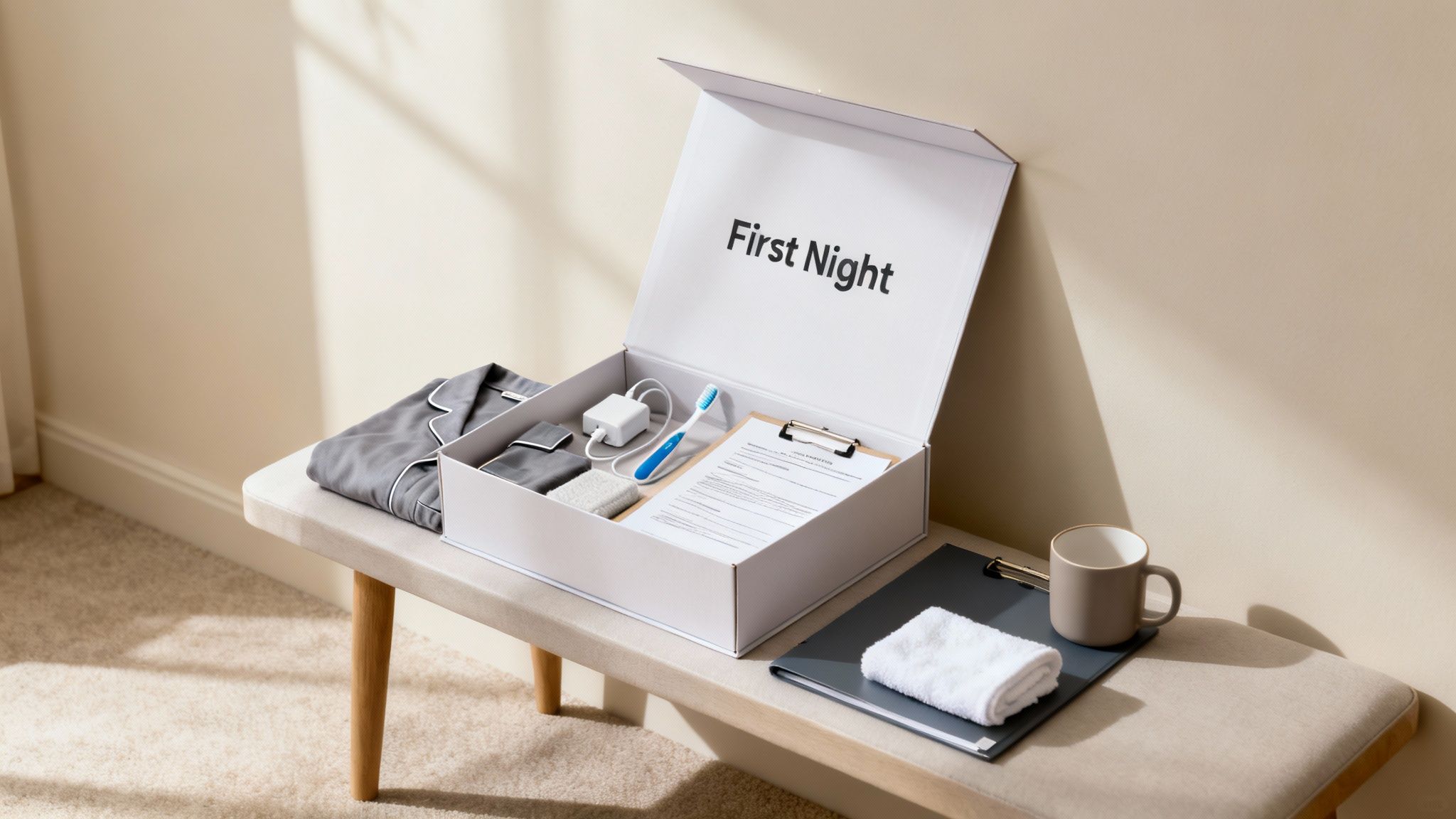
Key Essentials to Pack
To assemble the ultimate first-night kit, think about what you’d need for an overnight stay away from home. Your goal is to avoid unpacking any other boxes until the next day.
- Personal Items: Pack a change of clothes for everyone, pyjamas, basic toiletries (toothbrush, toothpaste, soap), and any required medications.
- Electronics: Include phone chargers, a portable power bank, and your laptop with its charger.
- Important Documents: Keep keys to the new property, deeds, passports, and moving-related paperwork in a secure folder within the box.
- Kitchen Basics: A kettle, coffee or tea, mugs, bottled water, snacks, and disposable plates and cutlery can be lifesavers.
- Comfort and Safety: A small first-aid kit, toilet paper, a multi-tool, and perhaps even a favourite pillow or blanket will make the first night much more comfortable.
Pro Tip: Clearly label your box on all sides with "OPEN FIRST" or "ESSENTIALS" in large, bold letters. This ensures it doesn't get mistaken for general cargo and remains easily identifiable.
By setting aside these necessities, you give yourself the freedom to decompress and rest after a strenuous day. It’s a small step in the planning process that delivers a massive payoff in convenience and peace of mind when you finally walk through your new front door.
8. Measure Doorways, Hallways, and Furniture for Fit Assessment
One of the most overlooked yet crucial tasks in any moving day checklist is a pre-move fit assessment. This involves meticulously measuring large furniture against the doorways, hallways, and stairwells of both your old and new homes. This proactive step prevents the stressful and costly scenario where a beloved sofa or antique wardrobe simply won't fit through the door, forcing last-minute disassembly or, in worst-case scenarios, leaving items behind.
This task is not just about avoiding frustration; it's about practical logistics and damage prevention. For instance, a homeowner moving into a character home in suburbs like Fremantle might discover their modern, king-sized bed frame won't navigate the narrow, older staircases. Similarly, a business relocating to a newer West Perth office needs to confirm that server racks and large boardroom tables can clear the building’s elevators and doorways. Identifying these potential issues beforehand allows you to create a plan with your removalist.
Key Measurement Points
To conduct an effective fit assessment, grab a tape measure, a notepad, and your phone for photos. Documenting everything clearly will be invaluable for your moving team.
- Measure Key Furniture: Record the height, width, and depth of all large items like sofas, fridges, wardrobes, and mattresses.
- Assess Access Routes: Measure the width and height of all doorways, hallways, and stairwells at both properties. Pay close attention to the narrowest points.
- Account for Obstructions: Note the location of permanent fixtures like handrails, light fittings, or tight corners that reduce clearance.
- Diagonal Measurements: For tricky items like couches, measure the diagonal depth and height. You can then compare this to the diagonal width of your doorway, as tilting the item is often the key to getting it through.
Pro Tip: When you share these measurements with your Perth removalist, they can plan accordingly. A professional team like Emmanuel Transport can advise if disassembly is needed or if specialised equipment could help navigate a particularly tight space.
Taking the time for these measurements transforms a potential moving day disaster into a smoothly executed plan. It provides the certainty that every piece of your life will fit comfortably into its new home, saving time, money, and unnecessary stress.
9. Arrange Pet and Child Care During the Move
A chaotic moving day with open doors, heavy furniture, and focused movers is no place for unsupervised children or anxious pets. Arranging dedicated care is a crucial step in any comprehensive moving day checklist, ensuring safety, reducing stress for everyone involved, and allowing the removalist team to work efficiently without obstruction. This proactive measure prevents accidents and keeps your most vulnerable family members comfortable and secure.
Whether you're moving from a family home in a Perth suburb or coordinating a complex relocation, the core principle remains the same: create a safe, controlled environment. For a family with a toddler, this might mean arranging for them to spend the day with grandparents. For a pet owner, this could involve booking a spot at a trusted doggy daycare or hiring a professional pet sitter. The goal is to remove them from the high-traffic zones, protecting them from potential hazards and preventing them from becoming a hazard themselves.
Key Considerations for Care
Planning this element 2-3 weeks in advance is essential, as professional services and trusted caregivers book up quickly. Here’s how to ensure a smooth experience for your children and pets:
- Secure a Safe Space: If they must remain on-site, designate a secure room (like a bathroom or spare bedroom) with a clear "Do Not Enter" sign. Equip it with food, water, toys, and bedding.
- Prepare a Care Kit: Pack a bag with all their essentials: food, water bowls, medications, favourite toys, treats, and any comfort items like a special blanket.
- Provide Detailed Instructions: Leave written instructions for the caregiver, including feeding schedules, medication dosages, behavioural quirks, and emergency contact information for both you and your veterinarian.
- Ensure Proper Identification: Double-check that pets are wearing collars with up-to-date ID tags. Having a recent photo on your phone is also a wise precaution. For cat owners, a dedicated guide to moving across country with cats can offer specialised tips for keeping them secure.
Pro Tip: Schedule care to cover the entire moving day, from before the movers arrive until after you've had a chance to set up a safe, familiar space for them at the new property. This prevents a rushed and stressful reunion amidst piles of boxes.
By organising this aspect of your move, you create a safer worksite for your removalists and a calmer, more positive experience for your entire family.
10. Conduct a Final Walk-Through and Security Check
Once the removalist truck is fully loaded and ready to depart, your final task at the old property is arguably one of the most important: conducting a thorough final walk-through. This systematic inspection is your last opportunity to ensure nothing is left behind and that the property is left in a secure and appropriate state. It’s a crucial step in any moving day checklist, preventing the stress of forgotten heirlooms and protecting you from potential disputes over the property’s condition.
This final check is more than a quick glance around; it's a comprehensive sweep of every single space. For tenants in Perth, this process is essential for securing a full bond return, while homeowners ensure they are handing over the property responsibly. Think of a business manager overseeing an office move in West Perth, who must verify that no sensitive documents or expensive equipment have been overlooked in a storeroom, or a family in a Fremantle home discovering a box of precious childhood photos tucked away in the garden shed.
Key Inspection and Security Points
To perform an effective final walk-through, move methodically from room to room with a clear checklist. Don’t rush this process, as overlooking even a small detail can cause significant hassle later.
- Check Every Nook: Open all cupboards, drawers, wardrobes, and built-in storage. Check attics, basements, the garage, and any outdoor sheds or storage units.
- Utility Shutdown: Ensure all lights are switched off. Confirm that non-essential utilities like the air conditioning are off, and that gas or water mains are shut off if required by your agreement.
- Secure the Premises: Lock every window and door securely. Double-check sliding doors, back gates, and garage doors to ensure the property is completely secured.
- Document Everything: Take photos or a video of each empty room to document its condition upon your departure. This creates a clear record that can be invaluable for resolving any potential claims about damages.
Pro Tip: Create a digital folder for your walk-through photos and label them by room. Email a copy to yourself and your property manager or the new owner as a timestamped record of the property’s condition.
This final, deliberate action provides closure and peace of mind, allowing you to leave your old property confidently and focus entirely on settling into your new one.
10-Point Moving Day Checklist Comparison
| Task | 🔄 Implementation Complexity | ⚡ Resource Requirements | 📊 Expected Outcomes | ⭐ Ideal Use Cases | 💡 Key Advantages |
|---|---|---|---|---|---|
| Confirm Final Moving Details with Your Removalist | Moderate — phone/email coordination; possible rescheduling | Low — call time, booking reference (15–30 min) | Aligned timing/crew/vehicle; fewer delays or surprises | All moves; complex access or special handling needs | Prevents no-shows and miscommunications; peace of mind |
| Prepare Your Home and Clear Pathways | Medium–High — physical prep day before move | Medium — protective runners, blankets, tools, helpers | Faster loading/unloading; fewer damages and injuries | Homes with large furniture, stairs, or narrow access | Reduces labour time/costs and protects property |
| Pack Clearly and Label All Boxes | Medium — systematic packing and consistent labeling | Medium — boxes, tape, markers, time for inventory | Efficient unpacking; accurate placement; easier claims | Multi-room household moves and office relocations | Speeds unpacking, improves inventory control |
| Disconnect and Prepare Appliances and Electronics | High — technical disconnection and draining | Medium — tools, photos, original packaging, possible pro help | Safer transport; reduced damage; easier reconnection | Home theaters, server rooms, major appliances | Protects equipment and warranties; reduces transport risk |
| Defrost and Clean Your Refrigerator | Low–Medium — 24‑hour lead time and drying | Low — towels, time, temporary food storage | Prevents leaks, odors, mold; lighter appliance | Any move that transports a refrigerator | Avoids water damage and unpleasant odors |
| Notify Utility Companies and Change of Address | Medium — multiple contacts and lead times | Low — list of providers, account details, time | Continuous service; correct billing; forwarded mail | All moves, especially long-distance or new installations | Prevents service disruption and billing issues |
| Create an Essentials Box for First Night | Low — simple planning and selection | Low — one box, basic toiletries, chargers, clothes | Immediate access to essentials; reduced first-night stress | Families, long-distance moves, elderly or kids | Ensures comfort on arrival; keeps valuables handy |
| Measure Doorways, Hallways, and Furniture for Fit Assessment | Medium — precise measuring and planning | Low — tape measure, photos, time | Avoids fit problems; enables disassembly planning | Moves with oversized furniture or tight historic homes | Prevents damage and on-site delays; improves crew prep |
| Arrange Pet and Child Care During the Move | Low–Medium — booking care ahead of time | Medium — caregiver fees, supplies, contacts | Safer environment; fewer distractions; faster move | Families with young children or anxious pets | Improves safety and mover efficiency; reduces stress |
| Conduct a Final Walk-Through and Security Check | Low — systematic room-by-room check after loading | Low — checklist, camera, time (15–30 min) | Ensures nothing left, secured property, documented condition | End-of-lease moves, large houses, office clear-outs | Prevents forgotten items and landlord disputes; documents condition |
Ready to Start Your Next Chapter with Confidence?
Moving day represents far more than just transporting boxes from one location to another; it's the physical start of a new chapter in your life. The difference between a day filled with chaos and one of controlled, efficient progress lies entirely in the preparation you've done beforehand. This comprehensive moving day checklist was designed to be your roadmap, transforming what can be an overwhelming experience into a series of manageable, actionable steps. By systematically working through each item, you build a foundation for success, ensuring no critical detail is overlooked.
From the strategic confirmation calls to your removalist to the final security check of your empty home, each task plays a vital role. You haven't just packed boxes; you've organised your life for a seamless transition. You haven’t just cleared pathways; you've created an efficient workspace for your moving team, saving time and preventing accidents. This level of meticulous planning is what empowers you to face the day not with anxiety, but with genuine confidence.
The Power of Proactive Preparation
The true value of this moving day checklist is in its proactive approach. Consider the most common moving day stressors:
- Unexpected Delays: Confirming details with your removalists and clearing access paths directly mitigates the risk of logistical hold-ups.
- Item Damage: Properly preparing appliances, measuring doorways, and labelling fragile items provides multiple layers of protection for your valuable possessions.
- First-Night Scramble: The "essentials box" is a simple yet brilliant strategy that turns your first night from a frantic search for a toothbrush into a moment of relief and comfort.
- Lingering Worries: Conducting a thorough final walk-through gives you peace of mind, knowing you haven't left anything important behind or overlooked a security vulnerability.
By addressing these potential issues before they arise, you reclaim control over the moving process. You're no longer just reacting to problems; you're actively preventing them. This foresight is the hallmark of a well-executed move.
Key Takeaway: A successful move isn't about luck; it's a direct result of deliberate planning and attention to detail. Every checklist item you complete is an investment in a smoother, less stressful transition into your new home or office.
Turning Your Checklist into a Seamless Reality
Now that you have the ultimate plan, the final piece of the puzzle is execution. While your organisational efforts are crucial, the physical move itself is a partnership. Having a professional, reliable team that respects your preparation and handles your belongings with care is non-negotiable. They are the ones who bring your meticulous planning to life, navigating the physical challenges of the day so you can focus on the bigger picture: starting your new life.
Remember, the goal is not just to move your things, but to arrive at your new destination with your energy and optimism intact. This checklist provides the framework, and a trusted moving partner provides the expert execution. With both in place, you are perfectly positioned to close one door and open the next with excitement and a well-deserved sense of accomplishment. You’ve done the hard work of planning; now you can look forward to settling in.
Executing the perfect moving day checklist requires a partner dedicated to precision and care. For a truly seamless experience in Perth, trust the team that understands the importance of your preparation. Let Emmanuel Transport handle the heavy lifting, so you can focus on starting your next chapter.
Contact Emmanuel Transport for a free, no-obligation quote today!