If you're gearing up for a move in Australia, you’ve probably noticed the market for packing & movers feels a bit… different right now. The demand for removalists is actually at a historic low, which is a direct knock-on effect of the shifts in our national housing market. This new landscape can change everything from how easy it is to book a truck to the price you’ll pay.
Getting a Read on the Australian Moving Landscape
Finding the right professional help for a move is always a big job, but the current climate presents some unique challenges—and a few opportunities. To make the most of it, you need to understand why things have changed. A huge part of the story is the ongoing housing crisis. It's become tougher and more expensive for Aussies to find new homes, which naturally cools down the demand for moving services.
This shift has created what you might call a quiet spell for the industry. In fact, the Australian packing and moving sector is having its quietest year in over two decades. A quick look at the data shows that Google search interest for removalists has plummeted to its lowest level since way back in 2006. This trend is tightly linked to soaring rental prices and a lack of housing supply, forcing many people to simply stay put.
So, What Does This Mean for Your Move?
How does a slowdown in the moving industry actually affect you? Well, a less frantic market can mean more flexibility when it comes to booking your preferred removalist. You might find that top-rated companies have more open slots than they would during a typical peak season, which is a definite plus.
But it's not the same story everywhere. The situation really depends on where you are and where you're going.
- Hot Spots: Some areas, like the Australian Capital Territory (ACT), are still buzzing with activity. If you're moving in or out of Canberra, you'll still need to book your packing & movers well ahead of time.
- Outflow Areas: On the other hand, regions like the Northern Territory (NT) have seen more people leaving. This can impact everything from the availability of local companies to their pricing structure.
Knowing these regional differences helps you set a realistic budget and timeline. It's also worth remembering that even with lower demand, the essential costs for removalists—think fuel, insurance, and wages—are still high. So, while you might have more choice, don't expect to see prices fall through the floor.
My advice? Get at least three quotes and don't be shy about asking companies about their current scheduling flexibility. Armed with this knowledge, you can negotiate from a much stronger position and find a service that’s the perfect fit for your move.
Planning Your Move in This Market
Your moving strategy should absolutely take these conditions into account. The first step is to research movers in your specific area to get a feel for the local demand. And as you're planning the logistics of the move itself, don't forget about the other moving parts, like getting your utilities sorted. For a full rundown on that, you can check out our https://emmanueltransport.net.au/your-guide-to-moving-house-utilities-in-australia/.
Ultimately, being informed about the bigger picture gives you a real advantage. It turns finding packing & movers from just another task on your checklist into a strategic decision, helping you lock in the best possible service for your relocation.
How to Choose the Right Professional Movers
Picking the right professional movers is probably the single most important decision you'll make for a smooth, stress-free move. Get it right, and the day is a well-oiled machine. Get it wrong, and you could be facing damaged furniture, surprise fees, and a whole lot of frustration. It’s worth putting in a bit more effort than just a quick Google search.
You’re not just hiring a truck and some muscle; you're looking for a reliable partner. That means seeking out companies that are transparent, professional, and have a solid history of happy customers. The best packing & movers stand out by how they communicate and treat you, right from that very first phone call.
The Australian removalist industry is a big one, pulling in around $1.8 billion in revenue in 2023. Even with some recent economic wobbles, quality companies are still busy, which tells you people are willing to pay for good service. To find a trustworthy mover in this massive market, you just need a clear plan. For a deeper dive, you can get more insights on the state of the Australian removalist industry from this detailed report.
Starting Your Search for a Mover
The best place to start is often by asking around. Chat with friends, family, or work colleagues who’ve moved recently in your area. A genuine recommendation is gold. After that, hit the internet, but don’t just glance at the star ratings.
Dive into the actual reviews—the good, the bad, and the ugly. Are people consistently raving about the crew's efficiency and care? Or are there recurring complaints about surprise costs or movers showing up late? This is where you get the real story behind the five-star average.
Always get quotes from at least three different companies. This isn't just about chasing the lowest price. It’s a chance to compare their service, professionalism, and what you’re actually getting for your money.
Comparing Removalist Service Tiers
Not all moving services are created equal. Companies usually offer a few different tiers of service, and understanding them helps you pick what's right for your budget and how much work you want to do yourself.
| Service Tier | What It Typically Includes | Best For |
|---|---|---|
| Budget / Backloading | Shared truck space, flexible dates. You do all the packing and unpacking. | Small moves, single items, or when you have a very flexible timeline and are on a tight budget. |
| Standard Service | The movers handle the loading, transport, and unloading of your pre-packed boxes and furniture. | The most common choice for families and individuals who are happy to do their own packing to save money. |
| Full-Service / Valet | They do it all: packing, loading, transport, unloading, and even unpacking and furniture reassembly. | People with very little time, large or complex moves, or those who want a completely hands-off experience. |
Choosing the right tier comes down to a trade-off between time, effort, and cost. A full-service move is the ultimate convenience, but a standard service is often the perfect middle ground for most household moves.
Getting Accurate and Binding Quotes
One of the oldest tricks in the book is the "bait and switch" quote—a tempting low price that magically inflates on moving day. The best way to avoid this is to insist on a detailed quote in writing. Even better, ask if they offer a binding quote, which locks in the price based on what they've agreed to move.
A good company will usually want to do a virtual or in-person walk-through of your home to give you an accurate price. Be very cautious of any mover who throws out a price over the phone without seeing what you have.
To make sure you're comparing apples with apples, give every company the exact same brief:
- A detailed inventory list: Walk through your home, room by room, and list all the big furniture and a rough count of boxes.
- Specialty items: Don’t forget to mention anything tricky, like a piano, an old antique dresser, or that oversized piece of art.
- Access details: Let them know about any challenges. Think flights of stairs, a tight driveway, or needing to book the lift in an apartment block.
Key Questions to Ask Potential Movers
Once you’ve got your shortlist, it’s time for a quick interview. How they answer these questions will tell you a lot about how they operate.
- "Are you fully insured and licensed?" Ask to see proof of their public liability and transit insurance. A legitimate mover will have this on hand.
- "What is included in your quote?" Make sure you’re clear on whether the price includes packing boxes, fuel surcharges, taking apart furniture, and GST. Get it all in writing.
- "How do you handle fragile or high-value items?" Their answer reveals how much care and expertise they bring to the job.
- "What is your policy for delays or damages?" You need to know their process for making a claim before you book them, just in case.
Spotting Red Flags
At the end of the day, trust your gut. If something doesn't feel right during your chats, it probably isn’t. Keep an eye out for these classic warning signs.
A huge red flag is a company that demands a large cash deposit upfront. Vague, evasive answers about insurance or hidden fees are also a bad sign. If they show up in an unbranded rental truck or their paperwork looks amateurish, you might want to think twice.
Choosing the right packing & movers really does set the tone for your entire move. A little extra time spent on research and asking the right questions will pay off massively when moving day finally arrives.
Smart Packing Strategies That Save Time and Stress
Great packing isn't just about speed; it's about having a smart system. A bit of strategy can turn a mountain of belongings into a manageable project, ensuring everything arrives in one piece and making unpacking a hundred times easier. It really is the difference between organised chaos and, well, just plain chaos.
Before you even think about taping up a single box, take a moment to plan. I’ve found that a room-by-room strategy is the best way to tackle the job without feeling completely swamped. Kick things off in the rooms you use the least—like the spare bedroom or home office—and save the kitchen and your main bedroom for the final stretch. Building that momentum early on keeps you motivated.
Protecting Your Valuables and Fragile Items
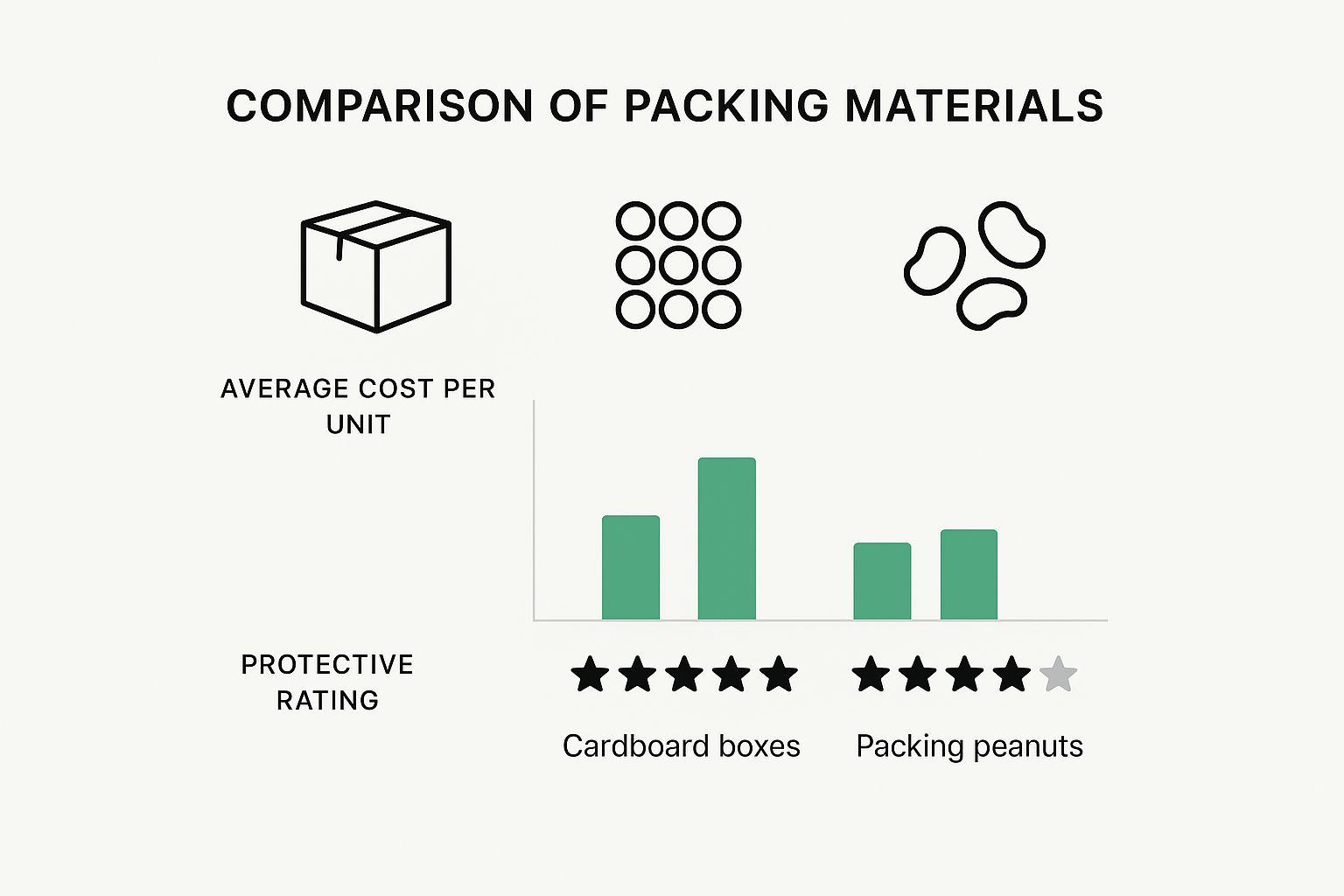
The thought of opening a box to find broken glassware or a cracked TV screen is enough to give anyone a serious case of moving anxiety. The good news? You don't need a truckload of expensive supplies to protect your things like a pro. Often, you can get creative with what you already have around the house.
For instance, try wrapping your plates and bowls in clothing or tea towels. Not only does this give them excellent cushioning, but it also gets your linens packed at the same time. Think of it as a two-for-one packing hack. For wine glasses, slide them into clean socks for a snug fit before carefully placing them in a box.
Here are a few more techniques we use all the time:
- Vertical Packing: Always, always pack plates and other flat items vertically, like files in a filing cabinet. Stacking them flat puts immense pressure on the items at the bottom. This one trick drastically reduces the risk of shattering.
- Electronics Prep: Before you unplug everything, snap a quick photo of the back of your electronics. This gives you a simple visual guide for reconnecting all those cables in your new home. Trust me, you'll thank yourself later.
- Fill the Gaps: Empty space inside a box is the enemy. It lets items shift and break. Stuff any and all gaps with crushed packing paper, towels, or even soft toys to keep everything secure.
The Power of a Smart Labelling System
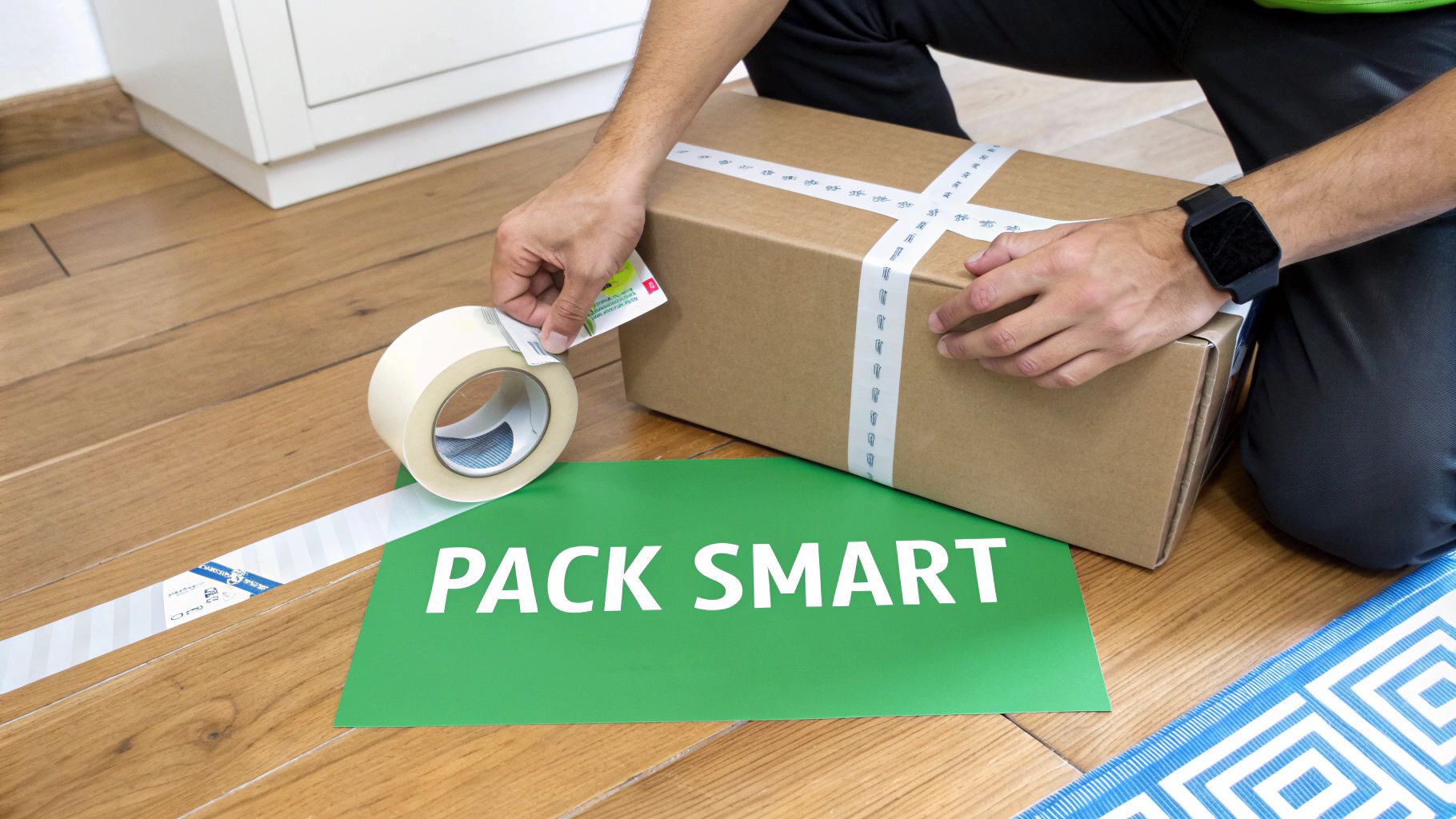
A detailed labelling system is your absolute best friend when it comes time to unpack. Just scribbling "Kitchen" on a box is a start, but you can do so much better. A truly effective label tells you three key things: which room it goes in, a quick summary of what's inside, and how urgently you need it.
For example, a box might be labelled:
KITCHEN
Kettle, Toaster, Coffee Mugs
PRIORITY 1 – OPEN FIRST
This simple method means you can find what you need right away, without tearing open ten different boxes just to make a cup of tea on your first morning. Using different coloured tape or stickers for each room also makes it incredibly easy to direct the packing & movers crew on where to put everything, saving you time and a sore back.
Creating a simple inventory list as you pack is another game-changer. Just assign each box a number and jot down its contents in a notepad or a spreadsheet. If you're ever worried a box has gone missing, you'll know exactly what was inside it.
Using Specialty Boxes and Knowing What to Leave Behind
While your standard moving boxes are workhorses, some items really do benefit from specialty containers. It’s worth considering investing in a few of these to make your life easier and give your belongings better protection.
| Box Type | What It's Used For | Why It's Worth It |
|---|---|---|
| Wardrobe Box | Hanging clothes, tall lamps, or plants. | Your clothes stay on their hangers, making it a breeze to transfer them directly into your new wardrobe, wrinkle-free. |
| Dish Pack (Cell Box) | Glassware, mugs, and fragile kitchen items. | These come with cardboard dividers that create individual cells, stopping items from clanking together and breaking. |
| Picture/Mirror Box | Framed art, mirrors, and large flat-screen TVs. | They are designed to telescope, fitting snugly around your items and providing superior protection, especially for the corners. |
Just as important is knowing which items professional movers legally cannot transport. Due to safety regulations, there are certain hazardous materials that removalists simply won't take, and some of them might surprise you. For a complete rundown, our guide on how to pack for movers offers plenty of detailed advice.
Commonly prohibited items include:
- Flammable liquids like petrol, paint, and cleaning solvents.
- Explosives such as fireworks or ammunition.
- Compressed gas cylinders, including BBQ gas bottles.
- Perishable food that can spoil in transit.
You’ll need to make other arrangements to move these items yourself or dispose of them safely before moving day. Taking the time to get these packing strategies right will pay off, transforming your move from a stressful ordeal into a well-organised transition.
Your Moving Week Action Plan
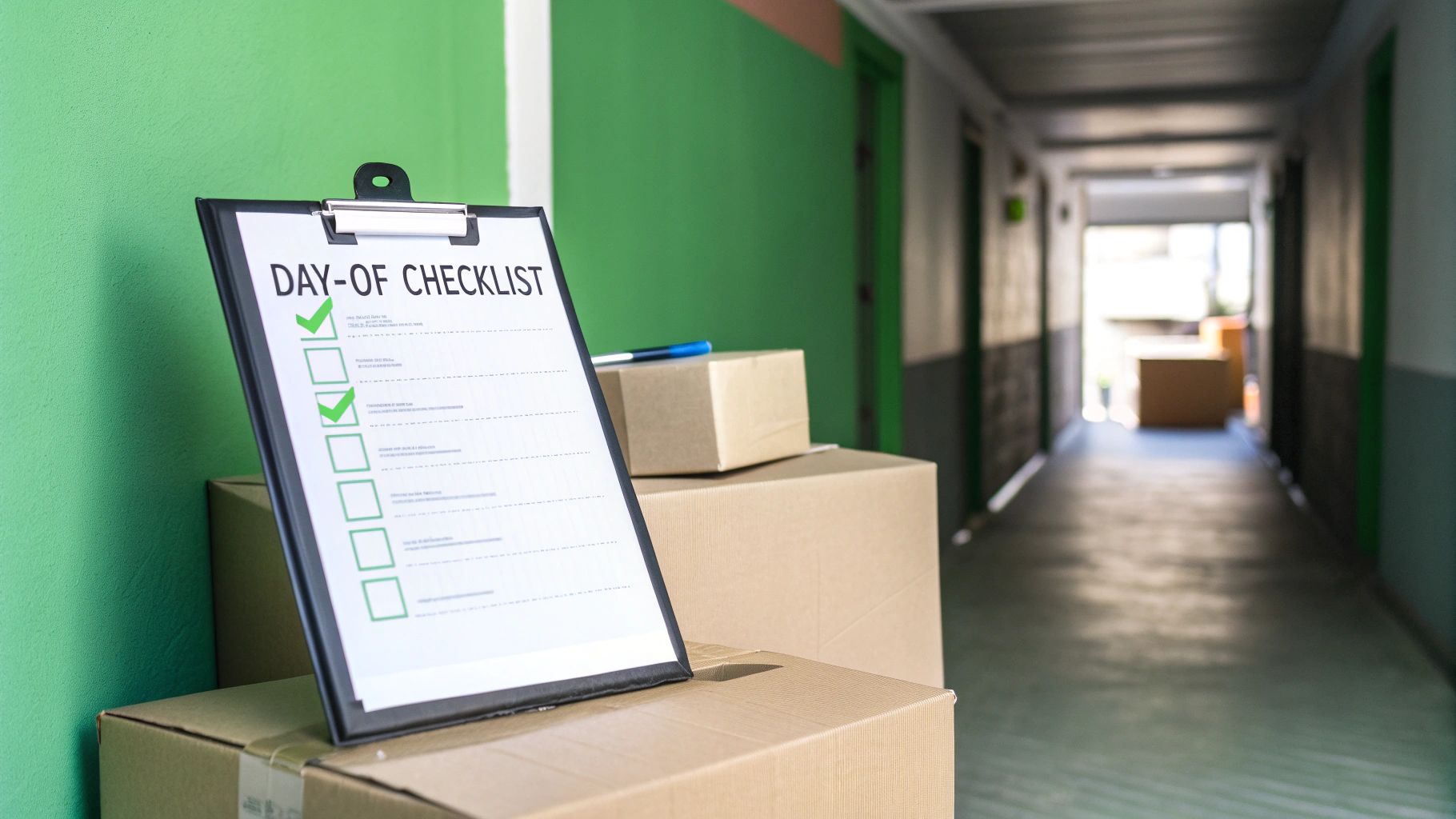
The final week before the removalist truck pulls up is where all your careful planning pays off. This is the home stretch. Getting through it without a last-minute panic comes down to tackling small, organised jobs each day. Think of this week less like a frantic scramble and more as the calm, step-by-step execution of your moving strategy.
This is when you shift from big-picture planning to daily, manageable tasks. The idea is to have a clear focus for each day, so nothing important slips through the cracks. It's all about confirming final details with your packing & movers team, prepping your home for their arrival, and getting your personal essentials sorted.
Seven Days Out: Confirm Everything
First things first: get on the phone with your moving company. Never assume everything is locked in just because you booked them weeks ago.
- Reconfirm the arrival time: Double-check the exact time they plan to show up and ask for a rough estimate of how long they think the job will take.
- Verify contact info: Make sure you have the driver’s mobile number and that they have yours. This is non-negotiable for any day-of communication.
- Go over the inventory: Quickly run through the list of items one last time. You want to be sure there are no surprises that could bump up your quote.
This one phone call can save you a world of stress. It’s also the perfect chance to ask any last-minute questions, like what their policy is on wait times if you're delayed getting the keys to your new place.
Now is also the time to lock in your utility transfers. Give your electricity, gas, and internet providers a call to schedule the disconnection at your old address and, more importantly, the connection at your new one. Pro tip: aim to have everything connected the day before you move in. Trust me, you don't want to spend your first night in a new home without power.
Preparing Your Essentials Box
As the last of the packing wraps up, your most critical task is to put together an "Open Me First" box. This isn't just another box—it's your survival kit for the first 24 hours in a house that’s wall-to-wall with sealed cardboard. This box travels with you in the car, not on the truck.
Your essentials box is your lifeline to comfort and normality amidst the chaos. Packing it well means you can make a cup of tea, charge your phone, and find a toothbrush without tearing your hair out.
So, what goes in it?
- Kettle, coffee, tea bags, and a couple of mugs
- Phone and laptop chargers
- Basic toiletries (toothbrush, soap, etc.) and any medications you need daily
- A change of clothes for everyone in the family
- Key documents like passports and your moving contract
- Snacks, bottled water, and pet food if you have a furry friend
- A small toolkit with a screwdriver and Allen keys is a lifesaver for assembling beds
The Final 48 Hours Before the Move
With just two days to go, your focus should shift to getting the physical space ready for the movers. Your goal is simple: make their job as quick and efficient as possible. This saves them time and you money. The big job here is to defrost your fridge and freezer—they need at least 24 hours to dry out completely to avoid any nasty mould growing in transit.
Next, clear the decks. Make sure there’s a completely unobstructed path from every room to the front door. This means rolling up rugs that could be a trip hazard and propping open doors. If you have floors you care about, like polished wood or light-coloured carpet, lay down some protective coverings like old sheets or flattened cardboard in the main walkways.
Finally, do one last, thorough sweep of the house. I mean it—check every single cupboard, drawer, and built-in wardrobe. It's amazing what gets overlooked in the final packing frenzy. This last check ensures you leave the property completely empty and ready for its new occupants, letting you close this chapter on a clean, organised note.
Settling In During the First 48 Hours
The truck doors have rolled shut, the last box is over the threshold, and an unfamiliar quiet settles over your new home. You’ve made it. But now you’re faced with a mountain of cardboard. The secret to turning this chaos into a comfortable home without completely losing your mind is having a solid plan for the first two days.
This initial 48-hour window isn’t about unpacking everything. Not even close. It’s about setting up a liveable base camp—creating strategic pockets of order so you can eat, sleep, and recharge. Fight the urge to just start tearing into random boxes. A little bit of strategy now will save your sanity and set a much calmer tone for the weeks of unpacking ahead.
Actually, your first job starts before the packing & movers have even driven away. This is your chance to play air traffic controller. With your brilliant labelling system, guide them to place the boxes in the right rooms. "KITCHEN" boxes in the kitchen, "MAIN BEDROOM" boxes in the main bedroom. Getting this right from the jump means you won’t be hauling heavy boxes from room to room later.
Day One: The Mission-Critical Tasks
Once the movers are gone, the real work begins. Your goal for day one isn't perfection; it's pure function. Think about the absolute essentials that make a house feel less like a storage unit and more like a home.
After a gruelling day of moving, a proper bed is non-negotiable. That’s your first priority.
- Assemble the Beds: Hunt down the boxes with bedding, pillows, and any tools you need for the bed frames. Seriously, make this the very first thing you do. Future-you will be incredibly grateful.
- Set Up a Basic Bathroom: Find that one crucial box with toiletries, towels, a shower curtain, and toilet paper. Having a working bathroom is a massive morale booster.
- Unpack Kitchen Essentials: Crack open your 'Open First' box. Get the kettle on, find the coffee maker, mugs, and a few snacks. You'll also want to dig out a single pot, a pan, and some basic utensils to throw together a simple first meal.
It’s also a great idea to give the kitchen and bathrooms a quick wipe-down. Cleaning the benchtops and toilet before you’re surrounded by unpacked items just makes the whole space feel fresher and more pleasant to be in.
Don't try to conquer an entire room on day one. The goal is simply to unpack what you need to get through the next 24 hours. This approach stops you from burning out and keeps the whole process feeling manageable.
A Strategy for Day Two
Hopefully, you got a decent night's sleep. Day two is all about expanding your liveable space. You’re still not aiming to unpack everything, but you are going to carve out more organised zones. Now you can tackle more boxes, but always with a clear purpose.
Start with the kitchen. They call it the heart of the home for a reason, and getting it mostly sorted has a huge psychological payoff. Concentrate on unpacking crockery, cutlery, and everyday appliances. You don’t need to alphabetise the spice rack just yet, but being able to cook a proper meal will make you feel infinitely more settled.
From there, move on to the main living area.
- Build the sofa: If your couch came in pieces, now’s the time to put it back together.
- Connect the tech: Get the TV and internet modem up and running. A bit of entertainment or background noise can be a welcome distraction from the sea of boxes.
- Clear a central space: Break down all the empty boxes from yesterday and stack them out of the way. Creating clear floor space instantly makes the room feel bigger and more usable.
By the time you clock off on day two, you should have a comfy bedroom, a working bathroom, a functional kitchen, and a living area where you can actually relax. The rest of the boxes can wait. This focused, two-day strategy, built on the prep work you did with your packing & movers, ensures your new house starts feeling like a home almost immediately, minus the overwhelming chaos.
Common Questions About Packing and Movers
No matter how well you plan, moving house always throws up a few questions. Getting straight, reliable answers can make all the difference, turning what could be a stressful day into a smooth one. We’ve pulled together some of the most common queries we hear about packing & movers to give you the clear information you need.
Sorting through booking times, insurance policies, and quotes can feel a bit overwhelming, but it doesn’t have to be. Getting a handle on these key areas means you’ll be fully prepared and can sidestep any nasty surprises on moving day. Let's get these common concerns sorted.
How Far in Advance Should I Book Movers?
Timing really is everything when it comes to a hassle-free move. To get the best rates and secure your preferred moving date, you should be looking to book your removalist 6 to 8 weeks in advance. This is particularly important for interstate relocations or if you’re planning to move during a peak time, like the summer holidays.
If you’re just moving locally during a quieter period, you might get away with booking 3 to 4 weeks out. But honestly, locking in your movers early is always the smartest play. It gives you peace of mind and far more choice, saving you from a frantic last-minute scramble.
What Is the Difference Between Quotes?
Getting your head around moving quotes is the key to keeping your budget in check. You’ll usually come across two main types, and knowing the difference can save you a lot of money and frustration.
- Binding Quote: This is a fixed price for your move. It's based on a detailed inventory of your belongings that you both agree on, and the price won’t change unless you add more items to the truck.
- Non-Binding Quote: This is just an estimate. The final bill is calculated based on the actual time it takes or the final weight of your shipment. This means the cost could easily go up.
To avoid any surprise charges, always insist on a detailed, binding quote in writing. It should clearly list every service and cost, so there’s complete transparency before you agree to anything.
Do I Need to Buy Extra Moving Insurance?
This is a question we get all the time, and it’s a big one for protecting your valuables. Most moving companies provide a very basic level of liability coverage. It’s the bare minimum and is often calculated by weight, which means it won't even come close to covering the replacement value of a damaged television or antique table.
First up, check your current home and contents insurance. Some policies will cover your goods while in transit, but many don't. If yours doesn't, then purchasing comprehensive moving insurance—either through your removalist or a third-party provider—is a wise investment. It offers proper protection and, more importantly, invaluable peace of mind. For more expert insights, check out these answers to the top 5 questions about moving house.
What Items Will Movers Not Transport?
For safety and legal reasons, there’s a standard list of items that professional packing & movers simply cannot take. You’ll need to make other arrangements for these things or dispose of them properly before the truck arrives.
Movers will always refuse to carry hazardous materials, which includes things like:
- Flammable liquids such as fuel, paint, and aerosol cans.
- Explosives, including fireworks and any ammunition.
- Corrosive chemicals and compressed gas cylinders (like your BBQ bottle).
They also won't transport perishable food, houseplants, or your pets. It’s also a good idea to personally move any irreplaceable valuables yourself. Keep things like important documents, jewellery, and essential medications with you to ensure they stay safe and sound.
Ready to make your Perth move simple and stress-free? The team at Emmanuel Transport has the local know-how and professional expertise to handle everything with care. Get your free, transparent quote today and let us take the weight off your shoulders.