

When you’re moving, things rarely line up perfectly. A combined removalist and storage service takes the pressure off by blending your move and secure storage into one smooth operation. It's the perfect solution for bridging the gap between settlement dates, decluttering your home to get it ready for sale, or even managing a complex office relocation.
Matching Your Move With the Right Services
Trying to find the right mix of moving and storage services can feel like a huge task, but it really just boils down to understanding what you actually need. Life's messy, and moves are rarely a simple trip from Point A to Point B. You might have delays, overlaps, or just a need for some breathing room. That’s precisely when a combined service becomes a lifesaver.
Think about a classic scenario: you're downsizing from the family home into a smaller apartment. You've got furniture and memories you want to keep, but there’s just no space for it all in the new place. Instead of juggling multiple companies, a single professional team can pack up those extra items, move your everyday essentials to the new apartment, and then whisk the rest away to a secure storage unit. It's all handled in one coordinated, stress-free job.

Understanding Your Storage Options
Choosing the right type of storage is just as critical as picking a good removalist. Your main options usually fall into a few different buckets, and each one is built for a different situation.
- Self-Storage Units: This is what most people picture when they think of storage. You get your own private, locked space that you can pop into whenever you like. They're fantastic for long-term storage or if you know you'll need to grab things every now and then.
- Container Storage: A massive shipping container gets dropped off at your place. You can either load it yourself or have the movers do the heavy lifting. Once it's packed, it’s taken to a secure depot. This is a great short-term fix, especially if you're renovating or stuck with an uncertain move-in date.
- Full-Service Storage: This is the ultimate "set and forget" option. The removal company handles everything—packing, transport, and storing your belongings in their own warehouse. Access can be a bit more limited, but if convenience is your top priority, it doesn't get any easier.
Comparing Your Storage Options
Here's a quick look at how these common storage choices stack up, helping you find the perfect match for your move.
| Service Type | Access Level | Typical Cost | Best For |
|---|---|---|---|
| Self-Storage Unit | High (often 24/7) | Moderate | Long-term storage; frequent access needed. |
| Container Storage | Low (by appointment) | Moderate to High | Short-term needs like renovations or moving gaps. |
| Full-Service Storage | Very Low (appointment only) | High | Maximum convenience; when you don't need access. |
Ultimately, the best choice depends on how often you'll need to get to your things and how hands-on you want to be.
The Australian removalists industry, which includes these essential storage services, grew to a market size of $2.5 billion in 2025. That number really shows how vital these services are for both families and businesses, even when things like the housing market slow down.
The setup in the image above gives you a great idea of the direct access and individual security that make traditional self-storage so popular. If you're looking for specifics on what's available, you can learn more by exploring our detailed guide to storage units in Perth.
How to Vet and Select Your Moving Company
Choosing the right removalist isn't just about finding the cheapest quote. It’s about handing over all your worldly possessions to a team and trusting them to be professional, reliable, and honest. A bit of due diligence now will save you a world of pain later—think hidden fees, broken heirlooms, and no-show movers.
First things first, look past the slick website and get into the nitty-gritty of their credentials. Any legitimate removalist will be fully insured and licensed. This is non-negotiable; it’s your safety net if things go pear-shaped.
Always ask for proof of both Public Liability and Transit Insurance. If a company gets cagey about showing you these documents, that’s a massive red flag. This insurance is what covers your stuff while it's on the truck and protects against accidental damage to your property during the move.
What Are Real Customers Saying?
Genuine customer feedback is your crystal ball into how a company actually operates. Don't just glance at the five-star rating plastered on their homepage. You need to dig deeper on independent platforms like Google Reviews or ProductReview.
Look for patterns. Are customers consistently praising the crew's professionalism and care? Or are there recurring nightmares about last-minute price hikes and terrible communication? A few bad reviews happen, but a clear trend of the same problems is a sign to run the other way. Also, pay attention to how the company replies to negative comments—a thoughtful, constructive response shows they actually care.
A modern, transparent booking system is another great sign. It shows they've invested in making the process clear and straightforward for you.
A detailed online form like this lets you spell out exactly what you need moving. This means the quote you get is far more likely to be accurate, minimising the chance of nasty surprises on moving day.
Do They Actually Offer What You Need?
Not all removalists are built the same. Some are experts at navigating tight apartment stairwells, while others have the gear for massive office relocations. You need to make sure their services actually match what you need done.
For instance, do you need them to:
- Handle fragile antiques? Ask them straight up about their experience and what kind of specialised wrapping they use.
- Dismantle and reassemble furniture? Get it in writing that this is part of the service and included in the cost.
- Provide short-term storage? Make sure you understand the terms, costs, and how you can access your things.
Knowing the right questions to ask is half the battle. To help you out, we’ve put together a handy checklist of 11 questions to ask when hiring a removalist.
"Finding the right team is crucial. A punctual, friendly crew that communicates clearly can transform a stressful day into a seamless transition. It's about feeling confident that your belongings are in good hands."
Choosing a quality mover is more important than ever. The recent housing crisis has slowed down the number of people moving, with Google search interest for removalists dropping by 22% since 2019—hitting a two-decade low. In this tougher market, the best companies are the ones focused on delivering exceptional service to stand out from the pack. You can read more about how the current market is impacting moving demand on Broker News.
Ultimately, picking your moving and storage partner boils down to trust. A company that provides a clear, itemised quote, keeps you in the loop, and has a solid track record is always worth the investment.
Nailing the Booking and Scheduling
A perfectly planned schedule is the backbone of any smooth move. When you're juggling a removalist and storage service, timing really is everything. Securing your slot well in advance is non-negotiable, especially if you’re eyeing a weekend or after-hours move—those spots are always the first to go.
Think of it like booking a popular holiday rental. The best ones get snapped up fast. My advice? Aim to lock in your moving company at least four to six weeks before your move date. This buffer gives you breathing room to get accurate quotes, iron out the details, and sidestep the panic of a last-minute scramble.
Locking in Your Service
Once you've settled on a removalist, the actual booking part should be pretty straightforward. It’s all about confirming the key details to make sure everyone is on the same page for the big day.
Here’s a quick checklist to run through when you book:
- A detailed inventory list: Be crystal clear about what’s going on the truck and what’s heading for storage. This keeps the quote accurate and ensures the team shows up with the right-sized vehicle.
- Confirmation of dates and times: Double, then triple-check the pickup date from your old place, the move-in date for the new one, and the exact start date for your storage unit.
- Special requirements: Make sure they’ve noted any extra services. This could be anything from dismantling that tricky IKEA wardrobe to handling fragile antiques or navigating difficult access points at either property.
Getting this stuff confirmed in writing prevents any nasty surprises later on.
The timeline below breaks down the whole process, from doing your initial homework to making that final booking.
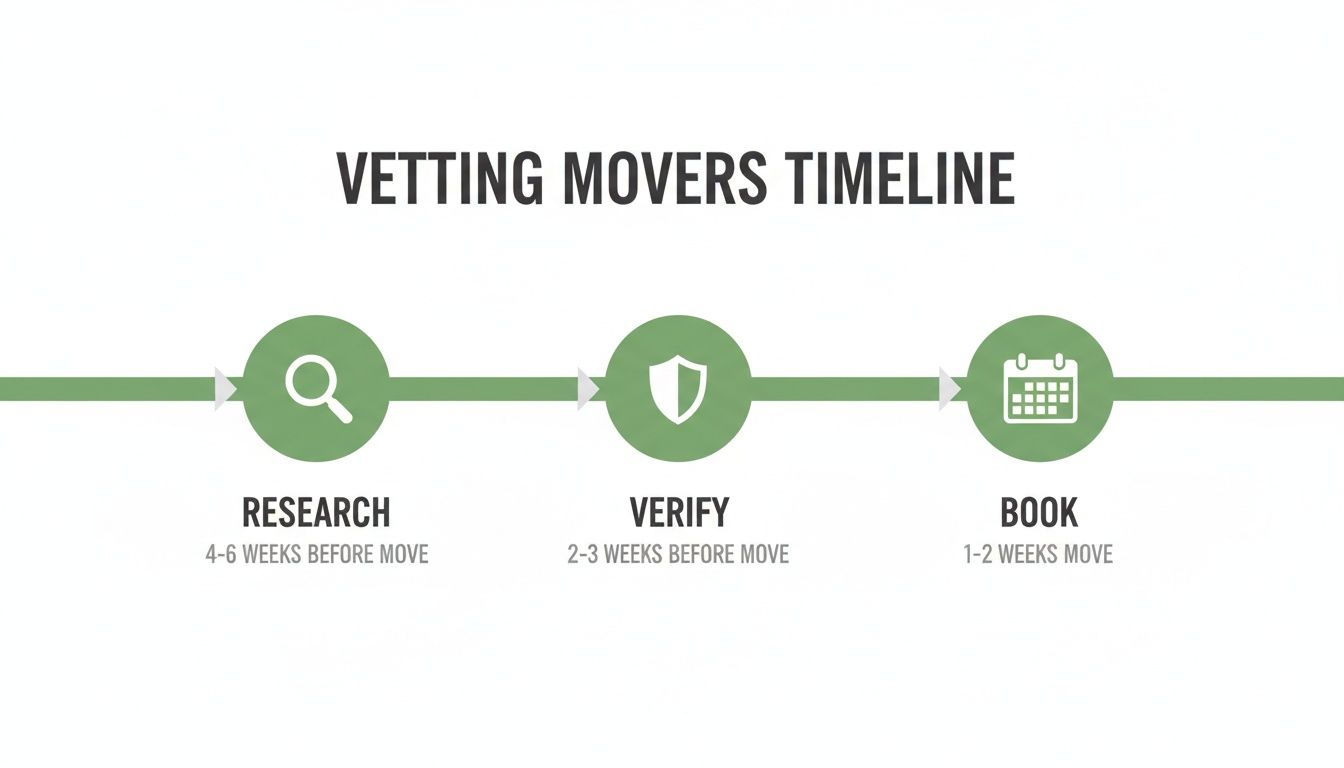
As you can see, a structured approach is your best bet. It helps you research properly, verify their credentials, and book your service with complete confidence.
Aligning Your Moving and Storage Dates
Want a clever way to save a bit of cash? Line up your storage and moving dates perfectly. You can avoid paying for overlap by having your items moved directly into storage on the same day you vacate your old place. Simple.
For instance, if you have a one-week gap between settlement dates, book the removalist to clear out your old home on settlement day. They can then take everything directly to a pre-booked storage unit. This keeps your belongings safe and means you won't have to clutter up a friend's garage.
A well-organised timeline is more than just a plan; it’s your best defence against unexpected costs and last-minute chaos. Keeping your removalist in the loop about potential date shifts is key to staying flexible.
This kind of careful planning is becoming more common. In the first quarter of 2025, the Regional Movers Index saw a 10.5% surge in people moving from capital cities to regional areas, driving up demand for these exact services. You can dig into the full report on these Australian migration patterns from the Regional Australia Institute.
Of course, even with the best plan, life can throw a curveball. Settlement dates get pushed back, or a last-minute repair pops up. Your best contingency plan is to have a backup date in mind and maintain an open line of communication with your moving company. A good, professional crew will understand and work with you to find a solution.
Packing and Preparing Your Belongings Like a Pro
Let’s be honest, how you pack your stuff directly impacts how it arrives at the other end. Think of it as the best insurance policy for your valuables, whether they're going straight to your new home or into a removalist and storage facility for a few months. A bit of strategy here can turn the usual moving chaos into a surprisingly organised, stress-free process.
Proper preparation starts long before you tape up that first box. First things first: get the right materials. I've seen it time and time again—skimping on supplies is a false economy that almost always ends with broken heirlooms and a whole lot of frustration.

Gathering Your Essential Packing Toolkit
To really protect your possessions, you’ll need more than just a few old boxes from the supermarket. Investing in a quality kit makes all the difference.
- Sturdy Boxes: Get your hands on new or barely-used boxes in a few different sizes. A common mistake is cramming everything into huge boxes; they become impossible to lift and are far more likely to split open.
- Quality Packing Tape: Don't even think about the cheap stuff that peels off if you look at it sideways. A strong adhesive tape is non-negotiable for keeping your boxes secure.
- Protective Wrap: Bubble wrap is your best mate for fragile things like glassware and electronics. For your big-ticket furniture, moving blankets or pads are essential to cushion against scrapes and dents.
- Permanent Markers: Trust me, clear, bold labelling will feel like a gift from your past self when you start unpacking.
A successful move is all about the details. Taking a comprehensive, planned approach, similar to working through a thorough Moving Out of Home Checklist, can save you from countless headaches.
Smart Labelling and Inventory Strategies
Good labelling is what separates a smooth unpack from a nightmare. When you're staring at a mountain of identical brown boxes, specific labels save hours of guesswork. Don't just write "Kitchen." Get detailed: "Kitchen – Pots & Pans" or "Kitchen – Everyday Glasses."
Here's a simple trick I swear by: use a colour-coded system. Grab a few different coloured markers or sticker dots and assign one colour to each room. This simple visual cue helps you and your movers instantly see where every single box goes, which makes unloading a breeze. This is even more crucial when some of your belongings are heading to storage and others to the new house.
Pro Tip: Grab a roll of bright tape or a unique marker and clearly label a few boxes with "OPEN FIRST." Pack these with the absolute essentials you'll need right away—the kettle, some mugs, toiletries, a change of clothes, and a basic toolkit.
Preparing for Your Storage Unit
If some of your gear is going into a storage unit, you need to pack with a slightly different mindset. It's all about access. You won't be unpacking it all at once, so organising the unit logically is the name of the game.
Try to place your heavier, bulkier items like furniture towards the back. A good strategy is to leave a narrow walkway down the middle of the unit. This lets you get to boxes at the back without having to pull everything out. And it goes without saying: keep anything you might need to grab—like seasonal clothes or important files—right near the front. Always make sure the box labels are facing outwards so you can see what's what at a glance.
Finally, have a chat with your removalist about the big furniture. You need to confirm whether their service includes disassembly and reassembly. Wrestling a king-sized bed frame through a narrow hallway is a classic moving-day mistake that can damage both your furniture and the walls. The pros have the right tools and know-how to handle this stuff efficiently, protecting your valuables every step of the way.
Smart Ways to Save on Moving and Storage Costs
A successful move doesn’t have to empty your wallet. With a bit of savvy planning, you can bring down the costs of your removalist and storage service without sacrificing quality or your sanity. It all comes down to knowing where the savings are hiding and how to ask for them.
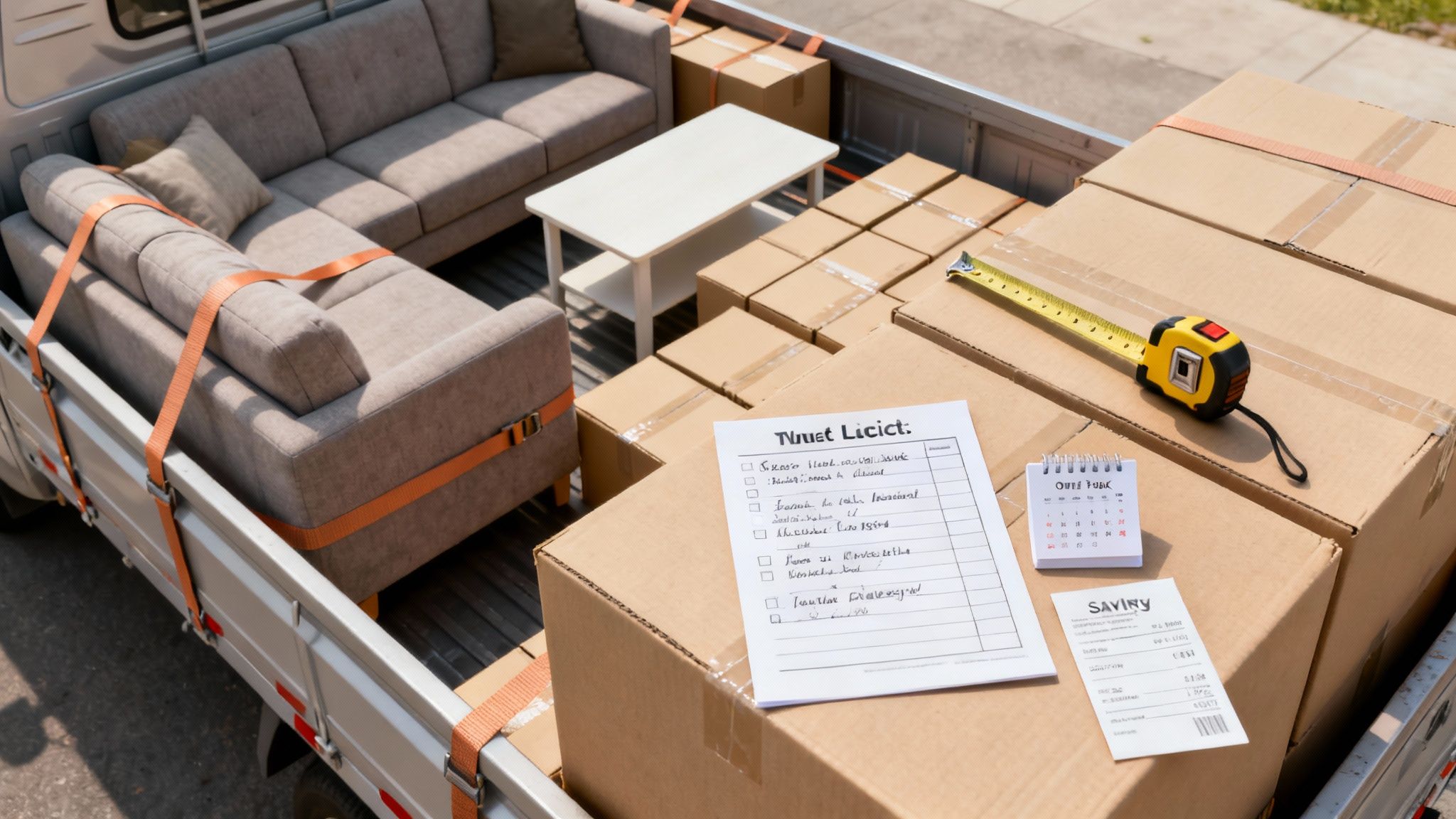
One of the simplest ways to get a better price is to bundle your moving and storage services with the same company. This often unlocks package deals you just won’t find if you book them separately. Think of it like combining your home and car insurance—providers reward the loyalty and simplicity of a single account with better pricing.
Timing Your Move for Maximum Savings
The date you choose to move has a massive impact on the final bill. Weekends, public holidays, and the mad rush at the end of the month are peak times, and high demand always pushes prices up. If your schedule has any wiggle room, aim for a mid-week, mid-month move.
Here's a quick breakdown of how timing plays out:
- Peak Days (Friday-Sunday): These are the most sought-after slots, so they come with premium rates. Convenient, but you’ll pay for it.
- Off-Peak Days (Tuesday-Thursday): Demand is lower, which usually means more competitive pricing. Removalists are often happier to offer a deal to fill their schedules.
- Seasonal Shifts: Summer is the classic moving season. If you can hold off until autumn or winter, you could see some pretty significant savings.
Honestly, even shifting your move by a couple of days can sometimes shave 10-15% off the total cost. It never hurts to ask your removalist if they have off-peak rates.
Unlocking Discounts and Avoiding Hidden Fees
You can tell a lot about a removal company by how they handle their pricing. A trustworthy mover will give you a detailed, itemised quote with no room for nasty surprises on the day. Your part in this is providing an accurate inventory of everything you need moved.
A clear inventory list helps the removalist assign the right-sized truck and the right number of people for the job. Guessing too low can lead to an overloaded truck, meaning extra trips and unplanned fees. Guessing too high means you're paying for empty space you didn't need. To get a better handle on how this all adds up, have a look at our guide on understanding Perth removalists' hourly rates.
Don't be shy about negotiating, especially if you need long-term storage. If you know you'll need a unit for six months or more, ask for a long-term discount. Many facilities are happy to lower the monthly rate to lock in a reliable client.
Keep an eye out for other discounts that might not be advertised upfront, too. Some companies offer deals for students, seniors, or even incentives for booking well in advance. A simple question—"Are there any promotions or discounts I might be eligible for?"—can lead to some welcome savings.
By combining these strategies—bundling services, picking an off-peak day, providing an accurate inventory, and asking for discounts—many of our clients have managed to reduce their moving and storage expenses by up to 20%. It just goes to show that a little planning really does go a long way.
Your Top Questions About Removalists and Storage Answered
When you’re wading through the logistics of moving and storage, it’s natural to have a few questions pop up. In fact, after years in this business, I’ve found that most people worry about the same things. Let’s clear the air on some of the most common queries so you can plan your move with confidence.
"Am I Covered if Something Goes Wrong?"
This is easily the biggest concern, and for good reason. You’re trusting a company with everything you own. A professional removalist will always have Public Liability and Transit Insurance as a standard part of their service. But don't just tick the box and move on.
You need to ask what that actually covers. Standard insurance might not be enough for your expensive electronics or that antique dresser you inherited. For peace of mind with high-value items, it's often smart to arrange extra cover yourself.
"How Do I Avoid Hidden Costs?"
Nobody likes a surprise bill. The key to avoiding this is demanding a detailed, itemised quote. Vague estimates are a red flag. A transparent quote from a reputable company will break everything down for you.
Watch out for these common extra charges that can catch people off guard:
- Access issues: Are there multiple flights of stairs? That’s often a separate fee.
- Long-carry distance: If the truck has to park a long way from your door, you might be charged more for the extra hauling time.
- Premium time slots: Moving on a weekend or after hours will almost always cost you more.
- Packing supplies: Don't assume boxes and tape are included unless it's explicitly stated in your quote.
Get any potential extra charges in writing before you sign anything. It keeps everyone honest and helps you budget properly.
A clear, detailed quote is more than just a price—it's a sign of a professional and trustworthy moving partner. It demonstrates their commitment to transparency and helps build confidence from the very start.
"What Happens if My Plans Change?"
Life happens. Settlement dates get pushed back, or you might realise you need storage for a few extra months. It’s a common scenario, so you want to work with a company that gets it.
Before you commit, ask about their policy on flexibility. A good removalist and storage provider will have clear, fair terms for extending your storage period or shifting your moving date without a massive penalty. It's a simple question that can save you a lot of stress down the road.
For a seamless move with transparent pricing and flexible options tailored to your needs, contact Emmanuel Transport. Our experienced Perth team is ready to help you plan your next chapter. Get your free quote at https://emmanueltransport.net.au.