
Most people picture a moving company as a truck, a few blokes, and a stack of cardboard boxes. That picture misses about 80% of what actually happens. The role of moving companies extends well beyond shifting furniture from one address to another. Professional movers manage logistics, protect your belongings, absorb the physical strain of the day, and, for businesses, keep downtime to a minimum. Whether you are moving a family home in Perth or relocating an entire office, understanding what movers actually do helps you get far more value from every dollar you spend.
| Point | Details |
|---|---|
| More than transport | Moving companies handle packing, protection, logistics, and unpacking, not just driving. |
| Business moves need specialists | Commercial relocations require inventory management, equipment protection, and scheduling to cut downtime. |
| Urgent moves are manageable | Professional movers reserve capacity and use fast inventory methods to handle short-notice jobs. |
| Valuation coverage matters | Released value and full value protection differ greatly; know which applies before you sign anything. |
| Choosing well saves money | Transparent pricing, proper licensing, and verified reviews separate reliable movers from costly mistakes. |
When you book a full-service removalist for a home move, the work starts long before the truck arrives. A good moving crew will assess what you have, source appropriate packing materials, and create a plan for loading that accounts for fragile items, heavy furniture, and access points at both ends. That level of preparation is what separates a smooth move from a stressful one.
Here is what professional movers typically handle for residential relocations:
The physical and logistical load this takes off you is significant. Professional moves reduce injury risk and protect your belongings from the kind of damage that comes from rushed, improvised packing. When you factor in equipment hire, vehicle costs, and the real possibility of a back injury, a full-service move often costs less overall than the DIY approach.
Pro Tip: Ask your removalist whether they use double-walled boxes for kitchens and fragile items specifically. Single-walled boxes compress under weight, and the bottom of a stack of ten boxes is not somewhere you want your good crockery.
Moving a business is not a bigger version of moving a house. It is a different problem altogether. The role of moving companies in commercial relocations centres on three things: protecting specialised equipment, managing a complex inventory, and keeping your operations running as close to normally as possible throughout the process.
Professional commercial movers use structured inventory systems to catalogue every item before it leaves your premises. Nothing is loaded without being logged. That discipline matters enormously when you are moving server racks, filing systems, or manufacturing equipment, where a single missing component can hold up an entire department.
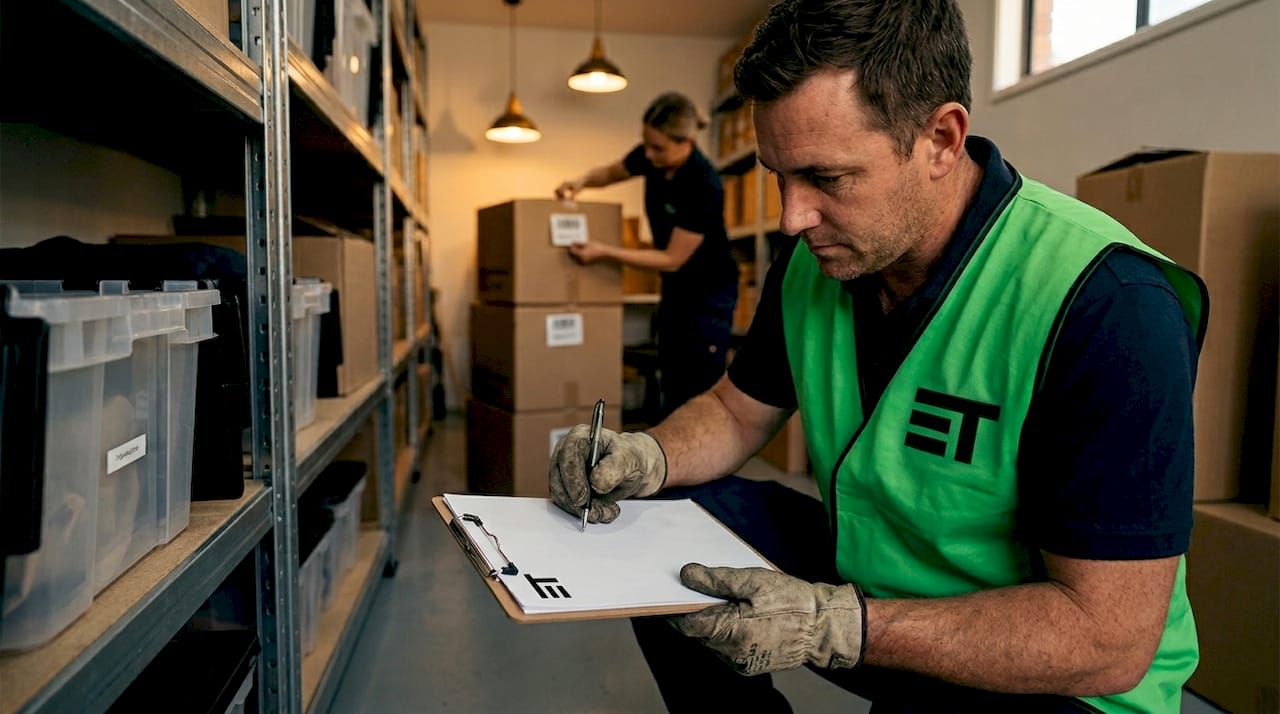
Strategic loading patterns are a real thing in commercial moving. Heavier items sit low and central. Sensitive equipment travels in padded cases or crates. Documents travel separately in clearly labelled sealed boxes. These are not improvised decisions made on the morning of the move. They are planned well ahead of time.
The following table shows how moving company roles differ between a home and a business relocation.
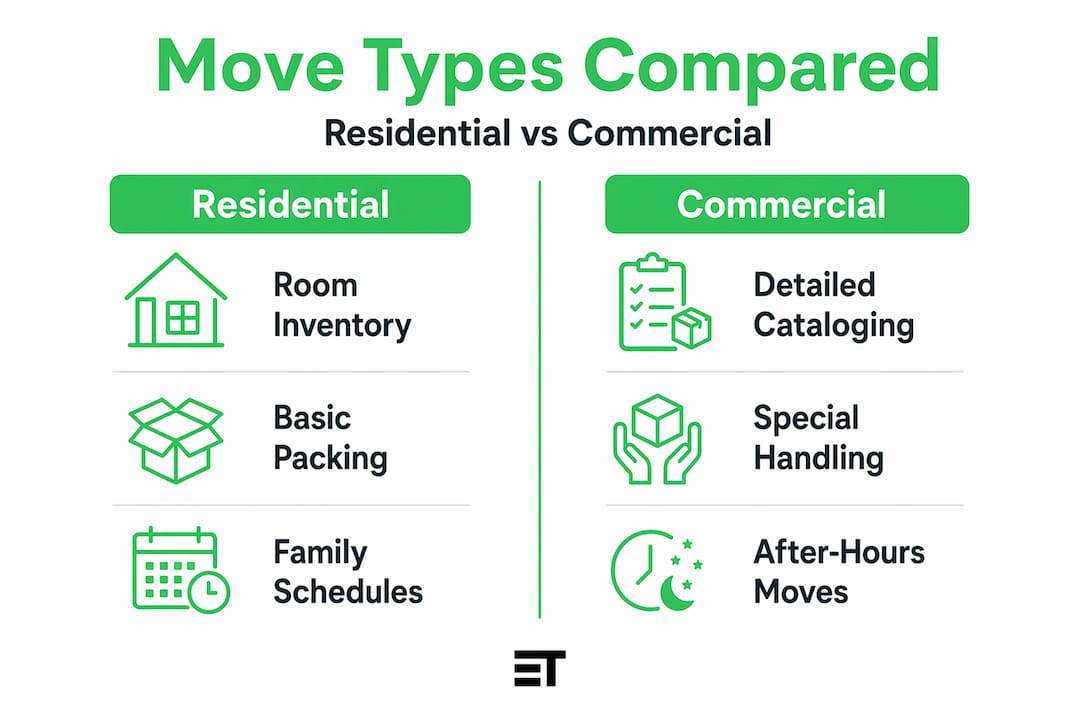
| Service area | Residential moves | Commercial moves |
|---|---|---|
| Inventory management | Basic room-by-room checklist | Full catalogued asset register |
| Equipment used | Dollies, blankets, straps | Dollies, crates, hydraulic gates, custom pallets |
| Scheduling | Weekend or flexible timing | Scheduled around business hours or after hours |
| Crew size | 2 to 4 removalists | 4 to 10+ depending on scale |
| Sensitive items | Fragile household goods | Servers, medical equipment, documents |
| Downtime concern | Minimal | Critical priority |
Scheduling is where professional commercial movers earn their fee. Moving after hours, across multiple days, or in stages to keep a section of your business operational are all strategies that experienced crews plan for and execute. The importance of movers in a commercial context is not just physical labour. It is operational continuity.
Life does not always give you eight weeks’ notice before a move. Lease endings, settlement delays, sudden job relocations, and family emergencies all create situations where you need to move fast. Understanding how movers assist in these scenarios is worth knowing before the pressure hits.
Here is how a professional moving company typically handles a short-notice job:
If you find yourself needing to move on short notice in Perth, it helps to have a guide to urgent house removals bookmarked before you ever need it. Having the right information at hand reduces the number of calls you make and speeds up the booking process considerably.
Pro Tip: When calling a removalist for a same-day or next-day job, have your inventory list ready before you pick up the phone. Even a rough count of rooms, large furniture pieces, and boxes cuts the assessment time in half and gets your quote faster.
This is the section most people skip when they are booking a move, and then wish they had read when something goes wrong. The moving services benefits conversation cannot be complete without talking about liability, because not all protection is created equal.
Here is what you need to understand:
Interstate movers must disclose valuation options in writing as part of the estimate and bill of lading. For local moves within Western Australia, the same principle of asking upfront applies. Never assume coverage exists without having it confirmed in writing.
Pro Tip: Before your move, photograph every piece of furniture and any item of value with the date visible. If a claim does arise, dated photos are the single most persuasive form of evidence you can have.
Knowing the moving company roles available to you is only half the equation. The other half is finding an operator who performs those roles properly. The moving market has reliable operators and unreliable ones, and the differences between them are not always obvious from a website.
Consider these factors when assessing moving companies:
The why hire professional movers conversation comes down to risk. Moving yourself saves money on paper. In practice, the risk of injury, damaged goods, and the sheer time cost of doing it without experience and equipment makes professional movers the smarter financial decision for most people.
I have spent years working in and around the moving industry in Perth, and the pattern I see most consistently is this: people underestimate what a moving company actually does until they have done it badly once. That one DIY move, or the one time they booked the cheapest operator on the list, teaches them more about the importance of movers than any article could.
The clients who get the most from a professional move are the ones who treat their removalists as partners rather than hired hands. They communicate clearly about access issues and fragile items. They have their inventory ready. They ask questions before moving day rather than on it.
What I have also noticed is that commercial clients, in particular, tend to underplan their moves significantly. Business owners focus so heavily on the destination setup that the move itself gets managed last minute. That is when things go wrong. Equipment gets damaged, documents go missing, and the disruption to staff and clients runs far longer than it should.
The moving industry is also changing. More operators are offering technology-assisted quoting, GPS-tracked vehicles, and real-time updates on move progress. These are not gimmicks. They are genuinely useful tools that reduce the anxiety that comes with handing your belongings over to someone else.
My honest advice? Do not shop purely on price. Shop on clarity. The removalist who asks the most thorough questions before your move is almost always the one who delivers the fewest surprises on the day.
— Emmanuel
Emmanuel Transport has been helping Perth residents and businesses relocate with confidence for years. Whether you are planning a full home move, an office relocation, or need a team on the ground fast for an urgent job, the service is built around reliability, transparent pricing, and crews who treat your belongings with genuine care.

From apartment moving tips for renters navigating tight stairwells to a detailed last-minute removals guide for those who need to move now, Emmanuel Transport covers the full spectrum of relocation needs across Perth and surrounding suburbs. All vehicles are fully insured. Every quote is transparent and obligation-free. If you are planning a move and want to know exactly what to expect from a professional removalist team, contact Emmanuel Transport today for a free quote.
Moving companies handle packing, furniture disassembly, safe loading, transit, and unpacking at the destination. Their role also includes logistics planning, asset protection, and scheduling coordination, particularly for commercial moves.
No. Valuation coverage is the mover’s contractual liability for your goods, while insurance is a separate product purchased through an insurer. The two operate independently and offer different levels of protection.
Yes. Many professional operators reserve capacity for urgent relocations and can allocate crews and trucks after a fast phone or photo-based inventory assessment. Surcharges may apply for very short notice bookings.
Check for consistent positive reviews across multiple platforms, ask for written proof of licensing and insurance, and request a detailed itemised quote. Evasiveness on any of these points is a clear warning sign.
Residential moves focus on household goods with flexible scheduling, while commercial moves require full asset cataloguing, specialised equipment, and scheduling designed to minimise business downtime. The crew size, planning depth, and equipment used all scale up considerably for commercial relocations.