
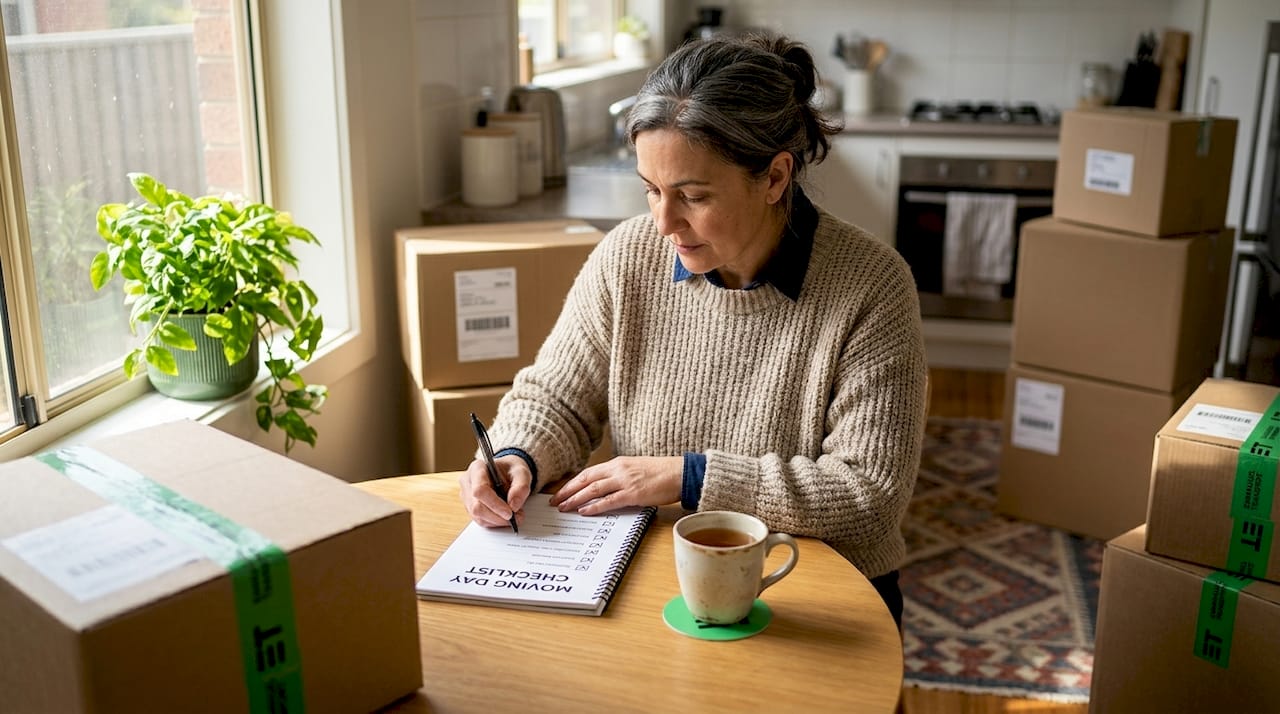
Moving house is one of the most logistically complex things a household will ever do, and without a clear plan, it can quickly spiral. Knowing how to prepare for removals before the truck arrives is the single most effective way to reduce costs, avoid damage, and protect your sanity. This guide walks you through every stage, from the first planning decisions made eight weeks out to the final walkthrough of your new home. Whether you are renting, buying, or relocating your family across Perth, these steps will keep you ahead of the process every time.
Table of Contents
- Key takeaways
- How to prepare for removals: build your timeline first
- Decluttering and sorting before you pack
- Packing strategies for efficient removals
- Preparing your home and coordinating on moving day
- Verifying delivery and settling into your new home
- My honest take on preparing for a move
- Moving with Emmanuel Transport: what to expect
- FAQ
Key takeaways
| Point | Details |
|---|---|
| Start eight weeks early | Begin packing and planning well in advance, tackling one or two rooms each weekend. |
| Declutter before you pack | Reducing your load before removals saves time, money, and unpacking effort at the new home. |
| Label every box clearly | Mark contents and destination room on each box so removalists know exactly where to place things. |
| Prepare a first-night box | Pack daily essentials separately so you are not hunting through boxes on your first night. |
| Verify delivery on arrival | Use an inventory sheet to check all items arrive undamaged and report issues immediately. |
How to prepare for removals: build your timeline first
The single biggest mistake families make is underestimating how long preparation actually takes. Life keeps moving while you are trying to organise a move, which is why starting eight weeks out and pacing the work across weekends gives you a realistic buffer without the frantic scramble at the end.
Here is a practical eight-week moving preparation guide you can work backwards from your confirmed moving date:
- Eight weeks out. Lock in your moving date. Book your removalists as soon as the date is confirmed, because quality companies fill their calendars quickly, particularly on weekends. Begin sourcing packing materials.
- Six to seven weeks out. Start decluttering and sorting room by room. Tackle storage areas, garages, and spare rooms first. These tend to be the most time-consuming.
- Four to five weeks out. Begin packing non-essential items such as books, seasonal clothing, artwork, and decorative items. Label every box as you go.
- Three weeks out. Confirm your booking with the removalist. Notify your landlord or property manager of your vacating date. Notice periods vary and can range from 30 to 90 days depending on your lease, so do not leave this step late.
- Two weeks out. Arrange mail redirection, notify your bank, Medicare, and key subscriptions of your new address. Pack all but the most essential kitchen and bathroom items.
- One week out. Confirm arrival time with your removalist. Prepare your first-night box. Begin disassembling flat-pack furniture.
- Moving day. Clear pathways, secure pets, and walk through the home with your removalist team before and after loading.
Personalised moving checklists that you can edit by topic or timeline are worth using alongside this plan. Apps such as Sortly or even a shared Google Sheet work well for families who want to track tasks across multiple people.
Pro Tip: Set a “packing session” in your calendar each weekend from week eight. Treat it like an appointment you cannot reschedule. Two hours on Saturday morning consistently beats a panic-packed Sunday night the week before the move.
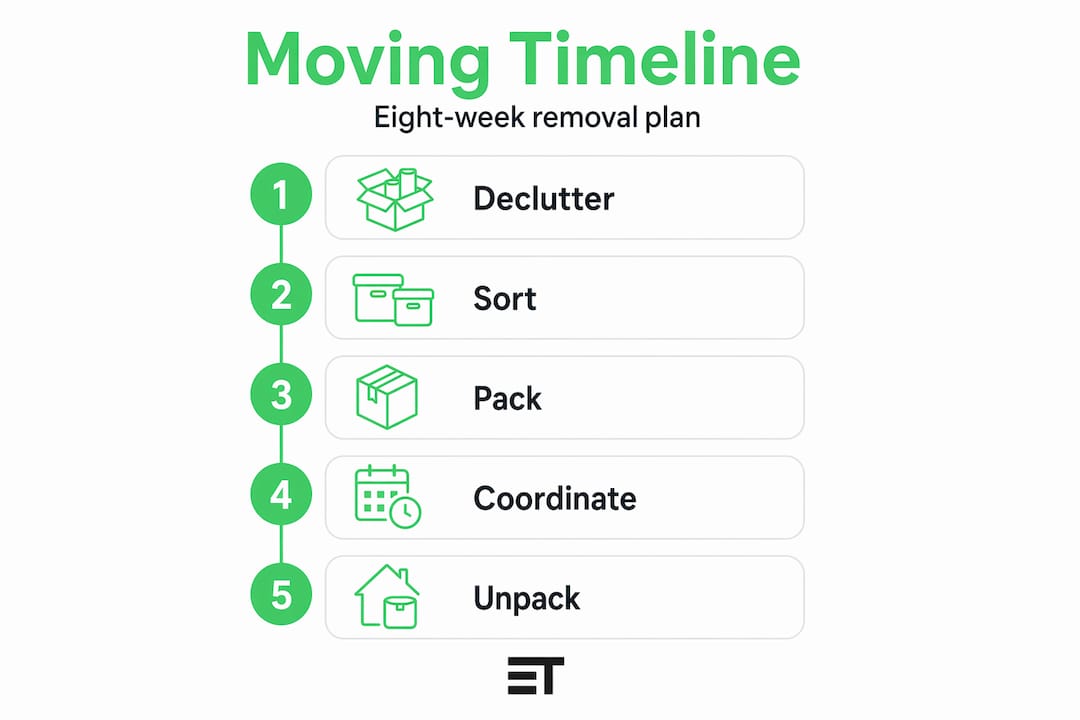
If you want a ready-to-use framework, the Emmanuel Transport moving checklist for Perth residents covers the timing and key steps in a format you can work through at your own pace.
Decluttering and sorting before you pack
Packing everything you own and moving it to a new location is expensive. Every extra box costs you in removal time, truck space, and the effort of unpacking items you no longer need or want. Decluttering before a move reduces volume, saves money, and makes settling into the new home much easier.
The most effective approach is a three-pile sort system applied room by room:
- Keep. Items you actively use, love, or genuinely need in the new home.
- Donate or sell. Items in good condition that someone else could use. Good candidates include kitchen appliances you rarely use, clothing your children have outgrown, and furniture that will not suit the new space.
- Recycle or dispose. Broken, expired, or unusable items. This includes old paint tins, outdated electronics, and worn-out manchester.
When you are unsure whether to keep something, ask yourself one practical question: would you bother unpacking it and finding a place for it in the new home? If the answer is no, it probably does not need to come with you.
For items you want to sell, Facebook Marketplace and Gumtree are the most effective platforms in Perth for shifting furniture and household goods quickly. For donations, Vinnies, Salvos, and local community groups on Facebook regularly accept quality items. Arrange collection or drop-off early so you are not storing donation boxes for weeks.
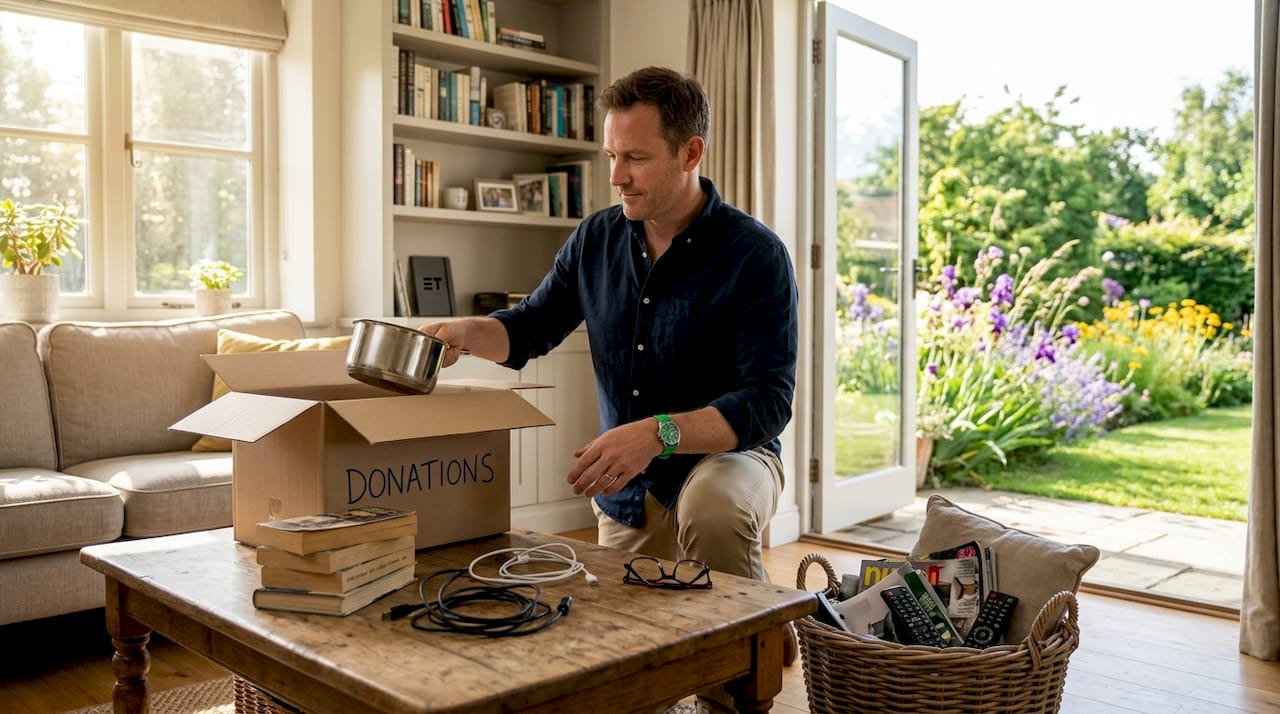
There is also a mental clarity benefit to decluttering early that most people underestimate. When you are surrounded by sorted, labelled boxes instead of chaotic rooms full of accumulated belongings, the move feels more manageable. You are making hundreds of small decisions if you leave sorting until packing day. Make those decisions weeks earlier when you have the time and headspace.
Pro Tip: Do not declutter and pack at the same time. Run a full declutter pass through a room first, then return to pack what remains. Mixing the two slows both processes down and leads to rushed decisions about what to keep.
For a detailed, Perth-specific approach to this step, the guide on decluttering before moving house covers practical methods suited to different household types and sizes.
Packing strategies for efficient removals
Good packing protects your belongings, speeds up the loading process, and makes unpacking at the other end far less painful. These are the packing tips for removals that consistently make the biggest difference.
- Choose the right boxes. Use sturdy double-walled boxes for heavy items like books and crockery. Linen and clothing can go into larger, lighter boxes. Avoid oversized boxes for heavy items as they become unmanageable and risk splitting.
- Label every box with two pieces of information. The contents (brief description) and the destination room. Write on the side, not the top, so you can read labels when boxes are stacked.
- Protect fragile items properly. Wrap plates individually in packing paper and stand them on their edge rather than laying them flat. Use bubble wrap for glasses and double-box anything particularly fragile. Towels and clothing work as padding when you run low on paper.
- Dismantle flat-pack furniture before moving day. Keep screws and fixings in a labelled zip-lock bag taped to the furniture piece itself.
- Keep an inventory of valuables. Maintain a move binder with photos of valuable items and their condition before the move. This is your protection if anything is damaged or disputed.
If you are not using a professional packing service, make sure all belongings are packed and labelled before the removalists arrive. Unpacked rooms on moving day can lead to additional fees and delays.
Pro Tip: Pack a first-night essentials box last and load it into your own vehicle, not the truck. Professional removers recommend including toiletries, phone chargers, a change of clothes, medications, basic snacks, and any documents you need immediate access to. You will be glad you did.
Here is a quick reference for matching packing materials to item types:
| Item type | Recommended packing method |
|---|---|
| Books and documents | Small, sturdy boxes; stack flat |
| Plates and crockery | Individually wrapped, standing on edge |
| Glasses and stemware | Bubble wrap, divided box inserts |
| Clothing and linen | Large boxes or vacuum storage bags |
| Artwork and mirrors | Mirror boxes or custom wrap with corner protectors |
| Electronics | Original boxes where possible; bubble wrap otherwise |
If you would rather leave this step to professionals, expert packing services through Emmanuel Transport are available to take the entire packing process off your hands, with trained staff and appropriate materials for every item type.
Preparing your home and coordinating on moving day
Moving day preparation starts the day before, not the morning of. Removalists work most efficiently when they arrive to a home that is ready for them. Tips for moving day that save the most time are not complicated, they are just easy to overlook when you are busy.
- Clear all pathways inside and outside your home. Remove trip hazards from hallways, clear the driveway, and create a direct path from each room to the front door or loading area.
- Secure parking close to your front door. If you are in a street with limited space, notify neighbours the day before and place your own vehicles in the spots the removal truck will need. Securing parking and notifying neighbours in advance is one of the most frequently overlooked details that delays moves.
- Arrange pets and children for the day. Having pets underfoot or children needing attention divides your focus at exactly the wrong time. Organise care with family or a friend for the day.
- Disconnect and prepare appliances. Fridges should be defrosted and emptied at least 24 hours before the move. Washing machines need their drum secured. Ask your removalist team about any specific requirements for larger appliances.
- Keep important documents and valuables with you. Passports, birth certificates, financial documents, and small high-value items should travel in your vehicle, not on the truck.
- Plan furniture placement at the new home in advance. Draw a rough floor plan and share it with the removalist team before unloading starts. This avoids the exhausting process of moving heavy furniture twice.
- Conduct a final walkthrough. Before the truck leaves your old property, walk through every room, check every cupboard, and inspect the garage and garden. Do the same at the new home once everything is unloaded.
“Delays and extra fees often arise from lack of accessibility or readiness on moving day. Preparation is key.” Move.org
Clear communication with your removalist coordinator on the day is just as important as the physical preparation. Let them know if any items need special handling, if there are access restrictions at either property, or if the lift booking at an apartment complex has a time limit.
Verifying delivery and settling into your new home
Arrival at the new home is not the end of the process. How you manage the delivery and first few days sets the tone for how smoothly you settle in.
Before the removalist team departs, do the following:
- Check items against your inventory. Use the list you prepared during packing to confirm all boxes and furniture pieces have arrived. Systematic unpacking by room prevents overwhelm and stops items from going missing.
- Document any damage immediately. If anything arrives in worse condition than it left, photograph it on the spot and notify the removalist team before they leave. Report it formally in writing within 24 hours.
- Compare move-in property condition against move-out photos. Your pre-move photos of both properties are your record if any disputes arise over bond or insurance claims.
Once the team has left, work through unpacking one room at a time rather than opening boxes across the whole house at once. Starting with the bedroom and bathroom means you have a functional space to sleep and refresh from the first night. The kitchen is typically the most complex, so approach it methodically once the essentials are handled.
Here is a practical comparison of two unpacking approaches:
| Approach | Pros | Cons |
|---|---|---|
| Unpack everything at once | Fast sense of progress early on | Creates chaos across the whole house; items harder to find |
| Unpack one room at a time | Organised, manageable, and easier to track | Takes longer to feel fully settled overall |
Address changes should go out within the first week. Priorities include your bank, Australian Electoral Commission, Medicare, the Australian Taxation Office, vehicle registration, and any regular deliveries or subscriptions. Setting up utilities, broadband, and gas before moving day where possible means you are not waiting days for connection once you arrive.
Pro Tip: Keep the move binder with your inventory, photos, and receipts accessible for at least 30 days after the move. If a claim arises or a box turns out to be missing an item, you will have the documentation to act on it quickly.
My honest take on preparing for a move
I have been involved in hundreds of moves across Perth, from small apartment relocations to large family homes with full furniture and years of accumulated belongings. The thing I keep seeing, regardless of the size of the move, is that the families who prepare well do not just have smoother moves. They are noticeably less stressed on the day itself.
The most common mistake I see is families treating decluttering and packing as the same task. They stand in a room, pick up an item, feel uncertain about whether to keep it, and then pack it anyway because making the decision feels too hard in the moment. Weeks of that adds up to a truckload of items nobody actually wanted to move.
The second pattern I have noticed is underestimating how much the removalist relationship matters. When clients communicate clearly, share floor plans in advance, and have pathways cleared when the team arrives, the job runs faster and more carefully. Good removalists are professionals. Treat them like it and the day goes better for everyone.
What I have personally found works is approaching the move as a project with a defined start date, clear milestones, and a non-negotiable moving day deadline. That mindset, more than any specific packing technique, is what keeps people in control of the process rather than the other way around. You do not need to be a planner by nature. You just need a list and the discipline to start early.
If there is one thing I would tell every family about to move, it is this. The work you do in weeks six and seven, when motivation is lower and the moving date still feels distant, is exactly the work that saves you on the day itself.
— Emmanuel
Moving with Emmanuel Transport: what to expect

Emmanuel Transport makes the removals process straightforward for Perth families and individuals, whether you are moving across the suburb or across the city. With experienced crews, fully insured vehicles, and transparent pricing, you know exactly what you are paying for before the truck rolls. Professional removal services take the physical and logistical weight off your shoulders, while still giving you full control over how your move is managed.
From comprehensive house removals across Perth to professional packing assistance for families who want expert help protecting their belongings, Emmanuel Transport offers tailored solutions to suit your situation. Get in touch for a free, no-obligation quote and find out how straightforward preparing for a removal can be with the right team alongside you.
FAQ
How far in advance should I start preparing for a move?
Start preparing about eight weeks before your moving date, packing one to two rooms per weekend to avoid a last-minute rush.
What should go in a first-night essentials box?
Your first-night box should include toiletries, phone chargers, medications, a change of clothes, important documents, and basic snacks. Pack it last and transport it in your own vehicle rather than the removal truck.
Do I need to have everything packed before the removalists arrive?
Yes. Belongings that are not packed when the removalist team arrives can result in delays and additional fees, so have all boxes labelled and ready before the scheduled start time.
How do I protect valuables during a move?
Keep an inventory with photos of valuable items before the move, transport high-value items in your own vehicle, and report any damage to the removalist team in writing within 24 hours of delivery.
How should I unpack after the move?
Work through one room at a time, starting with the bedroom and bathroom. Unpacking systematically by room prevents overwhelm and makes it far easier to locate items in the days after your move.
Recommended
- Moving into New House Checklist: Your Complete Relocation Guide | Emmanuel Transport Removalists Perth
- The Ultimate Checklist Moving House: 10 Essential Steps for 2026 | Emmanuel Transport Removalists Perth
- Emmanuel Transport: Packing Guide for Australian Movers
- What to Pack First When Moving House: An 8-Step Guide | Emmanuel Transport Removalists Perth
