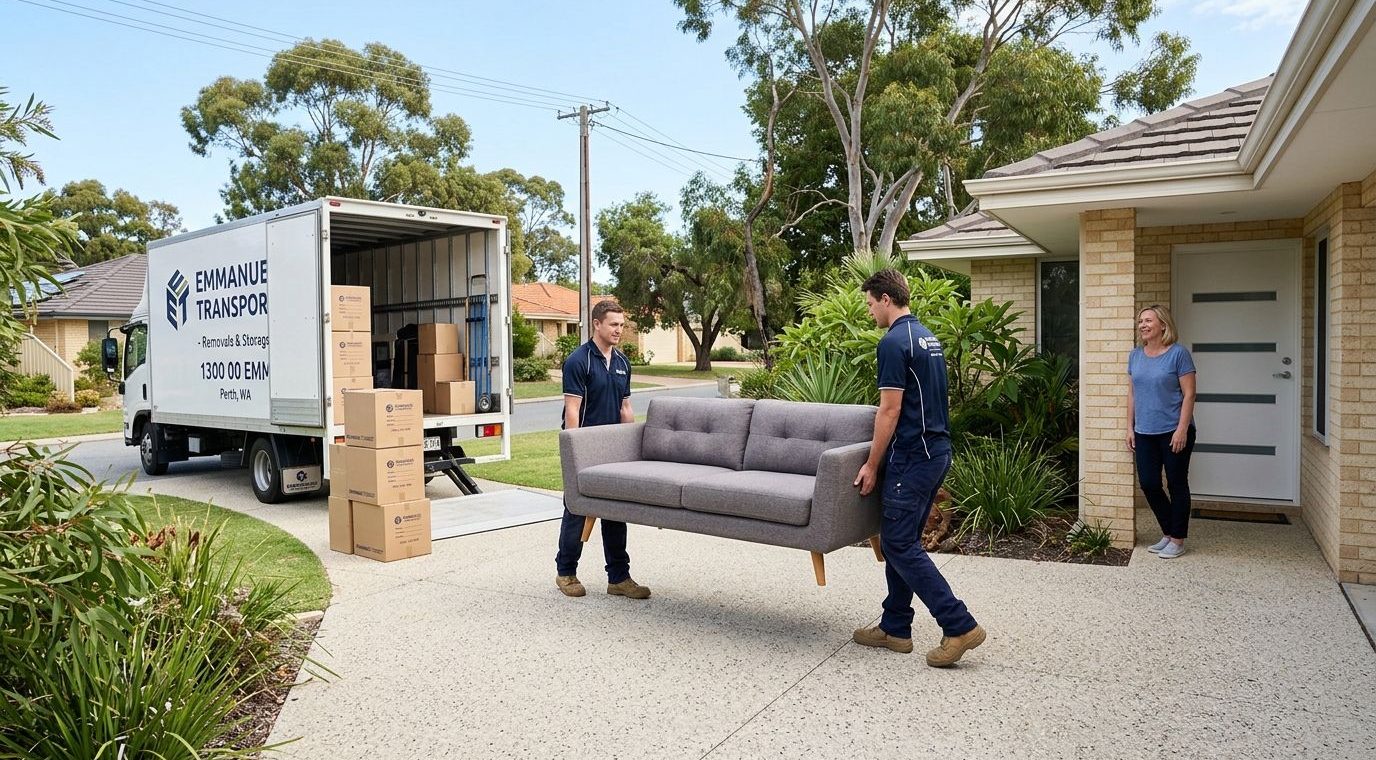
If you're moving from one Perth suburb to the next, it's easy to assume the job will be quick, cheap, and low risk. Then moving day arrives. The lift booking was never made, the sofa doesn't fit the stair turn, the truck has nowhere legal to stop, and the box marked “fragile” is packed with loose glassware and no padding.
That's why short distance removals catch people out. The drive might be short, but the labour, access issues, packing quality, and timing still decide whether your day runs smoothly or turns into a long, expensive scramble. In Perth, suburb-to-suburb moves often look simple on paper and become complicated at the kerb.
Table of Contents
- Your Pre-Move Blueprint for a Seamless Relocation
- How to Get an Accurate Removalist Quote in Perth
- Packing Strategies for Protecting Your Belongings
- Scheduling Your Move to Minimise Disruption
- Your Essential Moving Day Checklist
- Short Distance Removals Perth FAQ
Your Pre-Move Blueprint for a Seamless Relocation
Planning is often rushed, and it's the part that saves the move. A short trip from Joondalup to Scarborough doesn't remove the need for a proper plan. It just hides the risk until the truck is outside and the clock is running.
Professional crews work from an inventory, access notes, and a loading sequence. That structure matters because a local move usually finishes in 6 to 8 hours when it's organised properly, while DIY moves often drag out because packing and loading are less efficient, as noted by Grace Removals on truck hire versus removalists.

Start with the real inventory
A room count isn't enough. “Three bedrooms” tells us almost nothing if one room holds a treadmill, another has flat-pack furniture that wobbles when lifted, and the garage is stacked to the ceiling.
Build your list in layers:
- Furniture first: beds, lounges, dining settings, desks, bookshelves, whitegoods.
- Awkward items next: pot plants, gym gear, outdoor furniture, framed art, mirrors, TVs.
- Forgotten storage areas: garage shelves, sheds, wardrobes, linen cupboards, balcony boxes.
- Special handling pieces: antiques, fragile décor, electronics, glass cabinets.
Practical rule: If an item needs two people to lift, needs wrapping, or won't fit cleanly through a doorway, it belongs on the quote request.
Decluttering helps more than people expect. Fewer loose items means faster loading, cleaner stacking in the truck, and less unpacking stress at the other end. If you're managing pets during the move, short local jobs can still unsettle them badly, and this guide on preparing your cat for long distances is useful even for shorter relocations because the routines and stress triggers are similar.
Check access before moving day
The next mistake is assuming access is “fine”. In Perth, access can be the difference between a smooth half-day move and a frustrating stop-start job.
Check these points at both properties:
- Stairs and lifts: Is there stair-only access? Does the building require a lift booking?
- Parking: Can the truck stop close to the entrance, or is there a long carry from street to door?
- Entry widths: Measure tight hallways, security doors, and stair turns for large furniture.
- Site restrictions: Some complexes have loading bays, set moving times, or strata rules.
A proper moving planner keeps all of this in one place. If you want a clear structure to work through, use this moving planner for Perth relocations. It's much easier to solve access issues before the booking than on the day itself.
How to Get an Accurate Removalist Quote in Perth
A useful quote isn't just a price. It's a test of whether the mover understands the job you're asking them to do.
In Perth, two removalists plus a truck typically range from A$133 to A$178 per hour, and a 3-bedroom house averages around $1,231.64. For local moves, fuel charges can add 5% to 15% depending on distance within the metro area, based on Perth short distance removals pricing. Those figures are a starting point, not a substitute for a detailed scope.
What a quote needs from you
The cleaner your information, the cleaner the quote. If you leave out details, the estimate becomes guesswork.
A strong quote request should include:
| Detail | Why it matters |
|---|---|
| Property type | Houses, apartments, and offices load differently |
| Access conditions | Stairs, lifts, and long walks affect labour time |
| Inventory | Truck space and handling plan depend on item volume |
| Fragile or valuable items | Packing method and crew preparation change |
| Preferred date and time | Availability shapes scheduling options |
If you're comparing providers, ask each one the same questions and provide the same inventory. That gives you a fair comparison instead of three different interpretations of the same move.
For anyone pricing up a local relocation, this Perth removalist quotes page is one place to see what information a quote request should include.
What to question before you accept
A low headline rate can hide a messy invoice. The problem isn't only cost. It's uncertainty.
Ask directly about:
- Fuel charges: Are they included, or added separately based on the suburb-to-suburb run?
- Access fees: What happens if there are stairs, lift delays, or no close parking?
- Travel time: Is depot-to-home travel billed, and if so, how?
- Disassembly work: Are beds, tables, or office desks included or charged separately?
- Waiting time: What happens if keys, settlement, or building access are delayed?
The cheapest quote is often the least complete quote.
An all-inclusive quote should describe the labour, truck, timing assumptions, and any likely extras in plain language. If a quote can't explain what's included, it's not ready to sign.
Packing Strategies for Protecting Your Belongings
You can move from Mount Lawley to Inglewood in under an hour and still end the day with a chipped mirror, a scratched dining table, and a box of kitchenware rattling at the bottom of the truck. Short distance removals in Perth go wrong for simple reasons. Loose packing, poor box choice, rushed labelling, and no plan for awkward access at either end.

A local move still puts your belongings through repeated handling. Items are lifted out of cupboards, stacked, loaded, tied off, unloaded, then carried through driveways, lifts, stairwells, and narrow door frames. The distance between suburbs matters less than how well each item is protected for that handling.
For everyday household goods, aim for control rather than speed. Strong cartons, tight packing, and clear labels make unloading faster and reduce the chance of damage caused by boxes collapsing or contents shifting.
A practical packing method looks like this:
- Books and heavy items: Use small boxes so they stay manageable and the bottoms hold.
- Kitchenware: Pack plates upright, wrap each layer, and fill empty space so nothing knocks together.
- Clothing and linen: Put soft goods in larger cartons to save smaller boxes for dense items.
- Cables and electronics: Bag cords, label them clearly, and keep accessories with the matching device.
Labels need to work at the new place, not just in the old one. Write the room, whether it is fragile, and whether it should be opened first. “Bedroom” helps. “Bedroom, open first, bedside lamp” helps a lot more when you are tired and trying to get settled before dark.
If you are working out quantities before buying supplies, this packing calculator for moving boxes and materials gives you a better starting point than guessing.
Fragile and high-value pieces need a different approach.
We see this often on short Perth moves, especially in older suburbs with larger timber furniture and family pieces that have already survived a few house moves. People assume a quick trip means lighter packing is fine. Then a jarrah sideboard gets surface rub from an unpadded strap, or a ceramic lamp base cracks because it was boxed with general décor.
Use a separate packing process for items you would struggle to replace:
- Antique furniture: Protect finished surfaces with proper wrap, pad the corners, and remove anything loose inside or on top.
- Artwork and mirrors: Shield the face and edges with rigid protection. Bubble wrap alone is usually not enough.
- Ceramics and collectibles: Wrap each piece individually and cushion all sides inside the carton.
- Electronics: Keep screens free from pressure and do not load heavier items against them.
Access conditions matter here too. An apartment move in Subiaco with lift booking rules needs different prep from a house move in Baldivis with a long driveway and more walking distance from truck to front door. In both cases, fragile items are at greater risk if they are packed as an afterthought.
As noted in Instamove's guide to how removals work, clear inventories and proper packing reduce avoidable damage. Insurance also deserves a direct question before moving day. ES Removals' guide to questions to ask removalists makes the same point. “Insured” can mean different things depending on the item, the packing method, and who packed it.
If an item has financial or sentimental value, ask how it should be packed and what cover applies to that specific piece.
A quick visual guide can help if you're handling some of the prep yourself:
Scheduling Your Move to Minimise Disruption
The right move time isn't the earliest available slot. It's the slot that creates the fewest problems around school runs, work hours, settlement windows, building access, and traffic conditions near your property.
Families usually need predictability more than speed. If school bags, medication, chargers, and the kettle all disappear into the truck at once, the day gets harder than it needs to be. Businesses have a different pressure point. Their cost sits in interruption, not inconvenience, so after-hours or weekend moves often make more sense than trying to relocate desks, files, and equipment in the middle of a workday.
Choose the day around your real life
A practical move schedule starts with what can't move.
For households, that often means:
- School and childcare commitments: Keep handovers and routines intact where possible.
- Pet management: Have one quiet room or off-site arrangement during loading.
- Key collection timing: Don't book a tight turnaround if settlement or agent pickup is uncertain.
For offices, the strongest approach is usually to move outside trading or core working hours. Staff can leave one site set up and return to the next one ready to work, rather than losing half a day to cables, desks, and displaced equipment.
Good scheduling removes pressure before the first item is lifted.
Small scheduling decisions save hours
The fine print matters. Lift bookings, loading dock access, and furniture dismantling all affect the pace of the day.
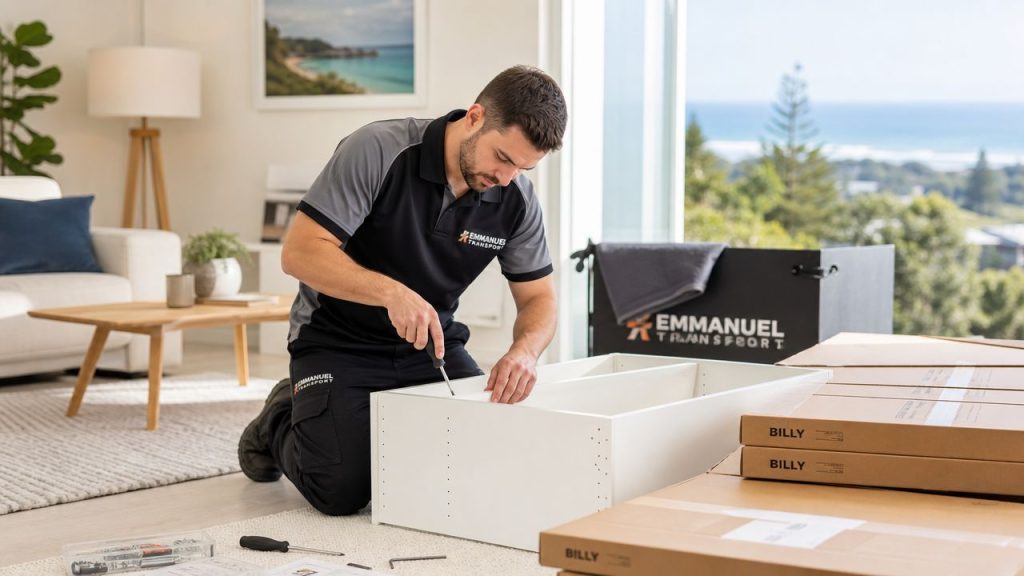
Beds, dining tables, modular desks, and large shelving units often need partial dismantling to move safely through doors and corridors. If that's discussed beforehand, the team arrives with the right plan. If it isn't, the job slows down while everyone works out how to get a frame around a tight corner.
Real-time booking updates also make a difference. People are calmer when they know the crew is on the way, the truck is running to plan, and any change has been communicated early. That's especially useful for apartment moves in busier parts of Perth where access windows can be tight.
Your Essential Moving Day Checklist
Moving day goes better when everyone knows what happens first, what stays with you, and what gets loaded last. Keep the plan simple and visible on your phone.

The night before
- Pack an essentials box: Include chargers, toiletries, medication, tea and coffee, basic tools, and a change of clothes.
- Separate valuables: Keep passports, jewellery, laptops, and important documents with you.
- Finish loose packing: Don't leave random bags and half-filled boxes for the morning.
When the movers arrive
Do a quick walkthrough before loading starts. Point out fragile items, furniture that needs dismantling, and anything that is not going on the truck.
Then confirm the destination layout. If bedrooms have similar furniture, label them clearly now. It avoids guesswork later.
At the new home
Use a simple arrival sequence:
- Direct large furniture first: Beds, sofas, dining tables, and fridges should go into position before smaller cartons pile up.
- Check key items as they come in: Not every spoon and towel. Focus on fragile, high-value, and awkward items.
- Keep pathways clear: Box clutter near the front door slows the whole unload.
- Do one final sweep: Check the truck, the old property, and outdoor areas before sign-off.
A calm moving day usually comes from decisions made earlier, not last-minute effort.
Short Distance Removals Perth FAQ
People often treat local moves as casual jobs, but Perth is a competitive removals market. The Australian Removal Services industry is projected to be worth $2.6 billion in 2026, with 8,310 businesses operating as of 2025 and 0.0% CAGR between 2020 and 2025, according to IBISWorld's Australian Removal Services industry data. In a market that crowded, the difference usually comes down to organisation, transparency, and how carefully the team handles the details.

How much notice should I give for a short move?
As much as you can. Local jobs can be flexible, but preferred dates, end-of-lease periods, and weekend bookings fill quickly. Earlier notice also gives time to sort parking, lift bookings, and packing.
What if settlement or key handover is delayed?
Tell your mover as soon as there's a risk of delay. Waiting time, truck access, and crew scheduling all need active communication. Silence causes more trouble than the delay itself.
Do I need to organise parking for the truck?
Often, yes. In places like Subiaco, Fremantle, or apartment-heavy streets near the city, parking can decide whether the move runs smoothly. Reserve space where possible and check council or strata rules if the truck needs a specific bay.
Are short distance removals safer for fragile items?
Not automatically. The shorter drive doesn't cancel out bad packing, poor stacking, or rough handling through stairs and doorways.
Should I dismantle furniture before the team arrives?
Only if you know it can be reassembled properly. Some items are better left intact until the mover sees the access and decides the safest way to handle them.
If you're planning short distance removals anywhere across Perth, Emmanuel Transport is one local option for residential and commercial moves, packing help, furniture dismantling and reassembly, and careful handling of delicate items. If you want a transparent quote and a move plan that accounts for real access, timing, and suburb-specific logistics, it's worth getting the details sorted before moving day.