
You've probably got a dozen tabs open right now. One for boxes, one for electricity, one for changing your address, and one for a removalist quote that looks simple until you realise it doesn't explain half of what you need to know.
That's normal with a local move in Perth. Even when you're only going from Mount Hawthorn to Fremantle, or from an apartment in Northbridge to a townhouse in Tuart Hill, the job still involves access, timing, wrapping, loading order, parking, and a quote that means what you think it means. A short move isn't always a simple move.
The good news is that short-distance removals in Perth become much easier once you know where the hidden friction sits. Most stress comes from the same few problems. Unclear pricing, poor prep, tight access, and suburb-specific issues that generic moving guides never mention.
Table of Contents
- Your Stress-Free Guide to Moving Across Perth
- What a Short-Distance Perth Removal Actually Involves
- Decoding the Costs of Moving Within Perth
- Your Ultimate Pre-Move Checklist and Packing Timeline
- Navigating Perth Suburb Challenges from Joondalup to Rockingham
- Why Perth Chooses Emmanuel Transport for Local Moves
- Your Next Chapter Starts Here
Your Stress-Free Guide to Moving Across Perth
A local move often feels deceptive. You tell yourself it's only a few suburbs away, so it should be quick. Then the complications begin. The sofa won't fit cleanly through the old doorway, the lift booking at the new place has a strict window, and nobody has checked whether the truck can stop near the front gate without blocking traffic.
That's where people lose time and money. Not because they chose the wrong suburb, but because they treated a short move like a light errand instead of a logistics job.
The smoother Perth moves usually have three things in common:
- A clear scope: everyone knows what's being moved, what needs wrapping, and what needs dismantling.
- A realistic quote: the price model matches the job, and there's no confusion about what can change on the day.
- Proper local planning: access, parking, stairs, loading distance, and suburb quirks are handled early.
Practical rule: If a move looks simple on paper, that's exactly when it pays to ask more questions. Local jobs often run into access issues faster than long-haul moves.
Short-distance removals Perth residents book every week can be calm, organised, and surprisingly efficient. But that only happens when the details are dealt with before the truck arrives, not while the crew is standing on the kerb waiting for a solution.
What a Short-Distance Perth Removal Actually Involves
A proper local move is more than transport from one address to another. It's a sequence of handling tasks, timing decisions, and protection steps that keep the move efficient without turning your furniture into a casualty of rushed loading.
What counts as a local move
In practice, a short-distance Perth move usually means relocating within the metro area. That could be house to house, apartment to apartment, office to office, or even a single-item or partial move across nearby suburbs.
The distance may be short, but the work can still be technical. A move from a ground-floor villa in Balcatta is very different from a move out of a third-floor walk-up in Leederville. The kilometres don't tell the full story. Access and handling do.
What's usually included
A standard professional service often covers the physical move itself plus the labour needed to make it workable and safe. That normally includes loading, transport, unloading, and placing items in the new property.
Depending on the job, removalists may also handle:
- Packing support: boxing kitchenware, books, linen, and other household contents if you want help before moving day.
- Protective wrapping: using moving blankets, shrink wrap, and other materials to reduce scuffs, dents, and transit movement.
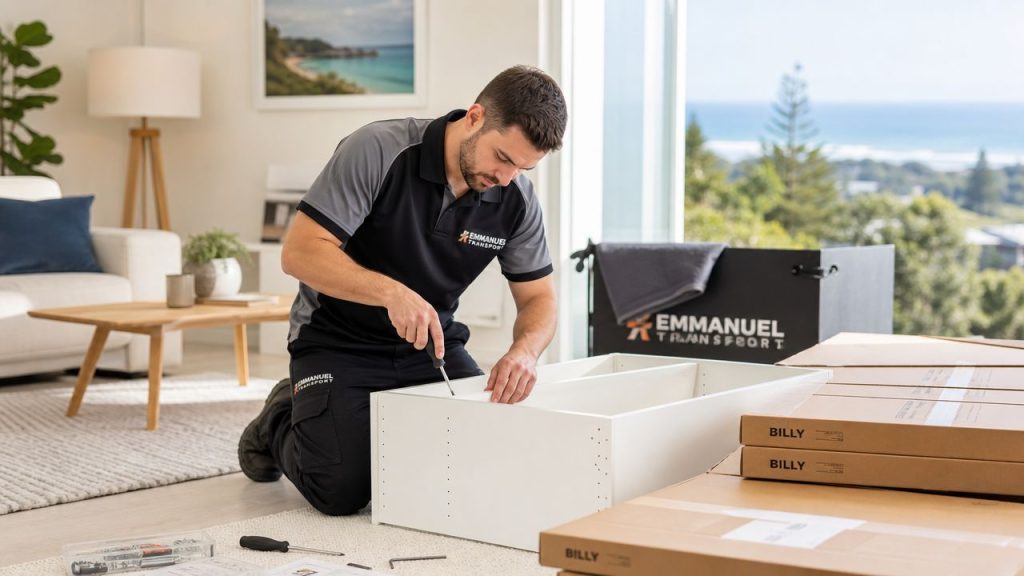
- Furniture dismantling: taking apart bed frames, dining tables, or modular pieces so they can be carried and loaded properly.
- Reassembly at the other end: putting the essentials back together so you're not sleeping beside a pile of hardware.
- Care with delicate pieces: handling antiques, artworks, mirrors, or glass-front cabinets with extra preparation.
What usually isn't included by default is just as important. Deep packing of every cupboard, disposal of unwanted goods, specialist disconnects, or unresolved access issues may need separate planning.
A well-run local move starts before the first box is lifted. The best time to solve access, packing, and inventory problems is during quoting, not in the driveway.
The value of a professional team isn't just muscle. It's sequencing. Heavy items go in first, fragile pieces are secured in the right spots, and the unload follows the room plan instead of becoming a jumble of random stacks. That's what makes unpacking easier later.
Decoding the Costs of Moving Within Perth
A local move can look cheap on paper, then grow legs on moving day. The usual pattern is simple. The hourly rate seems reasonable, but time blows out because the truck cannot park near the front door, the lift booking is shorter than expected, or the quote never spelled out what happens if access is worse than described.
How Perth local moves are usually priced
For short-distance removals in Perth, hourly pricing is still the standard model. A standard package of two removalists plus a truck typically costs between A$133 and A$178 per hour, according to Perth short-distance removal pricing details.
Use that as a starting point, not a final figure.
The total usually shifts for five practical reasons:
- Property size: more rooms usually mean more loading, more truck space, and more time at both ends.
- Item volume: two homes with the same bedroom count can price very differently if one has a garage, gym gear, or bulky outdoor furniture.
- Access conditions: stairs, tight corridors, lifts, and long carries slow the crew down.
- Parking setup: if the truck cannot stop close to the property, labour time rises fast. In some Perth suburbs, including older streets around Mount Hawthorn, parking restrictions and narrow verges can turn a short move into a slower one.
- Preparation before arrival: labelled cartons, disconnected appliances, and clear paths save billable time.
A one-bedroom unit with good truck access can move in a very different time frame from a villa with rear-lane access and a steep entry path, even if the distance between properties is only a few kilometres.
If you want a planning tool before asking for a formal quote, this moving cost calculator for Perth relocations helps you map out job size and likely variables.
The quote detail that catches people out
The part many households miss is not the truck size. It is the quote type.
A non-binding estimate is a guide. It can change if the inventory is larger than expected, if access is harder than described, or if extra labour is needed on the day. A binding not-to-exceed quote sets a ceiling for the agreed scope, which gives you far more control over the budget.
That difference matters most on local moves because people often assume a short distance means a fixed total. It does not. Time is usually the primary cost driver, and time is where vague quoting causes trouble.
Before you book, ask these questions plainly:
- Is this quote hourly, fixed, or not-to-exceed?
- What access assumptions have you priced in?
- Is travel time included?
- Are stairs, lift delays, long carries, or dismantling charged separately?
- What happens if the inventory list is wrong?
If the answers are loose, the final invoice usually is too.
Perth Removalist Quote Types Explained
| Feature | Non-Binding Estimate | Binding ‘Not-to-Exceed' Quote |
|---|---|---|
| Price certainty | Lower certainty | Higher certainty |
| If inventory grows | Final cost may rise | Terms depend on agreed scope |
| Budgeting | Harder to lock in | Easier to plan around |
| Best for | Flexible jobs with open-ended scope | Households that want a spending ceiling |
| Question to ask | What can increase the final amount? | What is excluded from the cap? |
Ask this directly: “Is this quote non-binding, or is it a not-to-exceed binding quote?” Then ask what specific site conditions or item changes can add cost.
One more cost pressure often gets missed. If settlement dates do not line up and some belongings need to be held elsewhere, storage can subtly increase the move budget. This guide on how to save on storage needs is useful for deciding what should go into storage, what should go straight to the new place, and what is better sold or donated first.
Your Ultimate Pre-Move Checklist and Packing Timeline
Good moving days are built well before moving day. The aim isn't to create a perfect spreadsheet for the sake of it. The aim is to stop last-minute decisions from burning time while the truck is on the clock.

If you want a printable version to work from, this moving planner for Perth households is a practical place to start.
Four to six weeks out
Start with a ruthless sort. Local moves get more expensive and more annoying when people pack items they don't even want in the new place. Be honest about furniture that never fit properly, kitchen gadgets that haven't moved in years, and clothing that's only taking up carton space.
Then lock in the basics.
- Confirm your key dates: settlement, lease end, access windows, lift bookings, and key collection.
- Transfer services early: electricity, gas, internet, and any building management requirements.
- Walk through both properties: look for stairs, narrow gates, fragile floor surfaces, and places where large furniture may need dismantling.
At this stage, it also helps to nominate what won't go on the truck. Important documents, medications, chargers, jewellery, and daily essentials should travel with you.
Two weeks out
Packing needs to become structured, not casual. Pack by room, and label by destination room at the new address rather than by item type alone. “Kitchen bench appliances” is better than “misc”. “Main bedroom wardrobe” is better than “clothes”.
Try this approach:
- Pack non-essentials first. Books, décor, spare linen, out-of-season clothes.
- Keep weight sensible. Small cartons for books, medium for pantry items, larger boxes for light goods.
- Protect breakables properly. Plates upright, glassware wrapped individually, empty spaces filled so items can't shift.
- Tape and seal as you go. Half-packed open cartons slow everything down later.
Label for the unload, not the pack. The person carrying the box doesn't need your packing logic. They need to know exactly where it belongs.
This is also the right time to clear drawers you don't want moved as-is. Some lightweight contents can stay in sturdy furniture, but only when the piece can still be carried safely and nothing inside can damage the item.
One week out and moving day
The final week is about shortening decision time. Every unresolved choice turns into a delay on the day.
A few jobs matter more than people think:
- Pack an essentials kit: kettle, mugs, chargers, basic toiletries, towels, medications, pet supplies, and a change of clothes.
- Separate anything fragile or sentimental: mark it clearly and tell the crew before loading starts.
- Empty the fridge and freezer in time: especially if it needs defrosting.
- Disassemble what you've agreed to handle yourself: don't leave bolts and bed slats scattered across different rooms.
- Keep pathways clear: boxes stacked neatly, nothing blocking exits, and pets secured away from loading zones.
On the morning itself, eat something simple, keep your phone charged, and do one final walk-through before departure. Open cupboards, check the shed, and look behind doors. Small leftovers are common on local moves because people assume they can “just come back for it later”. They often don't want to.
Navigating Perth Suburb Challenges from Joondalup to Rockingham
A truck arrives on time in Mount Hawthorn, but there is nowhere legal to stop close to the front door. What looked like a quick local move turns into a longer carry, more back-and-forth, and a bill that starts drifting from the original estimate. That sort of problem is common in Perth, and generic moving guides rarely prepare people for it.

Inner suburbs need access planning
Older inner suburbs such as Mount Hawthorn, Mount Lawley, and Northbridge often create problems before a single box is lifted. Street parking can be tight, verge access is not always usable, apartment loading areas may be shared, and some buildings have strict move-in windows. The distance between homes might be short, but the handling time can be longer than a bigger move in an easier suburb.
Parking is the detail people miss most often. Councils and strata managers may require advance approval for truck access or temporary loading arrangements, and if that is left until the last minute, the crew may have to park further away and carry everything by hand for longer. On an hourly job, that changes the final cost quickly.
Quotes matter here too. A non-binding quote can leave more room for added time if access is worse than expected on the day. A binding quote gives clearer cost certainty, but only if the access details were described accurately at booking stage. If there is a steep driveway, no lift access, or no practical truck parking, say so early. It protects both the schedule and the budget.
In tight inner suburbs, access usually decides the pace of the move more than the volume in the truck.
Long cross-metro moves need a different approach
A Joondalup to Rockingham move has a different shape. The homes may be easier to access, but the spread across Perth makes timing, route choice, and truck loading more important. If the first items needed at the new address are buried at the front of the load, the unload slows down and the day stretches.
Traffic patterns also change the plan. A crew leaving the northern corridor in the morning and unloading in the south later in the day is dealing with a different run than a short suburb-to-suburb booking. Good operators account for that early instead of treating every local move as the same job with a different postcode.
For northern corridor households, it helps to work with a team familiar with Joondalup removal services and surrounding suburbs. Local knowledge shows up in practical decisions, such as where the truck can wait, when to avoid bottlenecks, and how to scope the job properly before the quote is accepted.
Why Perth Chooses Emmanuel Transport for Local Moves
Once you understand where local moves usually go wrong, the shortlist becomes easier. You're not just choosing a truck. You're choosing how the day will be managed.

What matters in a removalist
Once moving day gets close, people generally care about the same things:
- Clear quoting: especially around what's included, what can change, and whether packing or dismantling is part of the job.
- Care with belongings: wrapping, loading discipline, and sensible handling of delicate pieces.
- Communication: arrival windows, booking confirmation, and updates when access or timing needs adjustment.
- Availability that suits real life: weekday, weekend, or after-hours options when work and settlement timings don't line up neatly.
These basics matter more than flashy marketing. A polished website won't carry a fridge down a tight hallway or fix a poorly scoped quote.
Why local knowledge changes the day
Emmanuel Transport is one Perth option that fits the practical criteria above. The company handles residential and commercial relocations across the metropolitan area, including packing, wrapping, furniture dismantling and reassembly, with service available seven days a week and after hours when needed.
The more useful point is fit. A removalist with genuine suburb knowledge is better placed to plan for loading access, building conditions, and route efficiency across the metro area. That reduces guesswork, which is what most households want removed from the process.
Short-distance removals Perth residents book don't need hype. They need a team that turns a messy list of moving parts into an organised day.
Your Next Chapter Starts Here
A smooth local move in Perth rarely happens by accident. It comes from three decisions made early. Get clear on how your quote works, prepare the property and cartons properly, and account for the suburb-specific issues that can subtly slow everything down.
That's the difference between a move that feels rushed and one that feels under control.
If you're planning short-distance removals in Perth, keep your focus on the details that affect the day most. Access. Parking. Packing quality. Scope. Timing. Those are the parts that shape the final experience far more than the number of suburbs between your old address and your new one.
Your move is still a big moment, even if the distance is short. With the right planning, it can also be a calm one.
If you want a clear, no-obligation quote for your Perth move, contact Emmanuel Transport. They handle local house, apartment, office, and single-item moves across the metro area with transparent pricing, packing support, and practical local knowledge.