
Moving into a new home is an exciting milestone, but the sheer volume of tasks can quickly become overwhelming. From the initial planning weeks before the moving truck arrives to the final box being unpacked, a systematic approach can transform a potentially stressful ordeal into a smooth and organised transition. This definitive moving into new home checklist is designed to guide you through every critical step, ensuring nothing important is overlooked. We have structured this guide to cover all bases, from essential administrative duties like address changes and utility setups to the practical logistics of moving day and the crucial first steps of settling into your new space.
Whether you’re moving across Perth from Joondalup to Rockingham or just around the corner, having a clear, actionable plan is your greatest asset. The process involves more than just packing boxes; it’s about methodically transferring your entire life from one location to another. If your move involves transitioning to a smaller home, which requires an even more strategic approach to decluttering and organisation, you may find additional tailored guidance in this ultimate downsizing checklist for seniors.
This comprehensive roundup will provide the structure you need. By following these steps, you can avoid common pitfalls, reduce last-minute panic, and ensure you’re fully prepared for the big day. We’ve compiled professional insights and practical advice to equip you with a reliable framework for a successful move. Let’s get started on organising your next chapter and making your house feel like a home from day one.
1. Pre-Move Blueprint: 4-8 Weeks Before Moving Day
The period of one to two months before you move is the foundational phase where strategic planning prevents future chaos. This stage is about more than just booking a truck; it’s about systematically decluttering your life, organising logistics, and setting the stage for a smooth transition. Taking care of these tasks early on will significantly reduce the pressure as moving day approaches, making it a critical part of any successful moving into new home checklist.
Taking Action: Your 4-8 Week Plan
The key is to break down large tasks into manageable weekly goals. To ensure every detail is covered and your relocation is as smooth as possible, consult a comprehensive moving checklist and timeline to structure your efforts.
- Week 8-7: Research & Decluttering Begins. Start by researching and requesting quotes from highly-rated Perth removalists. At the same time, begin decluttering a single, less-used room, like the guest room or study, to avoid feeling overwhelmed.
- Week 6-5: Organise & Book. Create a dedicated ‘Moving Binder’ or digital folder for all quotes, receipts, and important contacts. Finalise your choice of removalist and confirm your booking. Now is also the time to schedule a charity pick-up for large unwanted items like old furniture.
- Week 4: Inventory & Supplies. Develop a detailed inventory, perhaps in a Google Sheet, categorised by room. This helps with both packing and insurance. Start gathering packing supplies: boxes, tape, markers, and bubble wrap.
Pro Tips for Success
To maximise efficiency during this critical window, adopt a methodical approach. When decluttering, use the popular four-box method: label boxes for Keep, Donate, Sell, and Bin. This forces decisive action. Before finalising with a removalist, ask specific questions about their services, such as whether furniture dismantling and reassembly are included in their quote. Finally, measure your large furniture and the doorways of your new home to pre-empt any moving-day surprises. This foresight saves immense time and stress.
2. Set Up Utilities
Ensuring essential services are active from the moment you get your keys is a non-negotiable step in any moving into new home checklist. This crucial phase involves arranging for electricity, gas, water, and internet to be connected at your new address. Without these services, your new house won’t feel like a home, and the initial days of unpacking and settling in can become incredibly challenging. Proactive management of these transfers prevents service gaps and ensures a comfortable, functional living space from day one.
Taking Action: Your Utilities Connection Plan
The goal is to have all services switched on the day you move in, or even the day before. This requires contacting various providers, scheduling appointments, and keeping meticulous records of all communications and reference numbers.
- 2-3 Weeks Before Moving: This is the ideal time to start the process. Begin by identifying the utility providers for your new address. For electricity and gas, this might involve companies like AGL, Origin Energy, or EnergyAustralia. For internet, research providers available in your area such as Telstra, Optus, or TPG.
- Scheduling & Coordination: Contact each provider to schedule the connection. Be prepared to give them your move-in date and new address details. If a technician needs access, ensure you or an authorised person can be present. Simultaneously, schedule the disconnection of services at your old address for the day after you move out to avoid being left in the dark.
- Confirmation: A week before the move, call each utility company to confirm your connection and disconnection dates. Note down all confirmation numbers and the names of the customer service representatives you speak with in your moving binder or digital folder.
Pro Tips for Success
A strategic approach to utility setup can save you both money and hassle. Before committing to a provider, especially for electricity and internet, use comparison websites to check for better rates or introductory offers for new customers. When you call, always ask if there are any new-mover promotions or bundled deals available. To ensure a smooth transition, create a contact list with the names of all your new providers, their phone numbers, and your account numbers for easy access during the chaotic first few days in your new home. This simple list will be invaluable if any issues arise.
3. Update Insurance Policies
Often overlooked in the chaos of packing, updating your insurance policies is a non-negotiable step in any comprehensive moving into new home checklist. Your current coverage is tied to your old address, meaning it might not be valid or adequate for your new property. This task involves notifying your insurers of your move, assessing new risks associated with the location, and ensuring there are no gaps in your home, contents, or auto insurance coverage during the transition and beyond.
Taking Action: Your Insurance Update Plan
Failing to update your policies before you move can leave you financially exposed to damage or loss. The key is to act proactively and communicate with your providers well in advance of moving day to guarantee continuous protection.
- Contact Insurers Early: At least 3-4 weeks before your move, contact all your insurance providers, including home and contents, car, and health. Inform them of your new address and moving date. This gives them ample time to process the changes and provide you with new documentation and premium information.
- Assess New Coverage Needs: Your new home may have different risks. Consider if you now need flood, fire, or specific natural disaster coverage. If you’ve purchased new valuable items during the move, ensure your contents insurance limit is high enough to cover them.
- Compare and Switch if Necessary: Your current provider may not offer the best rate or coverage for your new area. Use this opportunity to get quotes from other insurers like Allianz, QBE, or comparison sites. A new location can sometimes lead to significant savings on premiums, particularly for car insurance.
Pro Tips for Success
To ensure your assets are fully protected, a detailed and timely approach is crucial. Start by creating a detailed inventory of your belongings, taking photos of high-value items, as this will be invaluable if you need to make a claim. When speaking with your insurer, ask specifically how your belongings are covered during the move itself. Some home and contents policies offer transit cover, but it’s essential to confirm the specifics. For more detailed guidance, discover some essential insurance tips for a stress-free move to understand the nuances of transit protection and policy updates. Finally, ensure you receive written confirmation of your updated policies before moving day and store a digital copy in your moving folder.
4. Transfer Medical Records
Amidst the boxes and booking forms, managing your health information is a crucial step that is often overlooked in the chaos of a move. Transferring medical records ensures continuity of care for you and your family, providing new healthcare professionals with a complete history to make informed decisions. This process involves officially moving your health files, prescription information, and specialist referrals, making it a non-negotiable part of any comprehensive moving into new home checklist.
Taking Action: Your Healthcare Handover Plan
A proactive approach is essential for a seamless healthcare transition. Begin this process several weeks before your move to allow ample time for administrative processing and to avoid any gaps in medical care or prescription access.
- 3-4 Weeks Out: Research & Request. Begin researching new general practitioners (GPs), dentists, and any required specialists in your new neighbourhood. Check which ones are accepting new patients and are covered by your health insurance. Concurrently, contact your current doctors’ offices to formally request the transfer of your medical records.
- 2 Weeks Out: Confirm & Collect. Follow up to ensure the transfer request has been processed. Arrange to either have the records sent directly to your new providers or to collect physical or digital copies yourself. For pets, contact your veterinarian to do the same for their records.
- 1 Week Out: Prescriptions & Pharmacy. Speak with your current pharmacist about transferring your prescriptions. Most national pharmacy chains can handle this easily. If you use a local chemist, you may need your GP to issue new scripts. Ensure you have at least a 30-day supply of any essential medications to cover the transition period.
Pro Tips for Success
To ensure your health is prioritised during the move, keep a dedicated folder for all medical documents. Request digital copies of records where possible, as they are easier to share and store. When researching new providers, check online reviews and ask for recommendations in local community social media groups. Before your move, it’s also wise to verify your current health insurance coverage in the new area and understand any changes to your network of providers. Keeping a summary of key health information, including allergies, chronic conditions, and current medications, on your phone can be invaluable in an emergency.
5. Register Children for School
When moving with a family, securing your children’s educational future is a non-negotiable priority that needs to be addressed well in advance. This step involves more than just filling out a form; it’s about navigating a new educational system, transferring records, and ensuring a seamless academic and social transition for your kids. Properly managing this part of your moving into new home checklist provides stability for your children during a period of significant change and prevents last-minute enrolment issues that could delay their start date.
Taking Action: Your School Enrolment Plan
Navigating the school enrolment process requires early and organised action. Each school district, private institution, and homeschool authority has its own set of deadlines and requirements, making timely research essential.
- Research & Initial Contact. As soon as your new address is confirmed, identify the local school catchment area or your preferred private schools. Contact the school administration or district office to request an enrolment pack and clarify their specific document requirements and deadlines.
- Gather Essential Documents. Begin collecting all necessary paperwork. This typically includes birth certificates, proof of residency (like a utility bill or lease agreement), immunisation records, and academic transcripts or report cards from the previous school. Keeping these in your dedicated ‘Moving Binder’ is a smart move.
- Complete & Submit Applications. Pay close attention to enrolment deadlines, especially for charter school lotteries or private school applications, which can be many months before the school year begins. Submit all completed forms and supporting documents well before the cut-off date to secure a place.
Pro Tips for Success
To ensure a smooth educational transition, think beyond the paperwork. Start by researching schools before you even finalise your new home, as school quality is a major factor for many families. If possible, schedule a visit to the top two or three schools to get a feel for the environment and meet the staff. This can help both you and your children feel more comfortable. Finally, once enrolled, seek out online parent groups or school community forums. Connecting with other parents can provide invaluable insights into teachers, extracurricular activities, and the overall school culture, helping your child settle in more quickly.
6. Update Voter Registration
Updating your voter registration is a crucial civic duty that is easily overlooked during the chaos of a move. When you relocate to a new address, especially to a new council area or electorate, your previous registration becomes invalid. Taking the time to update your details ensures your voice is heard in local, state, and federal elections, making it an essential task in any comprehensive moving into new home checklist. It allows you to participate in shaping your new community from the moment you arrive.
Taking Action: Securing Your Vote
The process is generally straightforward and can often be completed online in minutes. In Australia, the Australian Electoral Commission (AEC) manages the federal electoral roll, which is also used for state and local government elections.
- Online Update: The quickest method is to visit the AEC website. You can check your current enrolment, update your address, or enrol for the first time using your driver’s licence or Australian passport details.
- Paper Form: If you prefer, you can download a PDF enrolment form from the AEC website, pick one up from any AEC office or Australia Post outlet, and mail it back.
- Automatic Updates: In some cases, updating your address with services like VicRoads or Transport for NSW may trigger an option to update your electoral roll details simultaneously, streamlining the process.
Pro Tips for Success
To ensure you don’t miss an election, act promptly. It’s best to update your registration as soon as you have officially moved into your new home, as the electoral rolls close for updates shortly after an election is called. Take a moment to research your new federal electorate and local government area (council) to understand the different representatives you will be voting for. Finally, confirm your updated details online a week or two after submitting the change to ensure it has been processed correctly, safeguarding your right to vote.
7. Find New Service Providers
Moving to a new area involves more than just relocating your belongings; it means re-establishing your entire support network. Finding trustworthy local service providers, from healthcare professionals to home maintenance experts, is a crucial step that ensures your family’s wellbeing and your home’s upkeep are in good hands from day one. Proactively building this network is a vital part of any comprehensive moving into new home checklist, preventing stressful scrambles when a need arises unexpectedly.
Taking Action: Your Service Provider Search Plan
The goal is to have a reliable list of contacts ready before you need them. This requires a methodical approach, blending online research with local insights to find the best fit for your family’s needs.
- Healthcare First: Begin by identifying doctors, dentists, and veterinarians. Use your health insurance provider’s online directory to find local, in-network professionals. Platforms like Healthdirect Australia can offer government-vetted information and service finders.
- Home & Maintenance: Next, focus on home services. Look for qualified plumbers, electricians, and handymen. Ask for recommendations in local community Facebook groups or on neighbourhood apps, as peer reviews often provide the most honest feedback.
- Compile & Verify: Create a master contact list in a shared digital document or a physical notebook near your phone. Before adding a provider, spend a few minutes verifying their credentials, checking their ABN (Australian Business Number), and reading recent online reviews on Google or specialty sites.
Pro Tips for Success
To ensure you connect with high-quality, reliable professionals, go beyond a basic search. When seeking healthcare providers, check their professional affiliations and read patient testimonials. For tradespeople, always request to see a copy of their license and public liability insurance; this protects you from shoddy work and potential liability. Don’t hesitate to call and “interview” potential providers like a new childcare centre or a regular gardener. Asking about their availability, pricing structure, and experience gives you a feel for their professionalism and whether they are a good fit for your long-term needs. This diligence builds a foundation of trust and reliability in your new community.
8. Update Financial Accounts
In the whirlwind of packing and logistics, updating financial accounts is a task that can easily be overlooked, yet it’s fundamental to maintaining your financial stability. This crucial step involves notifying all your financial institutions, from your daily bank to your long-term investment firm, about your new address. Failing to do so can lead to missed statements, delayed security notifications, and potential disruptions in services like direct debits and automatic payments, making it a non-negotiable part of your moving into new home checklist.
Taking Action: Your Financial Update Plan
A systematic approach ensures no account is left behind. Start this process at least one to two weeks before your move to allow time for changes to be processed across different systems. This also provides a buffer to sort out any issues that may arise.
- Financial Inventory: Create a comprehensive list of all your financial relationships. This should include your primary bank (e.g., NAB, CommBank), credit card providers (e.g., American Express, Mastercard), superannuation fund, investment brokers (e.g., SelfWealth, Stake), and any buy-now-pay-later services you use.
- Sequential Updates: Begin by updating your main bank account first, as many other services may use it for verification. Most institutions like Bankwest or ANZ allow you to update your address online through their secure portal or mobile app.
- Payment & Deposit Review: Once your address is updated, review all automatic payments and direct deposits linked to your accounts. Confirm that bills for utilities at your old address are cancelled and set up new ones for your new home, ensuring a seamless transition of payments.
Pro Tips for Success
To avoid financial hiccups, precision is key. Keep your old bank accounts open for at least a month after moving to catch any stray transactions or final payments that may have been pre-scheduled. When researching local banking options, consider branch accessibility near your new home if you value in-person service. Finally, after your move, it’s wise to obtain a free copy of your credit report from services like Equifax or Experian to verify that all your accounts correctly reflect your new address and that no fraudulent activity has occurred during the transition period. This final check provides peace of mind and secures your financial identity.
9. Secure Your New Home
Establishing a secure environment is one of the most important first steps in making a house feel like a home. This critical phase involves more than just locking the door; it’s about implementing layers of security to protect your family and belongings from day one. Addressing security immediately upon arrival ensures you can settle in with peace of mind and is a non-negotiable part of any comprehensive moving into new home checklist.
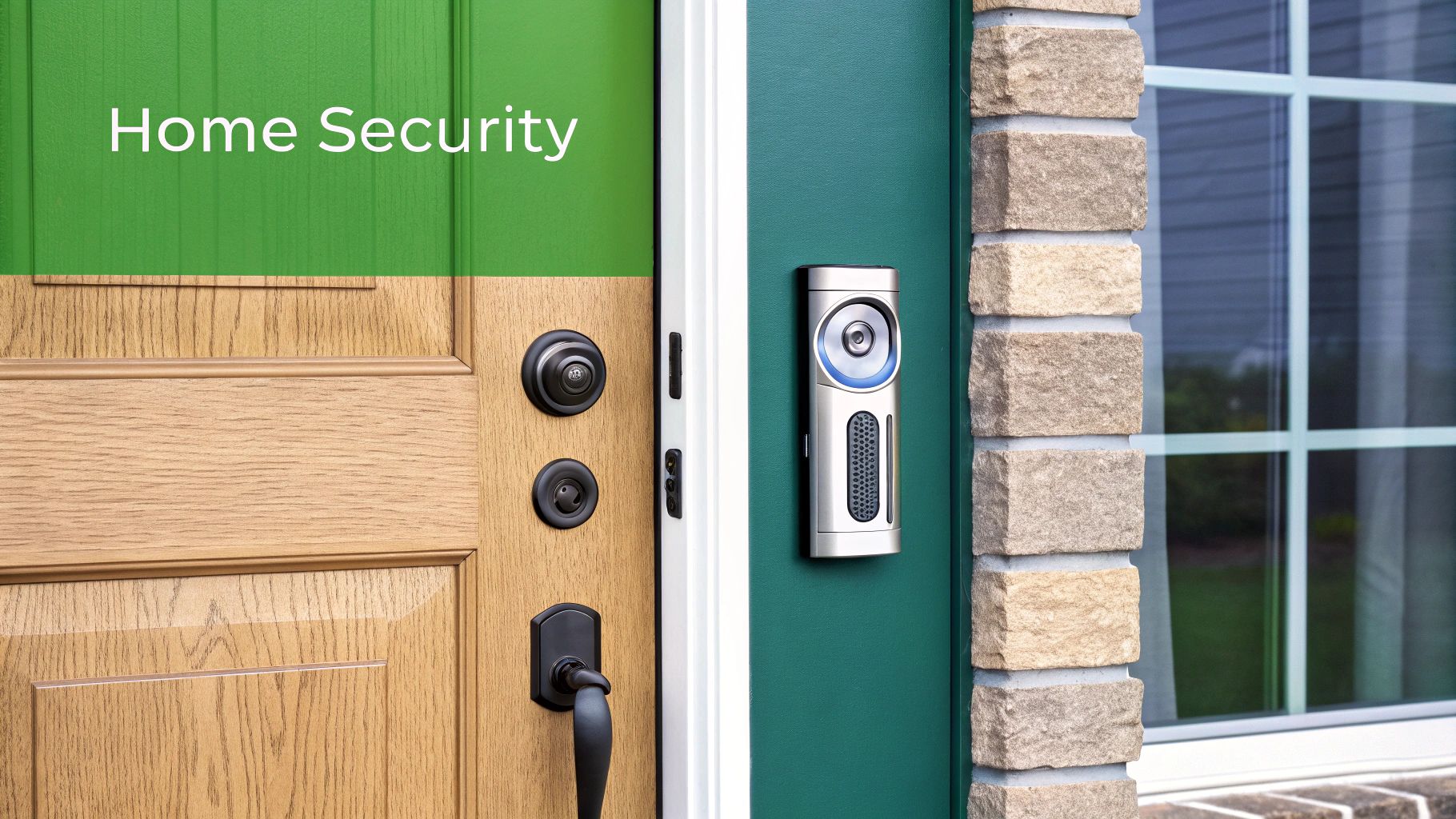
Taking Action: Your Security Implementation Plan
Your immediate focus should be on controlling access and setting up monitoring. Start these tasks before your main valuables arrive, ideally on the day you get the keys. Just as you need to find out where to get moving boxes and supplies before you pack, you need to organise security before you fully unpack.
- Day 1: Change the Locks. This is your top priority. You have no way of knowing who still has a copy of the old key, from previous owners to contractors. Engage a locksmith to rekey all external doors or install new hardware, such as Schlage smart locks, for enhanced control.
- Week 1: Install a Security System. Whether you opt for a professionally monitored system like ADT or a DIY solution like SimpliSafe, getting it operational quickly is key. Install cameras, door/window sensors, and video doorbells like Ring before all your belongings are moved in.
- First Fortnight: Assess & Enhance. Walk the perimeter of your property. Check for vulnerabilities like poorly lit areas, weak window latches, or overgrown shrubbery that could provide cover. Plan for improvements like outdoor sensor lights and reinforced window locks.
Pro Tips for Success
To build a truly secure home, think in layers. Your first layer is a strong perimeter. The most crucial step is changing the locks the moment you take possession. Do not wait. Secondly, when installing a security system, prioritise comprehensive coverage that includes all ground-floor entry points and key outdoor areas. Finally, integrate into your new community by introducing yourself to your neighbours. They can be your most valuable asset for neighbourhood watchfulness and shared information, creating a collective sense of security for the entire street.
10. Plan Your Moving Day
Organising the logistics of the actual moving day is the climax of your preparatory efforts. This crucial stage involves coordinating the physical relocation of your belongings from your old residence to the new one, a process that demands meticulous planning to prevent costly delays and stressful mishaps. A well-thought-out moving day plan, a cornerstone of any effective moving into new home checklist, ensures that everything and everyone moves in sync for a seamless transition.
Taking Action: Your Moving Day Blueprint
The goal is to orchestrate a smooth, efficient flow of activity on the day itself. Whether you’re hiring professional movers like Allied Van Lines, renting a U-Haul truck for a DIY move, or using a hybrid solution like PODS storage containers, a clear schedule is non-negotiable.
- Confirm Logistics: In the week leading up to the move, reconfirm all arrangements. Contact your removalists to verify arrival times and final instructions. If you’re renting a truck, confirm your booking, pick-up time, and equipment needs.
- Prepare Your Home: The day before, ensure clear pathways for movers by disassembling any remaining furniture and consolidating boxes in an accessible area like the living room or garage. Designate a “no-pack” zone for your essentials box and valuables.
- Coordinate on the Day: Be present to direct the moving crew. Provide them with a floor plan of the new home indicating where furniture and specific boxes should go. This simple step saves immense time and effort during the unpacking phase.
Pro Tips for Success
To ensure your moving day plan is executed flawlessly, focus on clear communication and preparation. Get multiple quotes from local moving companies, ensuring you find the right fit for your needs and budget. For those in northern suburbs, engaging with professional Joondalup removalists can provide localised expertise. Always pack an “essentials box” containing items you’ll need immediately upon arrival: toiletries, a change of clothes, medications, chargers, basic tools, and cleaning supplies. Label every box not just with its contents, but also with the destination room in the new house. This transforms the unloading process from chaotic guesswork into an organised operation.
New Home Move Checklist Comparison
| Task | Implementation Complexity 🔄 | Resource Requirements ⚡ | Expected Outcomes 📊 | Ideal Use Cases 💡 | Key Advantages ⭐ |
|---|---|---|---|---|---|
| Change Your Address | Medium: Multiple organizations to notify | Moderate: Time and possible fees | Mail continuity, legal compliance, identity protection | Moving residences, legal address changes | Ensures important mail delivery, prevents identity theft |
| Set Up Utilities | Medium: Coordinating multiple providers | Moderate: Scheduling and deposits | Ready utilities on arrival, uninterrupted basic services | New home move-ins requiring essential services | Can be done remotely, bundling saves money |
| Update Insurance Policies | Medium: Policy adjustments and shopping | Moderate: Research and documentation | Continuous coverage, legal compliance, risk-based rates | Moving to different areas affecting coverage/rates | Opportunity for better rates, protects against new risks |
| Transfer Medical Records | Medium-High: Coordinating health data transfer | Moderate: Time, paperwork | Continuity of care, reduces errors, prescription access | Changing healthcare providers or moving cities | Prevents duplicate tests, ensures quick history access |
| Register Children for School | Medium: Enrollment and paperwork | Moderate: Document preparation | Educational continuity, legal enrollment, social integration | Families relocating with school-age children | Access to new opportunities, federal enrollment rights |
| Update Voter Registration | Low: Mostly online, deadlines to follow | Low: Proof of residency, simple forms | Eligibility to vote, updated local election info | New residency needing voter update | Enables civic participation, often free and easy |
| Find New Service Providers | Medium: Research and vetting providers | Moderate: Time-intensive research | Access to quality local services, community support | Moving locales requiring new professionals | Builds local network, competitive pricing |
| Update Financial Accounts | Medium: Multiple account updates | Moderate: Time, monitoring payments | Maintains account access, prevents interruptions | Change of address for banking and investments | Opportunity to find local banks, avoid service gaps |
| Secure Your New Home | Medium: Installation and setup | Moderate: Equipment and monitoring fees | Increased safety, insurance benefits, peace of mind | New home occupants prioritizing security | Modern tech integration, reduces insurance costs |
| Plan Your Moving Day | High: Coordination of logistics | High: Hiring services, rentals | Smooth move, protected belongings, reduced stress | All relocations needing physical move assistance | Professional handling, insurance options, time-saving |
Making Your New House a Home
Embarking on a move represents more than just a change of address; it’s the beginning of a new chapter. The journey from a house filled with boxes to a space that truly feels like your own is a significant one. While our comprehensive moving into new home checklist has guided you through the critical logistical and administrative tasks, this final phase is where the magic happens. It’s about transforming four walls and a roof into a sanctuary filled with comfort, personality, and memories. The careful planning you’ve done, from updating your address to securing your new property, has laid the essential groundwork. Now, you can shift your focus from the practicalities of the move to the pleasure of settling in.
From Checklist to Comfort: The Final Transition
Successfully navigating the move itself is a monumental achievement. You’ve systematically worked through changing utilities, updating insurance, and ensuring all your precious belongings arrived safely. This diligence pays off by creating a seamless transition, minimising stress and allowing you to be present for the exciting part. The feeling of unlocking your new front door for the first time is unparalleled, but the true sense of “home” is cultivated over time. It’s built in the small moments: the first meal cooked in your new kitchen, the first night of restful sleep, and the first time you entertain friends or family in your new space.
Think of the completion of your moving checklist as graduating from the procedural to the personal. The foundational tasks are done, freeing up your mental and physical energy for more creative pursuits. This is your opportunity to put your unique stamp on every room and make the environment a true reflection of you and your family.
Key Takeaway: The ultimate goal of any moving checklist is not just to transport items from one place to another, but to create a smooth, organised foundation upon which you can build your new life with minimal friction and maximum enjoyment.
Actionable Next Steps: Personalising Your Space
With the logistics handled, your next steps are all about personalisation and settling in. This is where you can truly begin to enjoy the fruits of your labour.
- Unpack with Intention: Instead of randomly emptying boxes, unpack one room at a time. Start with the essentials like the kitchen and bedrooms. As you unpack, thoughtfully consider where each item will live. This is a chance to reorganise and declutter further, ensuring your new home starts fresh and organised.
- Establish New Routines: Settle into your new neighbourhood. Find your local go-to coffee shop, discover the best walking route, and introduce yourself to your neighbours. Establishing these small, daily routines helps to quickly build a sense of familiarity and belonging.
- Focus on Décor and Style: Now for the fun part. Once the essentials are in place, you can start making your new house truly feel like home. To personalise your space, consider exploring different interior design styles. For example, you might want to discover various living styles like bohemian, retro, or rustic to find the aesthetic that best suits your personality and the character of your new home.
- Plan a Housewarming: There’s no better way to christen your new home than by filling it with the warmth of friends and family. Planning a housewarming party, even a small, casual one, can be a wonderful motivator to get the last of the boxes unpacked and decorated.
By methodically following a detailed moving into new home checklist, you have invested in your own peace of mind. You’ve transformed what can be a chaotic and stressful experience into a structured, manageable project. This proactive approach doesn’t just make the move easier; it sets a positive tone for your entire experience in your new home, allowing you to begin your next chapter feeling organised, in control, and excited for what lies ahead. Welcome home.
Ready to make your next move the smoothest one yet? For professional, reliable removalist services that handle everything from expert packing to secure transport, trust the team at Emmanuel Transport. Let us take the stress out of your relocation so you can focus on the excitement of your new home. Get a free quote from Emmanuel Transport today!
