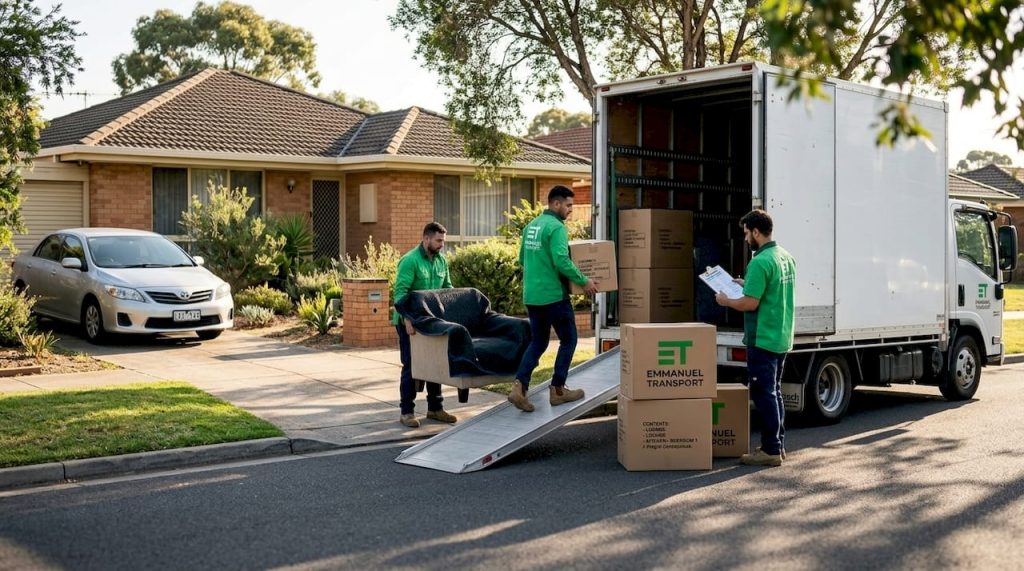

Booking reliable movers means confirming a company’s licencing, insurance, and written estimates before you hand over a single box. Most moving disasters trace back to one skipped step: choosing a removalist based on price alone without checking credentials or understanding what the quote actually covers. This guide walks you through every stage of the process, from verifying a mover’s operating authority to reading the fine print in your contract, so your move stays on budget and on schedule. Whether you’re relocating across Perth or planning an interstate move, the steps here apply directly to your situation.
How to book reliable movers: verify credentials first
The single most effective way to protect yourself when hiring a removalist is to confirm their licencing before you agree to anything else. In Australia, interstate removalists must hold the appropriate operating authority, and legitimate companies display their registration numbers on their website, vehicles, and all paperwork. If a company cannot or will not show you this information, that is a clear warning sign.

For interstate moves, the FMCSA SAFER database lets you search a mover’s USDOT number to confirm active operating authority, household goods authorisation, insurance coverage, inspection results, and accident history. This single search tells you more about a company’s reliability than any testimonial on their own website. In Australia, you can cross-reference removalists through state-based consumer protection agencies and the Australian Furniture Removers Association (AFRA), which maintains a register of accredited members who meet minimum standards for training, equipment, and insurance.
Legitimate movers display their licence numbers on trucks, websites, and contracts. Inconsistency between any of these, such as a different company name on the truck versus the contract, is a red flag that warrants immediate investigation.
Here is a step-by-step process for verifying any removalist before you book:
- Search the company name and ABN on the Australian Business Register to confirm the business is registered and trading legally.
- Check AFRA membership at the AFRA website, which lists accredited removalists who meet industry standards for insurance and professional conduct.
- Request a copy of their public liability and goods-in-transit insurance certificate. A reputable company provides this without hesitation.
- Search for reviews on Google, ProductReview.com.au, and Trustpilot. Look for patterns in complaints, not just the star rating.
- Confirm the company address is a physical premises, not a P.O. Box. Scam operators frequently use P.O. Boxes to avoid accountability.
- Ask directly whether they subcontract your move. If they do, ask for the subcontractor’s credentials as well.
Pro Tip: If a mover’s website has no ABN, no physical address, and no mention of insurance, close the tab. No amount of low pricing justifies the risk of your belongings disappearing or being held to ransom.
What are the different types of moving estimates?
Understanding your estimate type is the second most important step in finding trustworthy movers, and it is where most families get caught off guard. There are three types of written estimates, and each carries different financial implications.
| Estimate type | How it works | Your financial risk |
|---|---|---|
| Binding estimate | Price is fixed regardless of actual weight or time | Low. You pay exactly what was quoted. |
| Non-binding estimate | Final price based on actual weight; can exceed quote | Medium. Federal regulations cap this at 110% of the original estimate at delivery. |
| Binding not-to-exceed | Price cannot exceed the estimate; pays less if shipment is lighter | Lowest. You benefit if your load is lighter than surveyed. |
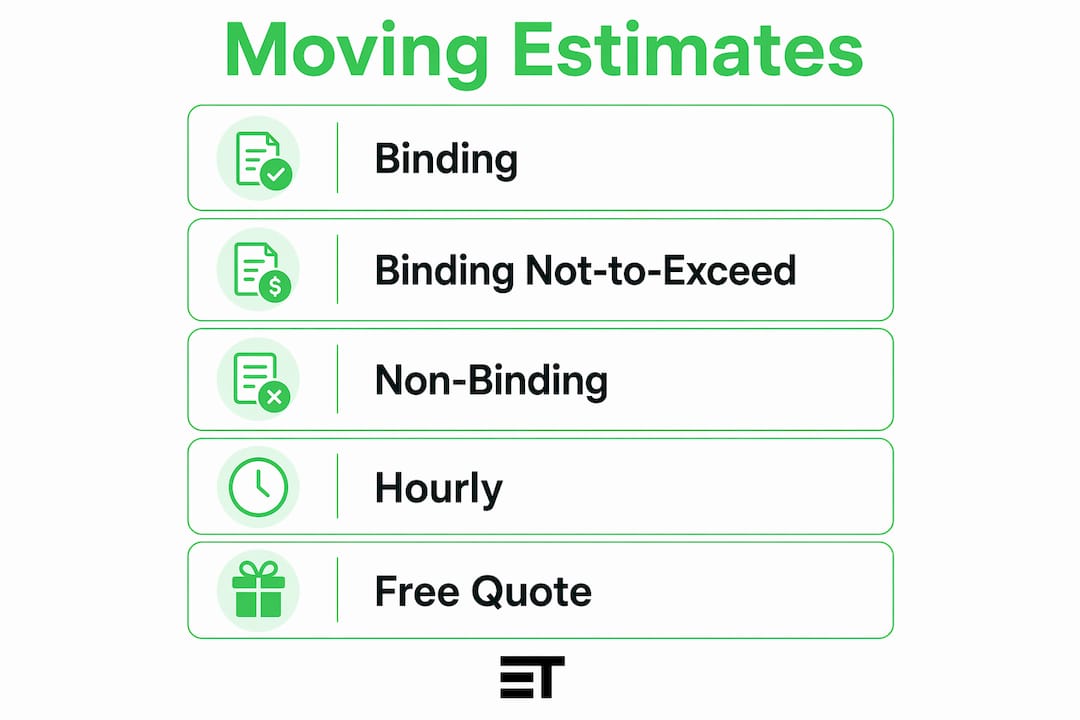
The binding not-to-exceed estimate is the most consumer-friendly option. It locks in a ceiling price while still allowing you to pay less if your actual load comes in under the surveyed weight. Many consumers expect a fixed price but movers often default to non-binding estimates, which can result in a bill significantly higher than expected on moving day.
An in-home or video survey is critical for any binding or binding not-to-exceed estimate to be accurate. Without a proper survey of your actual possessions, the estimate is essentially a guess, and that guess almost always works against you. Reputable removalists will insist on conducting a survey before issuing a binding quote.
When reviewing any estimate document, check for these specific line items:
- A complete inventory list of items being moved
- Accessorial fees for stairs, long carries, heavy items, and packing materials
- Valuation coverage options (basic liability versus full replacement value)
- The delivery window or specific delivery date
- Fuel levies and any weekend or public holiday surcharges
Pro Tip: Before signing, place the estimate and the bill of lading side by side. Every item and fee listed in the estimate must appear in the bill of lading. If something new appears on moving day, you have the right to question it before work begins.
For families comparing affordable interstate moving options, understanding these estimate types is the difference between a predictable budget and a nasty surprise at the destination.
How far in advance should you book movers?
Timing your booking correctly is one of the most underrated parts of a guide to booking movers. Book too late and you lose access to reputable companies, face higher prices, and risk your preferred date being unavailable entirely.
The recommended booking windows vary by move type and season:
- Local moves (within the same city or suburb): Book at least 2 to 4 weeks in advance. During peak periods, extend this to 6 weeks.
- Interstate moves: Book 4 to 8 weeks ahead to secure availability and better pricing. This window gives you time to compare multiple quotes properly.
- Cross-country or long-distance moves: Allow 8 to 12 weeks minimum. Logistics become significantly more complex and crew and vehicle availability is limited.
- International relocations or peak summer moves: Book 3 to 4 months in advance. Demand spikes sharply between November and February in Australia, which is the peak residential moving season.
Booking early delivers three concrete advantages beyond just securing a date. First, you lock in current pricing before any seasonal rate increases take effect. Second, you get your choice of crew and equipment, which matters when you have a piano, a pool table, or fragile antiques. Third, you give yourself time to get multiple written quotes and compare them properly rather than accepting the first available option under time pressure.
Last-minute bookings are not impossible, but they carry real risks. Availability narrows to whoever has a gap in their schedule, which is not always the most reputable operator. If you must book within a week of your move date, focus your search on established companies with verifiable reviews rather than the cheapest option that appears in a quick search.
Pro Tip: Even if your move date is not yet confirmed, contact your preferred removalist and provisionally hold a date. Most reputable companies allow you to adjust the date once without penalty, provided you give adequate notice.
Use a moving checklist to map out your timeline from booking through to moving day, so nothing falls through the cracks.
What should you check in your moving contract?
A signed contract is your only real protection if something goes wrong, so reading it carefully before you commit is non-negotiable. The contract, also called the bill of lading for interstate moves, must reflect everything discussed during the quoting process.
Check these specific elements before signing:
- All services are explicitly listed. Packing, unpacking, disassembly, and reassembly should each appear as line items if they were discussed.
- All fees are itemised. Delivery windows, fuel levies, stair fees, and long-carry charges must appear in writing. Hidden fees are the most common source of moving-day disputes.
- The delivery window is specified. A broad delivery window of several days is standard for interstate moves, but if you need a specific date, get that confirmed in writing before signing.
- Valuation coverage is clearly stated. Basic carrier liability in Australia typically covers only a fraction of replacement value. If you have high-value items, ask about full replacement value coverage or check whether your home and contents insurance extends to transit.
- Cancellation and rescheduling terms are clear. Understand what happens to your deposit if your settlement date changes or your move is delayed.
Beyond the contract itself, communication quality is a reliable indicator of how a company will perform on moving day. A removalist who responds promptly, answers questions directly, and proactively asks about stairs, parking constraints, and heavy items is demonstrating the same attention to detail they will bring to your move. If a company does not ask about these factors during quoting, expect possible underquoting and surprise charges when the crew arrives.
Keep copies of every document: the original estimate, the signed contract, any email or text confirmations, and the final bill of lading. If a dispute arises, you can escalate through the FMCSA’s National Consumer Complaint Database or, in Australia, through your state’s consumer protection agency and Fair Trading office. The escalation process involves first contacting the mover directly, then filing formal complaints with the relevant authority to document and resolve the dispute.
How do you avoid common moving booking mistakes?
The most expensive moving mistakes are almost always avoidable, and they follow a predictable pattern. Knowing what to watch for puts you well ahead of the average person booking a removalist for the first time.
- Choosing on price alone. The lowest quote is frequently the least accurate one. Underquoting is a deliberate tactic used by some operators to win the booking, with the real cost revealed on moving day when you have no leverage.
- Skipping the in-home survey. A phone or online quote without a proper survey of your belongings is not a reliable estimate. Insist on an in-home or video survey for any move of significant size.
- Accepting a verbal agreement. Nothing discussed verbally is enforceable. Every service, fee, and timeline must appear in a written document you have signed and received a copy of.
- Paying a large upfront deposit. Reputable movers request no more than 20% deposit and do not require cash-only payments. A demand for a large cash deposit before the move is a strong indicator of an unreliable or fraudulent operator.
- Not getting multiple quotes. Comparing at least three written quotes from verified companies gives you a realistic picture of market pricing and exposes any outliers that are either suspiciously cheap or unjustifiably expensive.
Pro Tip: When comparing quotes, do not just compare the bottom-line number. Compare what is included. A quote that covers packing materials, disassembly, and stair fees may be better value than a cheaper quote that excludes all three.
For practical guidance on protecting your belongings during transit, moving blankets and protective wrapping are worth discussing with your removalist during the quoting process, particularly for furniture and fragile items.
Key takeaways
Booking reliable movers requires verifying licencing, securing a written binding estimate, and confirming all fees and services in your contract before moving day.
| Point | Details |
|---|---|
| Verify credentials first | Check AFRA membership, ABN registration, and insurance certificates before accepting any quote. |
| Choose the right estimate type | A binding not-to-exceed estimate gives you the strongest price protection and is worth requesting specifically. |
| Book well in advance | Local moves need 2 to 4 weeks; interstate moves need 4 to 8 weeks; peak season moves need 3 to 4 months. |
| Read the contract in full | Confirm all fees, delivery windows, and services are itemised before signing the bill of lading. |
| Avoid large upfront deposits | Reputable removalists request no more than 20% upfront and never demand cash-only payment. |
What I’ve learned from years of watching moves go wrong
After working in the removals industry in Perth for many years, the pattern I see most often is not incompetent movers. It is families who did everything right except one thing, and that one thing cost them dearly.
The most common single point of failure is the estimate. People accept a non-binding quote over the phone, skip the in-home survey because it feels like an extra step, and then face a bill 30% higher than expected when the truck arrives. I always recommend requesting a binding or binding not-to-exceed estimate, and I will not issue one without conducting a proper survey first. That is not bureaucracy. That is the only way to give you a number I can stand behind.
The second thing I have learned is that booking early is not just about availability. It is about having options. When you book eight weeks out, you can afford to walk away from a company that gives you a bad feeling during the quoting process. When you book three days out, you take whoever answers the phone.
My practical recommendation: keep a folder, physical or digital, with every document related to your move. The original estimate, the signed contract, the confirmation email, and the final invoice. If something goes wrong, that folder is your evidence. Without it, disputes become your word against theirs, and that rarely ends well for the customer.
Communication is the last piece. The best removalists I have worked alongside ask more questions during the quoting process than most customers expect. They want to know about the narrow hallway, the third-floor walk-up, and the antique sideboard that needs special wrapping. If a company is not asking those questions, they are not building an accurate quote. And an inaccurate quote is the beginning of a bad moving experience.
— Emmanuel
Moving in Perth? Emmanuel Transport makes it straightforward
Planning a residential move in Perth and want a removalist you can actually trust? Emmanuel Transport holds full public liability and goods-in-transit insurance, provides transparent written quotes, and conducts proper surveys before issuing any binding estimate. There are no hidden fees and no cash-only deposit demands.

Whether you are moving a two-bedroom apartment or a large family home, the team at Emmanuel Transport handles every job with the same care and attention to detail. Read more about how moving companies support your relocation to understand what a professional removalist should be doing at every stage. When you are ready, get a free personalised quote from Emmanuel Transport’s residential moving team and lock in your date before the peak season fills up.
FAQ
How do I verify a removalist is legitimate in Australia?
Check the company’s ABN on the Australian Business Register, confirm AFRA accreditation, and request a copy of their public liability and goods-in-transit insurance certificate. Legitimate removalists display their credentials on their website and provide documentation without hesitation.
What is the safest type of moving estimate to request?
A binding not-to-exceed estimate is the most consumer-friendly option. It caps your price at the quoted amount but allows you to pay less if your actual load is lighter than surveyed, giving you price certainty with no downside risk.
How far ahead should I book movers for an interstate move?
Book interstate movers 4 to 8 weeks in advance for standard moves, and 3 to 4 months ahead for peak summer relocations. Booking early secures your preferred date and gives you time to compare multiple written quotes.
What deposit should I expect to pay when booking movers?
Reputable movers request no more than 20% deposit upfront and do not require cash-only payment. A demand for a large cash deposit before the move is a strong warning sign of an unreliable operator.
What can I do if a moving company overcharges or causes damage?
Contact the company directly first with your written documentation. If the issue is not resolved, file a formal complaint through your state’s consumer protection agency or Fair Trading office. For interstate moves, the FMCSA complaint database provides a formal escalation pathway to document and resolve disputes.