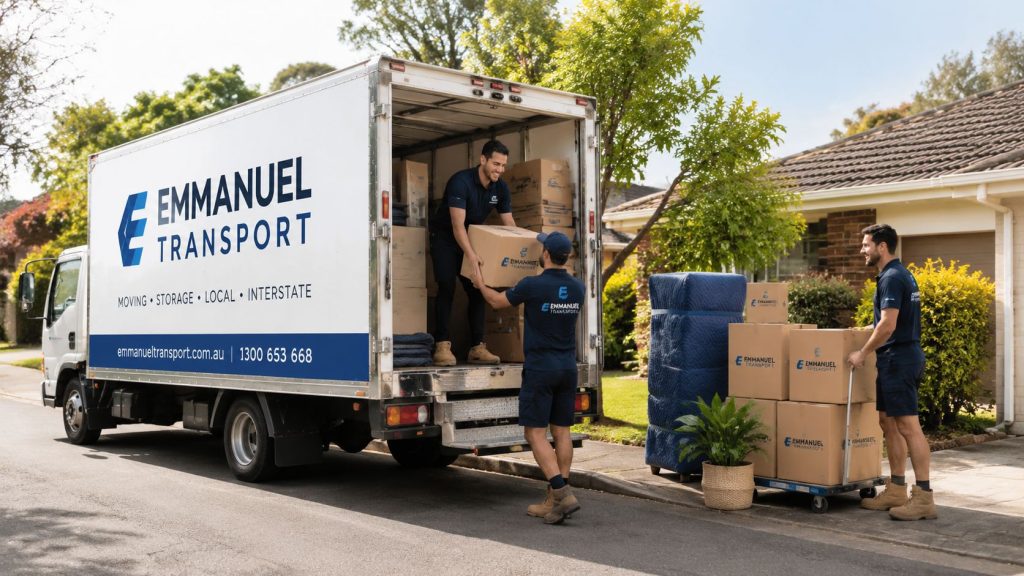

Choosing between the types of house removals available is one of the first decisions you’ll make when planning a move, and it’s one that directly affects your budget, your stress level, and whether your belongings arrive in one piece. Most people default to whatever option their mate used or pick the cheapest quote they find online. Neither approach tends to end well. This guide breaks down every major removal type available in Australia in 2026, gives you a practical framework for comparing them, and helps you work out which one actually fits your situation.
Table of Contents
- Key takeaways
- 1. What are the main types of house removals?
- 2. Key criteria for choosing a house removal type
- 3. Full-service house removals
- 4. Self-service removal options
- 5. Hybrid moving solutions
- 6. Side-by-side comparison of removal types
- 7. Types of furniture removals and what they mean for your choice
- 8. How to choose the right removal type for your move
- What experience has taught me about house removals
- Move with confidence using Emmanuel Transport in Perth
- FAQ
Key takeaways
| Point | Details |
|---|---|
| Know your removal types | Full-service, self-service, and hybrid options suit different budgets, timelines, and physical capacities. |
| Cost varies significantly | Full-service moves cost $4,000 to $12,000+, while self-service options range from $1,000 to $6,500. |
| Hybrid options save money | Combining containers with labour-only movers reduces physical strain without paying full-service prices. |
| Plan logistics early | Access, parking, and utility setups are the most commonly overlooked factors that derail otherwise well-organised moves. |
| Match type to your move | Move size, distance, and your physical capacity should drive your choice, not just upfront cost. |
1. What are the main types of house removals?
The different house moving services available today fall into three broad categories: full-service, self-service, and hybrid. Within each category, you have further options that vary in cost, convenience, and the amount of physical work you take on yourself.
Full-service removals involve a professional team handling everything from packing your kitchen to unloading the last box at your new address. Self-service options put you in the driver’s seat, literally or figuratively, covering things like moving container hire, truck rentals, and labour-only crews. Hybrid solutions sit in the middle, letting you mix and match to suit your budget and energy levels.
Understanding these categories up front makes every other decision easier. Once you know where you sit on the budget-versus-convenience spectrum, the right option becomes much clearer.
2. Key criteria for choosing a house removal type
Before you compare quotes or book anyone, spend ten minutes thinking through these factors. They will do more to guide your decision than any price list.
Budget. Full-service vs self-service moving comes down to cost more than anything else. Full-service is premium. Self-service is cheaper but requires more effort. Hybrid sits between the two.
Move size and distance. Local moves are typically billed by the hour, while long-distance moves are usually priced by weight or volume plus distance. A studio apartment moved across Perth and a five-bedroom home moved interstate are entirely different problems.
Physical capacity. Be honest with yourself here. If you have a bad back, two young kids, or no reliable friends available on a Saturday, a DIY move is a recipe for injury or chaos.
Time and scheduling flexibility. Some removal types lock you into specific dates. Others let you load over a week and transport at your convenience. Your settlement date and lease start date will often dictate how much scheduling room you have.
Risk tolerance. Who is liable if something breaks? Full-service companies carry insurance for your goods. If you rent a truck and scratch your grandmother’s sideboard on the tailgate, that is on you.
- Budget range (full-service vs self-service)
- Move size: number of bedrooms and bulky items
- Distance: local, interstate, or international
- Your physical ability and available helpers
- Scheduling constraints around settlement or lease dates
- Liability and insurance preferences
Pro Tip: Decluttering before you book any removal type is one of the fastest ways to reduce cost. Local moves priced by weight or labour get cheaper the less you move. Sell, donate, or dispose of anything you have not used in two years.
3. Full-service house removals
Full-service is exactly what it sounds like. A professional team arrives at your home, packs everything, loads the truck, drives to your new address, and unloads and unpacks on the other end. You do almost nothing physical. Full-service movers handle packing, loading, driving, and unloading, which makes them ideal for time-sensitive or physically demanding moves.
This option suits large homes, elderly movers, people relocating interstate or internationally, or anyone who values their time above all else. It is also the right call when you have antiques, pianos, or fragile artwork that require specialist handling.
The tradeoff is cost. Full-service moves typically cost between $4,000 and $12,000+, depending on home size, distance, and the level of packing service included. That is a wide range, and getting a virtual survey rather than guessing will give you a much tighter estimate. Virtual surveys take about 23 minutes and have become standard practice for improving pricing transparency, replacing the old system of a removalist walking through your home.
Advantages of full-service removals:
- Zero physical effort required from you
- Professional packing reduces damage risk
- Single point of contact for the entire move
- Liability typically covered by the company’s insurance
- Fastest option for large or complex moves
Disadvantages:
- Highest cost of all removal types
- Less scheduling flexibility once booked
- You relinquish control over how items are packed
Pro Tip: Ask any full-service removalist whether their quote includes professional removal services for packing materials. Some quotes look competitive until you realise boxes, tape, and wrapping are billed separately.
4. Self-service removal options
Self-service is the category where your house relocation options open up considerably. You take on more of the physical and logistical work, which brings the cost down significantly. There are three main types within this category.
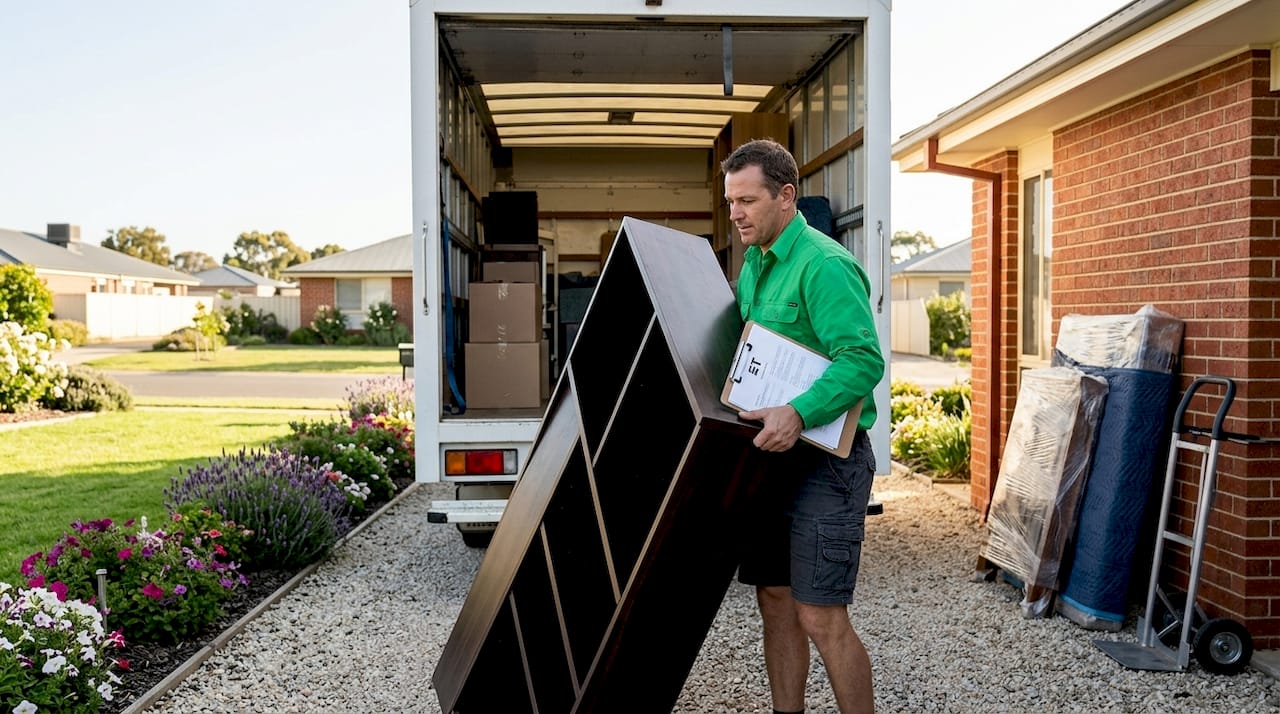
Moving containers. A company drops a large container at your home, you load it at your own pace, and the company transports it to your new address. Self-service containers require you to load and unload but the company handles all the driving, which is a good middle point for people who want scheduling flexibility without driving a large truck themselves. Read more about container hire logistics if this option appeals to you.
Truck rentals. You hire the truck, drive it yourself, and handle all loading and unloading. This is the most hands-on and lowest-cost option, but it requires at least one person with a valid licence, the confidence to drive a large vehicle, and a crew of helpers. This is a practical approach for smaller moves, younger renters, and anyone relocating within the same city.
Labour-only movers. You hire the truck or container but bring in a professional crew just for the heavy lifting. This is an underappreciated option that more families should consider. You control the schedule and the truck, but professionals handle your furniture, which reduces injury risk and speeds up the process considerably. For practical advice on loading a moving truck efficiently, it is worth reading up before you start.
Self-service cost comparison:
- Moving containers: typically $1,000 to $3,500 depending on size and distance
- Truck rentals: usually $300 to $1,500 for local moves, more for interstate
- Labour-only movers: $80 to $150 per hour per worker on average
Pro Tip: If you choose truck rental, book the largest truck that fits your budget. Underestimating how many trips a smaller truck requires is one of the most common and costly mistakes in DIY moves.
5. Hybrid moving solutions
Hybrid moving is what happens when you balance budget, physical ability, and scheduling flexibility without committing to either extreme. It is probably the most practical option for the majority of Australian families moving in 2026, and it is chronically underused because people do not realise it is available.
The most common hybrid approach is to hire a moving container for transport but bring in labour-only movers for the loading and unloading. Hybrid moving reduces physical strain while saving money compared to full-service, which makes it well suited to families with kids, older movers, or anyone with a tight timeline but a limited budget.
Another popular hybrid is to handle all packing yourself, then hand everything over to a full-service team on move day. You save on packing labour costs, maintain control over how your belongings are organised, and still get professional help for the physically demanding part.
“The best move I have seen planned well was not the cheapest or the most expensive. It was the one where the family knew exactly what they could handle themselves and paid for help with everything else.”
Hybrid options to consider:
- Container transport plus labour-only loading crew
- DIY packing plus full-service transport and unloading
- Truck rental plus hired helpers for heavy furniture only
- Partial packing service for fragile items only, DIY for the rest
6. Side-by-side comparison of removal types
Use this table to quickly match a removal type to your situation.
| Removal type | Who does the labour | Who drives | Scheduling flexibility | Typical cost range | Best suited for |
|---|---|---|---|---|---|
| Full-service | Removalists | Removalists | Low | $4,000 to $12,000+ | Large homes, interstate, time-sensitive |
| Moving container | You | Company | High | $1,000 to $3,500 | Flexible timelines, medium to large moves |
| Truck rental | You | You | Very high | $300 to $1,500 | Small moves, budget-conscious, local |
| Labour-only movers | Professionals | You | Moderate | $80 to $150/hr per worker | Medium moves, DIY with physical limits |
| Hybrid (container + labour) | Mix | Company | High | $1,500 to $5,000 | Families, budget with convenience needs |
The table above makes clear that no single option is universally best. The right choice balances budget, physical capacity, and schedule. A single professional with flexibility and a one-bedroom apartment has entirely different needs than a family of five moving from Perth to Brisbane.
7. Types of furniture removals and what they mean for your choice
Most people think of house removals as a single category, but the types of furniture removals you need to move can shift your decision significantly. Standard furniture like sofas, beds, and dining tables can be handled by almost any removal type with basic care.
Specialist items are a different story. Pianos, pool tables, large safes, and antique furniture often require dedicated equipment, experienced handlers, and in some cases, disassembly and reassembly. These items almost always tip the scale towards full-service or at minimum a labour-only crew with demonstrated experience in specialist removals. Check whether a removalist is genuinely experienced with these items, not just willing to attempt it, before you sign anything.
Flat-pack furniture is also worth thinking about separately. Moving a household full of assembled flat-pack pieces often makes more sense when you disassemble them first, wrap the panels, and reassemble at the destination. This reduces damage risk and makes loading much more space efficient.
Pro Tip: Take photos of how electronics, shelving systems, and furniture are assembled before disassembly. This saves significant frustration when reassembling at your new home. Read more in our furniture removal guide.
8. How to choose the right removal type for your move
Apply the criteria from Section 2 to your specific move. Here is a practical process to work through.
- List every room and large item in your current home. Count beds, sofas, appliances, outdoor furniture, and anything oversized. This gives you a realistic sense of volume.
- Confirm your move distance. Local Perth moves are priced and planned differently from an interstate relocation. Know your exact origin and destination suburbs.
- Set a realistic budget range. Include a 10 to 15 per cent buffer for unexpected costs like packing materials, access fees, or storage if your settlement date shifts.
- Assess your physical capacity honestly. Do you have reliable help? Any health constraints? Young children or pets to manage on move day?
- Check access at both properties. Access logistics like parking, lifts, and narrow staircases cause more move failures than removalists do. Know your constraints before you book.
- Get at least three quotes using the same inventory list for accurate comparisons. A detailed house moving checklist will help you capture everything for your quotes.
- Confirm insurance and liability with any removalist or hire company before committing. Know what is covered and what is not.
Pro Tip: Book your removal at least four to six weeks before your move date during peak periods like school holidays, end of month, and December. Availability tightens quickly and last-minute bookings often carry premium pricing.
Understanding why hiring professional movers is worth the cost for certain move types will help you make this call with confidence rather than second-guessing it on move day.
What experience has taught me about house removals
I have seen hundreds of moves go well and more than a few go sideways. The biggest lesson I have taken from all of it is that flexibility beats lowest cost almost every time. The family that saves $800 by renting a truck and roping in a few mates often ends up paying for it in time, injuries, damaged goods, or a second trip they never planned for.
What genuinely catches people off guard is the access and logistics side of moving. A narrow driveway at the new property, a building that requires a lift booking, or a gate that the removal truck cannot get past. These logistical oversights are responsible for most of the move failures I have seen, not the actual removalists or the removal type chosen.
My honest take on labour-only movers is that they are undervalued. For someone doing a medium-sized DIY move, paying two experienced professionals for three or four hours is one of the best decisions they can make. You keep control of the schedule, you save on full-service costs, and your back thanks you the following morning.
The other thing I have learned is that planning early and with specificity beats planning thoroughly at the last minute. Knowing your exact inventory, your access constraints, and your hard deadlines six weeks out gives you options. Knowing them the week before gives you whatever is still available.
Plan to your personal limits, not to the limits of what a determined person could theoretically manage.
— Emmanuel
Move with confidence using Emmanuel Transport in Perth

When you are ready to move beyond the research phase and actually book your removal, Emmanuel Transport makes the process straightforward. Whether you need a full-service team to handle everything from packing to unpacking, or a labour-only crew to take care of the heavy lifting while you stay in control of the rest, the team at Emmanuel Transport has options that fit.
Perth families and renters trust Emmanuel Transport for transparent pricing, fully insured vehicles, and staff who treat your belongings with genuine care. There are no surprise fees and no vague quotes. Get a free quote for your Perth house removal today and find out exactly what your move will cost before you commit to anything. For more on why professional help pays off, read about stress-free professional moves and what makes the difference.
FAQ
What are the main types of house removals in Australia?
The main types are full-service removals, self-service options (including truck rentals and moving containers), labour-only movers, and hybrid combinations of these. Each suits different budgets, move sizes, and levels of physical capacity.
How much do different house removal types cost?
Full-service moves cost between $4,000 and $12,000+, while self-service options like truck rentals and moving containers typically range from $1,000 to $6,500 depending on distance and move size.
What is a hybrid move and when does it make sense?
A hybrid move combines elements of self-service and full-service, such as hiring a container for transport but using labour-only professionals for loading and unloading. It is ideal for families wanting to reduce costs without taking on all the physical work themselves.
How do I choose between local and full-service removals?
Consider your move size, distance, physical capacity, and budget. Local moves billed by the hour suit smaller, nearby relocations, while full-service options make more sense for large homes, interstate moves, or anyone with time or physical constraints.
What is the most affordable moving type for a small home?
Truck rental is typically the lowest-cost option for a small home or apartment, particularly for local moves. Labour-only movers are the next step up, offering professional handling without full-service pricing.
Recommended
- The Ultimate 2026 House Moving Checklist Australia: 10 Essential Steps | Emmanuel Transport Removalists Perth
- Home Removals Perth: Your 2026 Moving Guide | Emmanuel Transport Removalists Perth
- The Ultimate 2026 Checklist Moving House Australia: 10 Key Stages | Emmanuel Transport Removalists Perth
- The Ultimate Checklist Moving House: 10 Essential Steps for 2026 | Emmanuel Transport Removalists Perth