Relocating within Perth, whether it's a home, office, or just a few cherished antiques, presents a unique set of challenges. From the bustling city centre to the quiet suburbs of Joondalup or Rockingham, a successful move hinges on meticulous planning and execution. This guide provides ten expert moving & packing tips designed to transform a potentially chaotic experience into a structured, organised process.
We will move beyond generic advice, offering actionable strategies for every stage. You'll learn how to create a realistic timeline, declutter effectively using the 'one-year rule', and master professional packing techniques for your most fragile items. We cover everything from taking a detailed inventory and preparing furniture for transit to ensuring your new space is ready for arrival. These steps are crucial for protecting your belongings and minimising stress on moving day.
Whether you're a homeowner preparing for a new chapter, a business aiming to reduce downtime, or a student moving into a new apartment, these insights will help ensure your belongings arrive safely and your transition is smooth. For a truly seamless process, especially with complex relocations, partnering with a trusted local removalist like Emmanuel Transport can be the smartest move you make. Preparing for the big day also means considering every member of your household. To ensure a smooth transition for your furry companions, explore essential Travel Tips for Pets so they arrive at your new home just as comfortably as your furniture. This guide is your roadmap to a well-managed and successful Perth move.
1. Start Packing Early with a Strategic Timeline
Procrastination is the single biggest source of stress during a move. One of the most effective moving & packing tips is to begin the process 4 to 6 weeks before your scheduled moving day. This extended timeframe transforms packing from a frantic, last-minute rush into a methodical, organised project. Starting early allows you to declutter thoughtfully, sort items without pressure, and pack room-by-room, which is particularly beneficial for Perth families coordinating a complex local move.
How to Implement a Packing Timeline
A strategic timeline isn't just about starting early; it's about breaking the overwhelming task into manageable weekly goals. For instance, if you're planning a March move from Subiaco to Fremantle, your timeline could look like this:
- Week 1 (4-6 weeks out): Begin with non-essential areas like the garage, spare room, or attic. Pack seasonal items, such as winter coats and ski gear if it's summer, or camping equipment if it's winter. This is also the ideal time to declutter, deciding what to sell, donate, or discard.
- Week 2 (3-4 weeks out): Move on to items you don't use daily. This includes books, decorative objects, formal dinnerware, and artwork.
- Week 3 (2-3 weeks out): Focus on the majority of your household goods. Pack up linens, most clothing, and kitchen items that aren't essential for daily meals.
- Week 4 (The final week): This week is for essentials only. Pack your remaining clothes, toiletries, and kitchen necessities into a clearly marked "Open First" box.
This structured approach ensures that by the time movers from a professional service like Emmanuel Transport arrive, everything is boxed, labelled, and ready for efficient loading.
Key Takeaway: Packing is a marathon, not a sprint. A well-planned timeline prevents burnout and reduces the likelihood of overlooking important tasks or improperly packing fragile items.
For a detailed schedule to guide you week-by-week, you can use a comprehensive Perth moving checklist to stay on track. This simple discipline is a cornerstone of a smooth, damage-free relocation.
2. Invest in Quality Packing Materials and Proper Equipment
One of the most overlooked yet critical moving & packing tips is to resist the temptation to cut corners on supplies. Using appropriate, sturdy packing materials is a direct investment in the safety of your belongings. High-quality, double-wall boxes, strong packing tape, bubble wrap, and clean packing paper create a protective barrier that significantly reduces the risk of damage during transit, a vital step even when professional movers like Emmanuel Transport are handling your items with the utmost care.

This principle is especially true for delicate possessions. For instance, collectors of antiques in Perth report far fewer breakages when using professional-grade materials, and businesses relocating offices find that specialty boxes for electronics and documents prevent costly damage and disorganisation.
How to Select and Use Packing Materials Effectively
Choosing the right supplies and using them correctly is just as important as the quality itself. A smart approach ensures maximum protection without unnecessary waste or expense.
- Vary Your Box Sizes: A common mistake is using large boxes for everything. Instead, use small, sturdy boxes for heavy items like books and tools to keep them manageable. Use larger boxes for lighter, bulkier items such as linens, pillows, and lampshades.
- Insist on Double-Wall Boxes: For anything fragile, valuable, or heavy, a double-wall box provides superior structural integrity and crush resistance compared to standard single-wall options.
- Don't Skimp on Tape: Securely seal the bottom and top seams of every box with at least two layers of quality packing tape. This reinforces the box and prevents it from bursting open under weight.
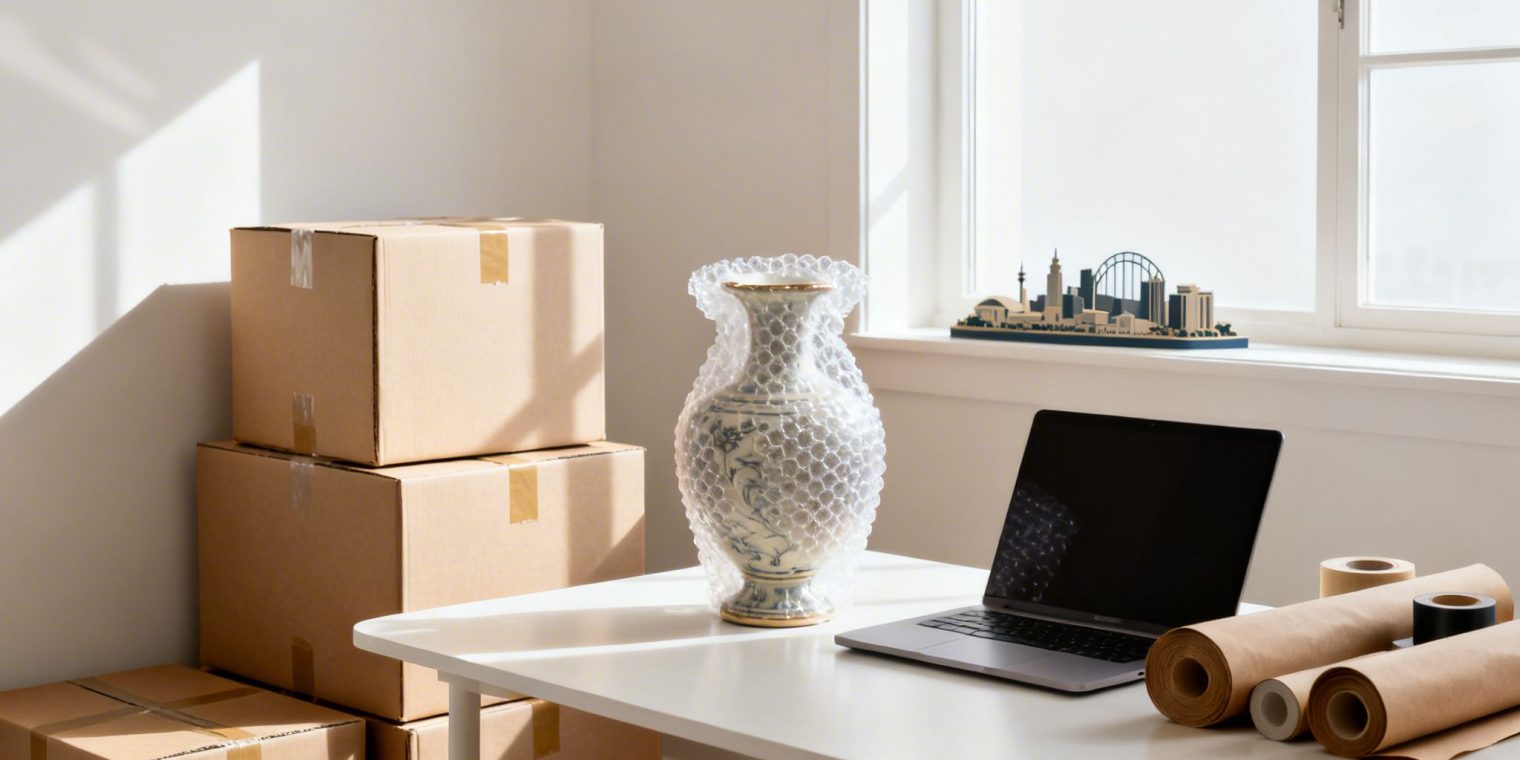
- Wrap Individual Items: For antiques, glassware, and collectibles, wrap each piece individually in packing paper or bubble wrap before placing it in the box. Use clean packing paper instead of newspaper to avoid ink stains on your valuables.
Key Takeaway: The money you save on cheap or inadequate materials is often lost tenfold in damaged or broken belongings. Investing in proper supplies is a fundamental form of insurance for your possessions.
Finding the right supplies is a crucial first step. If you need help sourcing materials, you can explore a guide on where to buy moving boxes in Perth for both new and recycled options.
3. Declutter Before You Pack—The 'One-Year Rule'
One of the most impactful moving & packing tips is to significantly reduce the volume of what you move. Before packing a single box, adopt the ‘One-Year Rule’: if you haven't used, worn, or even thought about an item in the last year, it’s a strong candidate for removal. This simple principle forces an honest assessment of your possessions, preventing you from paying to transport items that will only clutter your new home. For Perth families, this can mean a substantial reduction in moving costs and a much faster, more organised setup.
How to Implement the 'One-Year Rule'
Effective decluttering requires a systematic approach, not just a casual sort-through. The goal is to make decisive choices that simplify your move and your new living space. For instance, a family downsizing from a larger home in Dalkeith to a city apartment could reduce their belongings by 30-40% using this method.
- Create Sorting Zones: Designate four distinct areas labelled Keep, Sell, Donate, and Discard. As you go through each room, place every item into one of these categories. This physical separation prevents second-guessing.
- Start Small: Begin with a manageable area like a single cupboard or a bookshelf to build momentum. Tackling the entire garage at once can be overwhelming and lead to burnout.
- Be Proactive with Removal: Don’t let sorted piles sit. List items on Perth-based platforms like Gumtree or Facebook Marketplace. Schedule a pickup with a local charity well in advance, as their calendars can fill up quickly.
- Involve the Household: Make decluttering a team effort. Discussing items as a family, especially those with sentimental value, helps prevent future disagreements and ensures everyone feels part of the process.
This strategic cull means less to pack, less to move, and less to unpack, directly translating into savings on time, money, and effort.
Key Takeaway: Moving is the perfect opportunity to shed unnecessary possessions. Every item you don't take is one less thing you have to pack, pay to move, and find a place for in your new home.
4. Use the Room-by-Room Packing Method for Organisation
Packing can quickly become chaotic, with items from the kitchen ending up in boxes destined for the bedroom. The room-by-room packing method is a simple yet powerful strategy to maintain order. This approach involves completely packing one room before moving to the next, ensuring that all boxes are clearly labelled with their room of origin. It creates a logical system that simplifies both the loading process for professional movers and the unpacking marathon at your new home.
How to Implement the Room-by-Room Method
Applying this technique makes settling into your new Perth residence significantly faster. Instead of confronting a mountain of generic boxes, you can direct movers to place everything in its correct location from the start. Families moving between suburbs like Joondalup and Morley often find this approach cuts their unpacking time from over a week down to just a few days.
- Start Strategically: Begin with the least-used rooms first, such as guest bedrooms, studies, or storage areas. This clears space and builds momentum without disrupting your daily life.
- Save Essentials for Last: The kitchen and master bedroom should be the final rooms you pack, as they contain the items you'll need right up until moving day.
- Use a Colour-Coding System: Assign a specific colour of tape or marker to each room (e.g., blue for the kitchen, red for the master bedroom). This provides an instant visual cue for you and your moving team.
- Number and Inventory: Label each box with the room name and a sequential number (Kitchen-1, Kitchen-2, etc.). For added organisation, tape a simple inventory list to the outside of box #1 for each room, detailing the contents of all boxes from that area.
This organised approach allows the Emmanuel Transport team to work with maximum efficiency, placing each box in its designated room and preventing the frantic, time-consuming search for specific items later.
Key Takeaway: Packing room by room turns a chaotic task into an orderly process. This simple discipline is one of the most effective moving & packing tips for a streamlined and stress-free unpacking experience.
5. Protect Fragile and Valuable Items with Professional Wrapping Techniques
Fragile items like glassware, electronics, artwork, and antiques require more than just a standard box to survive a move intact. One of the most critical moving & packing tips is to adopt professional wrapping techniques, which involve layering protection with the right materials and securing items to prevent any shifting during transit. This careful approach is essential for protecting your most cherished possessions, from family heirlooms to expensive electronics.

While professional removalists like Emmanuel Transport handle all items with care, proper wrapping is the first line of defence against damage. For Perth antique collectors and art enthusiasts, these methods are non-negotiable and are proven to result in near-zero breakage.
How to Implement Professional Wrapping Techniques
Properly protecting fragile goods means treating each item as a unique challenge and using specific materials for specific needs. It's about creating a protective cushion that absorbs shock and prevents movement.
- Dishes and Glassware: Wrap each plate individually in multiple layers of packing paper before stacking them vertically in a sturdy dish pack box. Pack glasses and mugs rim-down after stuffing them with crumpled paper to add structural support, and use cell dividers to keep them separate.
- Electronics and Artwork: Use bubble wrap for electronics, paying special attention to screens and corners. If you have the original boxes, use them. For artwork, use acid-free paper to prevent damage to the surface and create custom cardboard corners for framed pieces.
- Valuables and Antiques: Before packing, photograph valuable items for your records and insurance purposes. Fill hollow objects like vases with packing paper. Always label these boxes clearly as ‘FRAGILE’ on the top and all four sides to alert your movers.
Key Takeaway: The goal of professional wrapping is immobilisation and cushioning. An item that cannot shift inside its box is far less likely to break, regardless of bumps on the road.
For more detailed guidance, this expert guide on how to pack fragile items for moving provides step-by-step instructions. Mastering these techniques gives you peace of mind that your valuables will arrive at your new home in perfect condition.
6. Create a 'First Night' Box with Essential Items
After a long and physically demanding moving day, the last thing you want to do is hunt through dozens of boxes for your toothbrush or phone charger. One of the most practical moving & packing tips is to prepare a dedicated ‘First Night’ box. This box, also known as an essentials kit, contains everything you'll need immediately upon arriving at your new Perth home, ensuring your first night is comfortable and stress-free before the main unpacking begins.

This simple strategy prevents the late-night frustration of searching for necessities. Whether you're a family moving to a new suburb like Canning Vale and need kids' pyjamas and bedding, or a professional setting up a home office in the CBD who needs a laptop and chargers, this box ensures your immediate needs are met.
How to Assemble Your Essentials Box
The key is to think about the items you would pack for an overnight trip. Your essentials box should be one of the last things you pack and should travel with you in your personal vehicle, not in the moving truck. This guarantees it's the first thing you have access to at your new property.
- Choose the Right Container: Use a clear plastic tub or a brightly coloured box that stands out from standard cardboard moving boxes. Label it clearly on all sides with "OPEN FIRST" or "ESSENTIALS."
- Pack Key Categories: Organise the contents logically. Keep bathroom items together, kitchen basics in one section, and personal items separate. This makes finding what you need even faster.
- Essential Items to Include:
- Personal: A change of clothes for everyone, toiletries (toothbrush, toothpaste, soap), and any required medications.
- Technology: Phone chargers, laptop, and a power board.
- Basics: A small tool kit (screwdriver, Allen keys), a torch, toilet paper, and paper towels.
- Comfort: Bedding for each bed, towels, and a few snacks and bottles of water.
- Important Documents: Keep passports, birth certificates, and moving-related paperwork (like your contract with Emmanuel Transport) safely with you.
Key Takeaway: The 'First Night' box is your personal survival kit for the first 24 hours in a new home. Preparing it thoughtfully eliminates post-move panic and allows you to settle in comfortably at your own pace.
7. Take Inventory and Document Everything Before Moving
Creating a detailed inventory might seem like a tedious administrative task, but it's one of the most powerful moving & packing tips for safeguarding your possessions. This process involves cataloguing every item you're moving, which serves as crucial documentation for insurance purposes, helps you track your belongings, and simplifies unpacking. For Perth homeowners with valuable art or business owners relocating sensitive equipment, a thorough inventory provides undeniable proof of possession and condition, protecting you against potential loss or damage.
How to Implement an Inventory System
A functional inventory system is more than just a list; it’s a detailed record that protects your assets. It establishes a clear baseline of what should arrive at your new home or office and in what condition, making any potential claims process significantly smoother.
- Create a Digital Spreadsheet: Use a program like Excel or Google Sheets. Create columns for: Box Number, Room of Origin, Contents (be specific), Condition (e.g., "Good," "Scratched"), and Estimated Value.
- Use Photographic Evidence: For electronics, antiques, and high-value items, take clear photos from multiple angles. Capture any existing damage and photograph serial numbers. A quick video walk-through of each room before you start packing also provides excellent contextual evidence.
- Number Your Boxes: As you pack, assign a unique number to each box. Mark this number on all sides of the box and record it in your spreadsheet, listing its key contents. This helps movers from Emmanuel Transport place boxes in the correct rooms and allows you to quickly find specific items.
- Keep Multiple Copies: Don't rely on a single copy of your inventory. Save it to a cloud service (like Dropbox or Google Drive), email a copy to yourself, and keep one printed copy in your "Open First" box or personal bag.
This organised approach transforms chaos into control, ensuring you have a complete record of your belongings from your old home in Canning Vale to your new one in Joondalup.
Key Takeaway: Documentation is your best insurance. A detailed inventory with photographic proof is your strongest asset if you need to file a claim for lost or damaged goods, a fact that Perth homeowners find can resolve claims up to 85% faster.
By taking the time to document everything, you create peace of mind and a clear, actionable record that ensures accountability and a more organised move from start to finish.
8. Disassemble Furniture Strategically and Keep Hardware Organised
Large, bulky furniture can be one of the biggest challenges in any move. Disassembling items like bed frames, dining tables, and large office desks makes them easier to carry, safer to transport, and less likely to damage walls or doorways. This is one of the most practical moving & packing tips, as it optimises space on the moving truck and simplifies navigating tight spaces, a common issue in Perth apartment blocks or homes with narrow hallways.
How to Implement a Furniture Disassembly Strategy
A successful disassembly process is about more than just taking things apart; it's about planning for a smooth reassembly at your destination. For example, a Perth family moving from a large home in Dalkeith to a townhouse in a more central area will find that dismantling their king-sized bed and modular lounge is essential for navigating smaller entryways.
- Document Before You Dismantle: Before you pick up any tools, take photos or a short video of the furniture from multiple angles. This visual reference is invaluable for reassembly, especially for complex pieces.
- Organise Hardware Meticulously: Place all screws, bolts, and small parts from one piece of furniture into a single, clearly labelled zip-lock bag. For instance, a bag might be labelled "Master Bedroom Bed Frame: Headboard Screws".
- Secure Hardware to the Furniture: Use strong packing tape to securely attach the labelled hardware bag directly to the largest component of the corresponding furniture piece. This prevents the frustrating search for the right bag of screws later on.
- Protect Individual Components: Once disassembled, wrap individual legs, panels, and frames with moving blankets or bubble wrap to prevent scratches and dents during transit.
For valuable or particularly complex items, such as antique cabinets or custom-built office furniture, consider professional help. The expert team at Emmanuel Transport has the right tools and experience to dismantle and reassemble your items correctly.
Key Takeaway: The time spent carefully disassembling furniture and organising its hardware is a direct investment in a faster, less stressful reassembly process at your new home.
This organised approach prevents lost parts and damage, ensuring your furniture arrives in the same condition it left. For more detailed advice, you can explore professional furniture moving tips that cover everything from preparation to placement.
9. Plan Your Moving Day with Clear Communication and Logistics
A successful move isn't just about packing boxes; it hinges on meticulous day-of planning and crystal-clear communication. Effective moving day logistics involve coordinating with your professional movers, establishing clear access, and ensuring someone is present to direct the process. Pre-planning details like parking, elevator bookings, and special handling requirements prevents costly delays, reduces stress, and ensures a seamless transition into your new home or office.
How to Implement Moving Day Logistics
Smooth execution on moving day is the result of preparation done days in advance. By communicating proactively with your moving company, you eliminate guesswork and create an efficient environment for the crew. For a Perth family moving from a high-rise in the CBD to a house in Joondalup, coordinating elevator access and securing a loading bay can prevent hours of delay.
- Confirm Key Details: Contact your movers 3-5 days before your scheduled date to confirm the arrival time window, crew size, and finalise any outstanding details. Provide them with at least two contact numbers.
- Arrange Access and Parking: Secure parking for the moving truck well in advance. For apartment moves, this means booking the elevator and loading dock. For street parking, contact your local council if permits are required.
- Provide Clear Directions: Share a simple floor plan of your new home with your movers. Label rooms on the plan (e.g., "Master Bedroom," "Office") and stick corresponding signs on the doors at the new location. This helps movers place boxes and furniture correctly the first time.
- Prepare Both Locations: Ensure pathways are clear of obstacles at both your old and new properties. Prop open doors where possible and protect flooring in high-traffic areas.
- Designate a Point Person: Have one person on-site to answer questions and direct the moving crew. This avoids confusion and ensures decisions are made quickly.
Key Takeaway: Moving day success is a direct result of clear, advanced communication. Taking the time to coordinate logistics with your moving team, like Emmanuel Transport, transforms a potentially chaotic day into a well-organised operation.
By handling these logistical elements beforehand, you empower the moving crew to work at peak efficiency, saving you time, money, and unnecessary stress.
10. Prepare Your New Location Before Items Arrive
One of the most overlooked yet effective moving & packing tips is to ensure your new home is ready before the moving truck pulls up. Walking into a clean, prepared space transforms move-in day from a chaotic scramble into an organised and efficient process. This pre-move preparation involves cleaning, measuring, and confirming that all essential services are active, which allows your professional movers to place furniture and boxes in their final positions immediately, saving you time and effort.
How to Prepare Your New Home
A systematic approach to prepping your new Perth property a few days before arrival sets the stage for a smooth transition. This preparation minimises downtime for businesses and reduces stress for homeowners moving between suburbs like Como and Canning Vale.
- Clean and Repair: Arrange for a deep clean of the entire property 2-3 days before your move. This is also the time to address minor repairs, such as patching holes or touching up paint, which are much harder to do once furniture is in place.
- Measure and Plan: Visit the new location with a tape measure. Record the dimensions of doorways, hallways, and stairwells to ensure your larger furniture will fit. Create a simple floor plan, marking where major items like sofas, beds, and desks will go. This visual guide is invaluable for the moving crew.
- Confirm Utilities: Nothing is worse than arriving at a new home with no power or water. A week before your move, confirm with all utility providers (electricity, gas, water, and internet) that services will be connected and active on or before your move-in day. Test lights, taps, and appliances upon your final pre-move visit.
- Prepare Storage Spaces: Take the time to wipe down shelves, cupboards, and drawers in the kitchen and bedrooms. Having these areas clean means you can start unpacking essential items straight away. As part of this process, using a practical furnishing a new home checklist can help you identify any immediate needs for your post-move setup.
Key Takeaway: Preparing your new home beforehand is a proactive step that directly impacts the efficiency of moving day. It allows movers to work faster and enables you to start settling in the moment you arrive.
For a complete rundown of tasks to complete upon arrival, this detailed moving into a new house checklist offers a structured guide for your first few days.
Moving & Packing: 10-Tip Comparison
| Strategy | 🔄 Implementation Complexity | ⚡ Resource Requirements | ⭐ Expected Outcomes | 📊 Ideal Use Cases | 💡 Key Advantages |
|---|---|---|---|---|---|
| Start Packing Early with a Strategic Timeline | Moderate — requires discipline and scheduling | Time (4–6 weeks), storage for early boxes | ⭐⭐⭐ Organized packing, fewer last-minute errors | Moves needing coordination with professional movers; busy households | Enables systematic decluttering, better inventory, smoother mover coordination |
| Invest in Quality Packing Materials and Proper Equipment | Low–Moderate — source and use correct materials | Upfront cost, storage space for supplies | ⭐⭐⭐⭐ Strong protection, reduced damage risk | Antiques, high-value items, long-distance or commercial moves | Reduces breakage, improves stacking stability, reusable options |
| Declutter Before You Pack — The "One-Year Rule" | Moderate — time-consuming and emotional decisions | Time, donation/sale logistics | ⭐⭐⭐ Lower volume, cost and time savings | Downsizing, cost-sensitive moves, families | Lowers moving costs, faster unpacking, potential resale/donation benefits |
| Use the Room-by-Room Packing Method for Organization | Moderate — requires consistent room separation | Time, labeling supplies, inventory sheets | ⭐⭐⭐ Easier unpacking and accurate placement | Families, multi-room homes, office relocations | Prevents box mixing, simplifies mover placement, systematic unpacking |
| Protect Fragile and Valuable Items with Professional Wrapping Techniques | High — specialized skills and careful process | Specific materials (acid-free paper, foam), time or pro service | ⭐⭐⭐⭐ Highest protection against breakage | Artwork, antiques, electronics, collectors | Dramatically reduces damage, lowers insurance claims, preserves value |
| Create a "First Night" Box with Essential Items | Low — simple selection and packing | Minimal items, a clear/titled container | ⭐⭐ Immediate access to essentials on arrival | Any move, especially long days or late arrivals | Prevents rummaging, ensures comfort first night, keeps docs/tools handy |
| Take Inventory and Document Everything Before Moving | High — detailed lists, photos, condition notes | Time, camera/device, spreadsheet/cloud backup | ⭐⭐⭐⭐ Strong claims support, easier recovery of lost/damaged items | Moves with valuable items, insured relocations, businesses | Provides proof for claims, improves mover accountability, aids unpacking |
| Disassemble Furniture Strategically and Keep Hardware Organized | Moderate–High — tool use and labeling required | Tools, labeled bags, time for disassembly | ⭐⭐⭐ Saves space, reduces damage risk during transport | Large furniture moves, staircases, tight doorways | Reduces truck space and costs, easier reassembly, safer handling |
| Plan Your Moving Day with Clear Communication and Logistics | Moderate — coordination among stakeholders | Time for planning, contacts, floor plans, parking arrangements | ⭐⭐⭐ Fewer delays, efficient loading/unloading | Apartment moves, commercial moves, multi-location transfers | Prevents bottlenecks, ensures correct placement, reduces stress |
| Prepare Your New Location Before Items Arrive | Moderate — access and pre-move tasks required | Time, possible cleaning/repairs, measurement tools | ⭐⭐⭐ Faster settling-in, fewer placement issues | New homes, rentals, offices reopening after move | Ensures utilities ready, prevents refusal to place items, speeds unloading |
Making Your Next Perth Move Your Best One Yet
The journey from one Perth address to another is much more than simply transporting boxes. It represents a significant life transition, and the process itself can set the tone for your new beginning. By now, it should be clear that a successful, low-stress move isn’t about luck; it’s the direct result of deliberate planning, strategic execution, and a commitment to doing things right from the very start. The collection of moving & packing tips provided in this guide serves as your blueprint for achieving that seamless experience.
From Preparation to Peace of Mind
The core takeaway from these strategies is the power of proactive control. You gain this control not by tackling everything at once, but by breaking the monumental task of moving into a series of manageable, logical steps.
- Strategic Planning is Your Foundation: The importance of starting early with a detailed timeline cannot be overstated. This initial step prevents the last-minute panic that leads to rushed packing, damaged goods, and unnecessary stress.
- Methodical Packing Protects Your Possessions: Organising by room, investing in proper materials, and using professional wrapping techniques for fragile items are not just suggestions; they are essential practices that safeguard your belongings. A well-packed box is the best insurance against breakage.
- Efficiency Saves Time and Money: Decluttering with the 'One-Year Rule' and meticulously creating an inventory aren't just about organisation. These actions directly impact your costs by reducing the volume you need to move and ensuring everything is accounted for upon arrival.
- Logistical Details Ensure a Smooth Moving Day: The 'First Night' box, a clear communication plan with your removalists, and preparing your new home are the final, critical details that transform a potentially chaotic day into a smooth, coordinated operation.
Mastering these moving & packing tips means you are no longer just reacting to the demands of a relocation. Instead, you are directing the entire process. This shift in approach is what makes the difference between an exhausting ordeal and an exciting milestone. You’re not just moving furniture; you’re carefully curating the start of your next chapter in a new Perth home, office, or apartment.
Ultimately, the goal is to arrive at your new destination with your belongings intact and your sanity preserved, ready to build new memories. While diligent self-preparation can take you a long way, the most valuable tip of all is recognising when to call for professional support. For the items that are too heavy, too valuable, or simply too numerous to handle alone, partnering with a trusted expert is the wisest investment you can make. It frees you to focus on the future, knowing the physical transition is in capable hands.
Ready to ensure your move is completely seamless? For expert packing, secure transport, and a reliable team that understands the specifics of Perth relocations, contact Emmanuel Transport. Let their professional removalists handle the heavy lifting so you can focus on settling in.