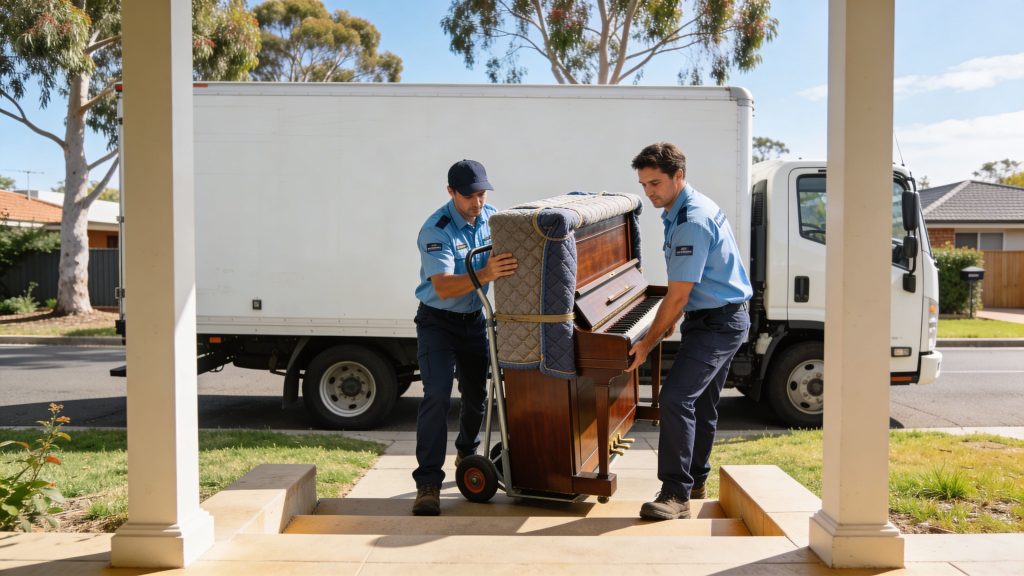

You’re probably staring at half-packed cupboards, a growing pile of boxes, and a calendar that suddenly feels too full. That’s how most Perth moves begin. One minute you’re thinking about keys and handover times, the next you’re wondering whether the couch will fit, whether the truck can park outside, and whether the quote you received includes everything.
If you’d rather lock in the practical side early, book a free quote through Emmanuel Transport’s Perth removals and storage service before your date gets taken. A clear booking and a realistic plan remove a lot of stress before packing even starts.
Table of Contents
- Your Stress-Free Guide to Moving in Perth
- Finding and Vetting Reputable Perth Removalists
- Understanding Costs and Comparing Quotes in Perth
- Expert Preparation for Packing and Logistics
- Mastering Moving Day From Joondalup to Rockingham
- Your Final Perth Moving Checklist and FAQs
Your Stress-Free Guide to Moving in Perth
Few people call perth removalists because they enjoy moving. They call because the job gets big fast. A small apartment move turns into lift bookings, parking questions, dismantling furniture, wrapping fragile pieces, and trying to avoid a full day blowing out into the evening.
That’s where local knowledge matters. A Perth move isn’t just loading a truck. It’s knowing whether access in Mount Hawthorn will be tighter than it looked in the photos, whether a northern suburbs run needs an earlier start, and whether your “couple of fragile items” need separate packing materials and a different place in the truck.

A smooth move usually comes down to three things:
- A realistic scope: Count the stairs, the bulky items, the access limits, and the packing still left to do.
- A clear price model: Hourly rates are common in Perth, but the details around travel time and surcharges matter.
- A crew with a method: Good movers don’t guess. They plan loading order, protect key items first, and keep communication simple on the day.
Moving gets stressful when the plan is vague. It gets manageable when each step is decided before the truck arrives.
If you’re moving house, downsizing, relocating from an apartment, or trying to get a business moved with minimal disruption, treat the move like a short project. Get the quote early. Confirm access. Decide what’s being packed by you and what needs professional handling. That alone prevents a lot of last-minute chaos.
Finding and Vetting Reputable Perth Removalists
A polished website doesn’t tell you much. The key question is whether the mover has a repeatable process, proper handling standards, and a quote that still makes sense once moving day begins.
What a professional process looks like
The strongest benchmark in this trade is method. According to this Perth removalist industry overview, professional moving methodology aligned with AFRA uses a three-phase process: pre-move assessment, systematic loading optimisation, and careful unloading. The same source notes that companies following this approach, including Emmanuel Transport with a 4.9-star rating, show stronger customer satisfaction, and that inadequate planning can cause 25-35% of delays.
That matters because bad moves rarely fail for dramatic reasons. They fail in ordinary ways. The truck is loaded in the wrong order. Fragile items are added late. Nobody checked whether the building lift was booked. Time gets lost in small chunks until the whole day runs behind.
Look for removalists who can explain their process clearly:
- Before the move: They should ask about inventory, access, stairs, parking, fragile items, and whether furniture needs dismantling.
- During loading: They should describe how they protect furniture, stack by weight, and keep essential items accessible.
- At delivery: They should confirm room placement, reassembly needs, and any items that require extra care on entry.
Questions worth asking before you book
The fastest way to spot weak operators is to ask specific questions and listen for vague answers.
Use this checklist:
How do you charge travel time?
Some quotes sound competitive until depot travel or suburb-to-suburb travel is added unclearly.What happens if the job runs longer than expected?
A good answer is direct and calm. You want a clear hourly continuation rate, not hand-waving.What protection do you use for furniture and fragile items?
Blankets, wrapping, tie-downs, and loading order all matter.Do you handle dismantling and reassembly?
This matters more than people think. Beds, dining tables, and modular lounges can slow a move badly if nobody’s assigned to them.How do you manage damage prevention?
You’re listening for method, not sales talk.
Practical rule: If a mover can’t explain how they load a truck, they probably don’t load one consistently.
A quick review scan helps too, but read beyond the star rating. Look for comments about punctuality, communication, care with awkward items, and whether the final bill matched the quote structure. Those details tell you much more than generic praise.
You should also watch how the company communicates before booking. Good perth removalists ask useful questions. Weak ones rush to price before they understand the job.
Understanding Costs and Comparing Quotes in Perth
Moving costs confuse people because two quotes can look similar and still behave very differently on the day. One includes practical detail. The other hides the cost in travel, access complications, or surcharge language.
The broad Perth market gives you a starting point. According to Muval’s Perth removalist pricing guide, the average cost for a 3-bedroom house move in Perth is approximately $1,231.64, and the standard hourly rate for two movers and a truck ranges from $150 to $173.47. The same source states that weekday booking and decluttering can reduce costs by 20-30%, while weekend or after-hours services can add a 20-30% surcharge. It also notes that transparent providers may start from $75 per half-hour.

If you want a clearer sense of how local pricing is structured, this page on Perth removalists hourly rate is useful alongside any quote you receive.
What Perth moving rates usually include
A quote should tell you more than the hourly number. It should tell you what work that number covers.
Here’s the practical breakdown:
| Quote item | What to check |
|---|---|
| Crew size | Two movers is common for local jobs, but large houses or difficult access may need more hands |
| Truck size | Too small means extra trips. Too large can be unnecessary for small apartment moves |
| Travel time | Ask whether charging starts at arrival, departure from depot, or another point |
| Access issues | Apartments, stairs, long carries, and tight parking can all affect time |
| Extra services | Packing, wrapping, dismantling, and reassembly should be listed clearly |
A cheap rate can become expensive if the crew is underprepared or the truck is undersized. A fair rate with a realistic time estimate is usually the safer deal.
How to compare quotes properly
Don’t compare on price alone. Compare on scope.
A useful way to test a quote is to ask the same three follow-up questions to every mover:
- What assumptions have you made about the job?
- What could increase the cost on the day?
- What is included in your base rate?
That exposes gaps fast.
A good quote makes the job more predictable. A weak quote only makes the booking easier.
Keep these trade-offs in mind:
- Lower headline rate, less detail: Often riskier.
- Higher clarity, itemised service: Often easier to budget.
- Weekend convenience: Useful, but usually more expensive.
- DIY packing: Can save money if done well, but poor packing slows loading and increases breakage risk.
For apartment dwellers and students, single-item or small moves need the same level of quote clarity. The move may be smaller, but hidden travel and timing charges can still cause frustration if nobody explains them upfront.
Expert Preparation for Packing and Logistics
Moving day is won before moving day. The truck, the crew, and the route all matter, but poor preparation at the house is what creates most avoidable delays.
Declutter first and pack second
People often do this in the wrong order. They start boxing everything, then realise they’re paying to move items they don’t want, don’t need, or haven’t used in years.
Start with a simple filter:
- Keep what you use
- Donate what’s still useful
- Dispose of what shouldn’t follow you to the new place
That step matters for budget as much as convenience. Less volume means less loading time, easier stacking, and fewer unpacking headaches.
Once you’ve reduced the load, build a room-by-room packing plan. Label by room and function, not just by object type. “Kitchen everyday” is more useful than “misc kitchen”. “Main bedroom first night” beats “linen”.

If you want a visual way to plan furniture placement before the move, a guide to a floor plan maker can help you map rooms and decide what fits before the truck unloads.
For a practical packing walkthrough, this guide on how to pack for movers is worth reviewing before you start taping boxes.
How to handle antiques and valuable items properly
Special items need their own plan. They should never be treated as just “fragile boxes”.
According to this Perth removalist questions guide, antiques form part of an estimated 25% of Perth moves, and homeowners should check a removalist’s equipment and expertise because standard insurance may not cover items that weren’t prepared properly for transit. The same source also notes that professional valuation before a move is an important step that many people miss.
That has real consequences. If an antique cabinet, artwork, heirloom mirror, or specialist electronic item isn’t documented and packed correctly, you can create problems for both transport safety and any later insurance claim.
A workable method is:
- Photograph the item clearly before the move
- Record any existing marks or weak points
- Get a valuation if the item’s value is significant
- Ask what wrapping and lifting equipment the mover will use
- Separate special items from general household packing
Valuable items need three things. Documentation, the right packing materials, and a mover who knows they are not ordinary freight.
For Perth conditions, it also helps to think beyond the object itself. Dust, repeated handling, awkward driveway access, and long carries all increase risk. The best protection is always early identification and a plan made before move day.
Mastering Moving Day From Joondalup to Rockingham
By the time the crew arrives, the hard thinking should already be done. Moving day should feel structured, not improvised.
How the day should run
A good local move usually starts with a short walkthrough. The crew leader confirms what’s going, what’s staying, which items are fragile, and whether anything has changed since booking.
After that, the loading order matters more than many realise. Heavy stable pieces go in first. Delicate pieces are protected and positioned with intent. Essentials for the first night shouldn’t be buried under garage items and outdoor furniture.
Your role on the day is simple:
- Be available for decisions
- Keep access clear
- Separate anything not going
- Point out fragile or sentimental items directly
- Check room placement at the new address
You don’t need to hover. You do need to be clear.
Why Perth route knowledge matters
Perth’s geography stretches jobs out. Even straightforward moves can lose time if the operator doesn’t understand the city’s spread, suburb access, and timing pressure.
According to Muval’s Australian moving and migration statistics, Perth has maintained Australia’s highest net migration levels, and as of September 2023 its net migration stood at +54%. That matters for perth removalists because a busier, more dynamic local market puts more pressure on scheduling, route planning, and job allocation.

Anyone moving between outer northern and southern corridors knows the difference local knowledge makes. A crew familiar with the run from Joondalup down to Rockingham won’t just drive the distance. They’ll plan around access, staging, and timing so the truck isn’t loaded perfectly and then delayed by avoidable logistics.
Good movers don’t just know how to lift. They know when to arrive, where to park, and how to keep the whole day moving.
The final unload should be deliberate. Put furniture into the correct rooms immediately. Reassemble key pieces first. Don’t create a second moving job inside the new property by dropping everything in the garage “for later”.
Your Final Perth Moving Checklist and FAQs
The last few days before a move are where small oversights become expensive annoyances. Keep the finish clean and practical.
Final checklist
Use this as your final pass:
- Confirm the booking: Recheck arrival window, addresses, access notes, and contact numbers.
- Finalise payment expectations: Know how the job will be charged and whether any after-hours conditions apply.
- Finish packing early: Leave only true daily essentials unpacked.
- Defrost and empty appliances: Fridges and freezers need time.
- Separate valuables and documents: Keep them with you, not on the truck.
- Prepare the property: Clear driveways, pathways, and internal walkways.
- Make room labels obvious: Tape labels where movers can see them quickly at unload.
- Pack a first-night kit: Chargers, medication, toiletries, kettle, bedding, and basic kitchen items.
If you prefer a second checklist to cross-reference against your own, this moving house checklist is a handy backup.co.uk/moving-house-checklist/) is a handy backup.
FAQs
How far ahead should I book perth removalists?
Earlier is better, especially if you need a weekend, month-end slot, or specific time window.
Are same-day bookings realistic?
Sometimes, but they’re harder to secure. According to this Perth removals article, Perth’s population growth has driven a 35% surge in same-day booking demand post-2025, and the same source warns that unclear pricing around after-hours moves or travel time is a common cause of complaints.
What about office relocations?
Treat them like a staged project. Label workstations clearly, isolate critical equipment, and book a mover that can work around downtime requirements.
Can a removalist handle a single item or apartment move?
Yes, but ask how minimum booking periods and travel charges work. Small moves still need a clear quote.
Should I move antiques myself?
Only if you have the right materials, a proper vehicle setup, and a realistic understanding of the risk. In most cases, specialist handling is the safer call.
If you want a clear quote, practical advice, and a move plan that matches your home, apartment, office, or special-item job, contact Emmanuel Transport to discuss your move.