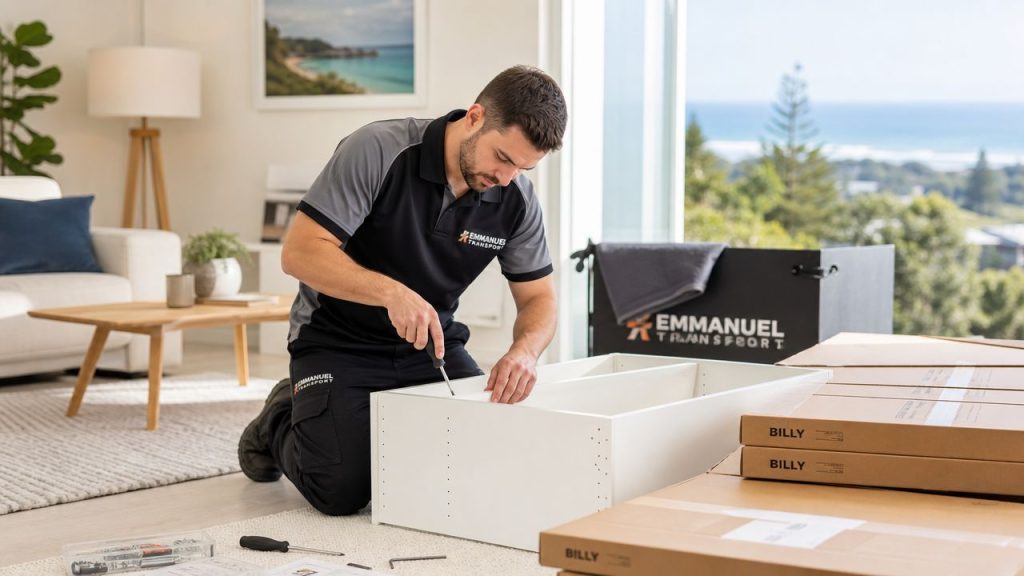

You’re probably reading this with a notes app full of half-finished lists, a lease date getting closer, and rooms that somehow look fuller now than they did last week. That’s normal. Most Perth moves don’t feel hard because of the truck. They feel hard because dozens of small decisions pile up at once, from booking access and packing fragile items to figuring out what can wait and what can’t.
That pressure is one reason removals perth australia is never just about shifting furniture from one address to another. Timing matters. Access matters. Preparation matters. In the first three months of 2021 alone, over 10,000 people moved out of Perth as part of a broader shift towards more affordable living, and that lift in relocation activity increased demand for dependable movers across local and interstate jobs, as noted in Keys Removal’s moving trend report.
A smooth move usually comes down to one thing. Having a clear order of attack before moving day arrives.
Table of Contents
- Your Guide to a Stress-Free Perth Move Starts Here
- Decoding Your Perth Move Services and Solutions
- Your Step-by-Step Perth Moving Timeline
- Mastering the Pack With Professional Wrapping and Packing
- Understanding Removalist Pricing and Quotes in Perth
- Why Perth Chooses Emmanuel Transport for Removals
- Perth Removals Frequently Asked Questions
Your Guide to a Stress-Free Perth Move Starts Here
A Perth move often starts the same way. One person is checking settlement dates, someone else is trying to find tape, and the dining table has turned into a staging area for chargers, paperwork, and keys. The stress usually isn’t one big event. It’s the accumulation of loose ends.
A family moving from a suburban house has one set of problems. An apartment tenant in a lift-controlled building has another. A business shifting desks, files, and IT equipment has no room for delays. What helps in all three cases is the same thing. A practical plan that starts early and deals with the job in the order it happens.

The people who cope best aren’t always the most organised on paper. They’re the ones who stop trying to do everything at once. They lock in dates, sort access early, pack by zone, and get proper help for the parts that carry risk. If you’re comparing providers or trying to decide how much to do yourself, start with a clear view of the full moving process and the service options available through Perth removals and storage support.
Practical rule: If a task affects access, timing, or fragile items, deal with it earlier than you think you need to.
Perth moves also have a local rhythm. Some suburbs are easy drive-up jobs. Others involve tight parking, shared driveways, apartment loading bays, or older homes with difficult furniture paths. A calm move doesn’t happen by accident. It comes from making the right decisions before the truck arrives.
Decoding Your Perth Move Services and Solutions
Not every move needs the same service level. That sounds obvious, but it’s where plenty of people get caught. They book for a simple house move when the actual issue is apartment access, or they think an office move is just desks and chairs when the actual risk is the server rack and reconnect sequence.

Residential moves need planning, not guesswork
House and unit relocations look simple until access and packing start affecting time. For local homes, the usual pressure points are disassembly, whitegoods prep, driveway position, and how quickly boxes can be loaded without blocking the crew. For apartments, the trouble often starts before a single item leaves the old address. Lift bookings, narrow corridors, stairwells, loading restrictions, and where the truck can legally stand all shape the day.
A good residential move usually includes these practical supports:
- Furniture prep: Beds, dining tables, and modular lounges often need dismantling before loading and reassembly on arrival.
- Protection work: Wrapping matters most on corners, glass panels, polished timber, and anything with a finish that marks easily.
- Access planning: Apartments need building instructions confirmed in advance, not on the morning of the move.
- Storage flexibility: Handy when settlement timing doesn’t line up neatly.
If you also need the property handed over clean, it helps to line up reliable cleaning for property turnover before moving week starts, especially when your lease or sale conditions leave little margin.
Commercial moves need sequence and control
Office relocations punish sloppy planning. Staff can work around stacked boxes for a day. They can’t work around disconnected systems, missing cables, or equipment that was packed without a relaunch order.
For Perth IT relocations, a phased process can keep downtime to under 4 hours, and minor cable misalignment can cause 25% data loss in fibre-optic systems. Professional movers protect hardware with anti-static padding and air-ride suspensions, according to Keys Removals relocation guide.
That matters because office moves aren’t one job. They’re several jobs linked together:
| Move type | Main risk | What works |
|---|---|---|
| Standard office fit-out | Lost time during pack and reset | Label by team, room, and priority |
| IT relocation | Hardware disruption or reconnect errors | Stage shutdown, cable tagging, protected transit |
| Files and archives | Misplaced records | Zone-based boxing and room-by-room delivery |
One factual option in Perth is Emmanuel Transport, which handles residential, office, packing, dismantling, reassembly, and single-item removals across the metro area with clear quoting and seven-day availability.
Small moves still need proper handling
Small doesn’t mean easy. A student move, a single antique cabinet, or a mattress-and-fridge job can be harder to schedule because the booking window is tighter and access still needs managing. The mistake people make is assuming a smaller load means less preparation.
If the item is awkward, fragile, sentimental, or access-heavy, treat it like a specialist job even when the volume is low.
For small moves, the best solution is usually a mover who can confirm booking times clearly, explain what needs wrapping, and tell you upfront whether the job is realistic in the window you’ve given them.
Your Step-by-Step Perth Moving Timeline
The easiest moves follow a timetable. The hardest ones rely on memory and last-minute decisions. Use the timeline below as your working plan and adjust it to suit your property, building rules, and whether you’re moving a home, apartment, or office.

Eight to twelve weeks out
This is when good moves are won. You still have options, which means you can make choices instead of compromises.
- Fix the date range: Confirm your preferred moving window first. If settlement, lease handover, or office access is still moving around, identify your primary date and your fallback.
- Research movers carefully: Ask what they include, how they handle access issues, and whether they can do packing, disassembly, or storage if needed.
- Declutter hard: Don’t pay to move furniture you already know won’t fit, won’t be used, or should’ve left the house months ago.
- Start a move file: Keep quotes, booking confirmations, building instructions, and utility notes in one place.
- Walk the problem areas: Measure doorways, stair turns, lift depth, long driveways, and any item that might require a different handling plan.
The first version of your moving list will be wrong. That’s fine. Write it anyway so you can start improving it.
Four to six weeks out
By this point, the move should be booked and the practical work should start.
- Lock in the removalist: Once dates are confirmed, don’t sit on it. Popular windows get taken, and delay usually reduces your choices.
- Notify utilities and services: Arrange disconnection and reconnection dates for power, internet, gas, and any building access systems.
- Begin packing non-essentials: Books, spare linen, off-season clothing, décor, and rarely used kitchen items can go early.
- Order materials properly: Use sturdy cartons, packing paper, tape, mattress covers, and labels. Weak supermarket boxes create avoidable damage.
- Sort parking and access: Reserve loading areas where possible and ask apartment managers about lift protocols, entry fobs, or restricted hours.
Some people try to leave all packing until the last two weeks. That rarely ends well. Start with what won’t be used and build momentum early.
Two weeks out
The move starts to feel real at this stage. The key now is reducing uncertainty.
- Pack by room, not by random item type: Mixed cartons slow unloading and make unpacking miserable.
- Label with purpose: Write the destination room and a brief contents note. “Kitchen 3” tells you almost nothing. “Kitchen, plates and pantry jars” is useful.
- Change your address: Update banks, subscriptions, schools, insurers, and any regular deliveries.
- Prepare valuables separately: Important documents, jewellery, medications, and passports should travel with you.
- Check furniture plans at the new place: Know where the large pieces are going before the crew arrives. It saves lifting things twice.
A simple packing method works best. Heavy items in small boxes. Light items in large boxes. Fragile items packed tight enough not to shift, but never crushed.
One week out
The final week isn’t for heroic efforts. It’s for tightening everything that could derail the day.
- Pack an essentials box: Chargers, kettle, tea or coffee, toiletries, medication, toilet paper, towels, pet supplies, and basic tools.
- Defrost and dry appliances: Fridges and freezers need time. Washing machines should be drained and ready to transport.
- Finish disconnections: If furniture needs dismantling before loading, make sure the right screws and fittings stay with the item.
- Clean progressively: Don’t leave the whole property clean for the final evening if you can avoid it.
- Confirm arrival details: Recheck access instructions, key collection, parking, and any building contact numbers.
Moving day
This is the day to stay available, not busy. Your role is to answer questions quickly and keep the path clear.
- Do a final sweep before loading starts: Check cupboards, sheds, outdoor areas, and the back of wardrobes.
- Keep children and pets out of the work zone: It’s safer and faster for everyone.
- Walk the crew through priorities: Point out fragile cartons, items not to load, and anything that needs special placement.
- Check the new property before unloading: Confirm room destinations, access paths, and where large furniture should go.
- Do one last walkthrough at the old address: Don’t leave until you’ve checked every storage space and collected all keys and remotes.
If you’ve planned well, moving day should feel busy but controlled. That’s the target.
Mastering the Pack With Professional Wrapping and Packing
Packing is where a lot of damage starts. Not on the road. Not on the stairs. In the carton, under pressure, with the wrong material, packed in a hurry. Good loading helps, but it can’t rescue a poorly packed box of glassware or a cabinet full of loose contents.

What works when you pack yourself
DIY packing can work well if you stay disciplined. The mistake is treating all items the same. Books, crockery, framed art, lamps, and electronics each need different packing logic.
Use this basic guide:
- Books and tools: Small cartons only. They get heavy quickly.
- Kitchenware: Wrap individually, stand plates on edge where appropriate, and fill voids so nothing rattles.
- Electronics: Use original boxes if you still have them. If not, wrap screens carefully and keep cords labelled in sealed bags.
- Linen and clothing: Good for cushioning, but don’t rely on them to protect breakables by themselves.
- Furniture surfaces: Wrap vulnerable finishes before the item reaches the truck, not after.
A helpful starting point is this practical set of packing advice for moving, especially if you’re deciding what to box yourself and what to leave to professionals.
Pack for movement, not for storage. A box can look full and still fail if the contents can shift during carrying and transport.
When professional packing earns its keep
Professional packing makes the biggest difference on fragile, expensive, awkward, or high-sentiment items. It’s not just about speed. It’s about choosing the right wrap, building support around weak points, and preparing pieces so they can be carried and loaded without strain on joints, glass, or finishes.
Pianos are the clearest example. A piano can weigh 450 to 1200 kg, and improper handling causes 80% of transport-related damages. Professional movers use custom padded cradles and climate-controlled vans to protect the instrument and its internal components, as outlined by Fox Removals’ piano handling guidance.
That same thinking applies to more common household items:
| Item | Common packing mistake | Better method |
|---|---|---|
| Dining chairs | Stacking without surface protection | Wrap contact points and secure in pairs |
| Glass coffee table | Loose top packed separately without edge support | Protect edges and isolate glass from hard contact |
| TV unit | Leaving shelves and fittings loose | Remove, bag, label, and tape fittings together |
| Artwork | Using thin cartons with no corner protection | Wrap face and corners, then brace upright |
This short video is useful if you want a visual refresher before you start the fragile boxes.
If you’re unsure where to draw the line, pack everyday items yourself and hand over the high-risk pieces. That split usually gives you the best balance between control, time, and protection.
Understanding Removalist Pricing and Quotes in Perth
A quote should tell you what you’re paying for, what could change the price, and what’s included on the day. If it doesn’t, it’s not a useful quote. It’s a rough promise.
Cheap quotes often look attractive because they leave out the messy parts. Access complications, extra handling time, wrapping requirements, difficult stairs, dismantling, long carry distances, or delays caused by building rules can all change the shape of a job. If those details aren’t discussed early, they usually show up later as stress.
What a quote should account for
A proper Perth moving quote usually depends on a mix of these factors:
- Volume of goods: A lightly furnished unit and a full family home need different truck space and labour.
- Distance and route: Local suburb-to-suburb jobs differ from regional or staged moves.
- Property access: Stairs, lifts, parking distance, loading bays, and narrow entries all affect timing.
- Service level: Packing, unpacking, disassembly, reassembly, and storage change the scope.
- Special handling: Antiques, large mirrors, appliances, and sensitive equipment need more care.
A vague quote is risky because it gives you nothing to measure against when the day stops matching the assumption.
Hourly rate or fixed quote
Neither model is automatically better. It depends on how well the job is understood.
An hourly rate can suit straightforward local moves where access is easy and the inventory is clear. It gives flexibility if your load changes slightly. A fixed quote can suit complex jobs where you want certainty and the details have been properly inspected.
The catch is simple. A fixed quote based on incomplete information is no safer than a vague hourly estimate. The better question is whether the mover has asked enough about the job to price it properly.
How to read a quote without getting caught out
Before you accept a quote, check these points:
- Ask what’s included: Confirm labour, truck size, standard protection materials, and travel terms.
- Declare access issues upfront: Don’t hide stairs, awkward driveways, or building limits to get a lower figure.
- Check handling assumptions: Make sure large or delicate items are listed.
- Clarify timing windows: Know when the crew is expected and whether delays could affect your booking.
- Use a structured estimator: A tool like a removalist cost calculator helps you think through inventory and service needs before requesting quotes.
The best quote is rarely the cheapest line on the page. It’s the one that reflects the actual job in front of you.
Why Perth Chooses Emmanuel Transport for Removals
A lot of people don’t need a flashy moving experience. They need one that runs on time, handles their belongings properly, and doesn’t surprise them halfway through the day. That’s what most customers are trying to buy when they look for removals perth australia.
What people actually need from a mover
The basics matter more than slogans:
- Clear communication before the move
- Realistic planning around access and timing
- Care with furniture, antiques, and fragile goods
- Help with dismantling and reassembly where needed
- Pricing that doesn’t change shape without explanation
These aren’t extras. They’re the difference between a move that stays controlled and one that turns into damage control.
Why local knowledge changes the day
Perth metro jobs can look similar on paper and behave very differently once the truck arrives. A mover familiar with routes from Joondalup to Rockingham is better placed to anticipate parking realities, traffic patterns, and suburban access quirks. That local knowledge also helps with arrival sequencing, truck placement, and avoiding wasted handling time.
Customers also benefit when one provider can cover the whole move rather than just the transport leg. Packing, wrapping, furniture prep, office relocation support, single-item jobs, and after-hours availability matter because real moves rarely fit neatly into one category.
For many households and businesses, the right choice isn’t the company with the biggest claims. It’s the one that asks the right questions before the job, gives a transparent quote, and turns up ready for the actual conditions on site.
Perth Removals Frequently Asked Questions
How far ahead should I book a Perth removalist
Book as soon as your date range is credible. If your settlement or lease timing isn’t final, shortlist your mover early and confirm the moment dates are locked. Waiting too long usually reduces your options, especially if your move needs packing help, storage, weekend timing, or difficult access.
Can I book a last-minute or same-day move
Yes, but flexibility matters. Demand for urgent bookings in Perth is high, and industry-wide success rates can be low. These jobs often come with a 30% to 50% premium over standard rates, which is why it helps to use a provider that operates seven days a week and can tell you quickly whether the booking is realistic, as noted in Nuping’s guide to small moves and single-item removals.
Do removalists handle antiques and delicate items
Good removalists do, but you should never assume every mover handles them the same way. Ask how they wrap timber finishes, secure mirrors, protect corners, and separate fragile items from general load pressure. If you have antiques, artwork, or sentimental pieces, list them in the quote stage rather than mentioning them when the truck arrives.
What should I have ready on moving day
Have keys, phones, chargers, basic tools, medications, water, and an essentials box easy to reach. Clear walkways, reserve parking if possible, and keep the crew informed about any item that isn’t going on the truck. If appliances are staying, mark them. If they’re going, make sure they’re disconnected and ready.
If you want a move by one of Perth’s best moving companies that’s planned properly from the first quote to the final unload, Emmanuel Transport offers Perth metro removals, packing, furniture handling, office relocation support, and single-item jobs with clear communication and practical scheduling.