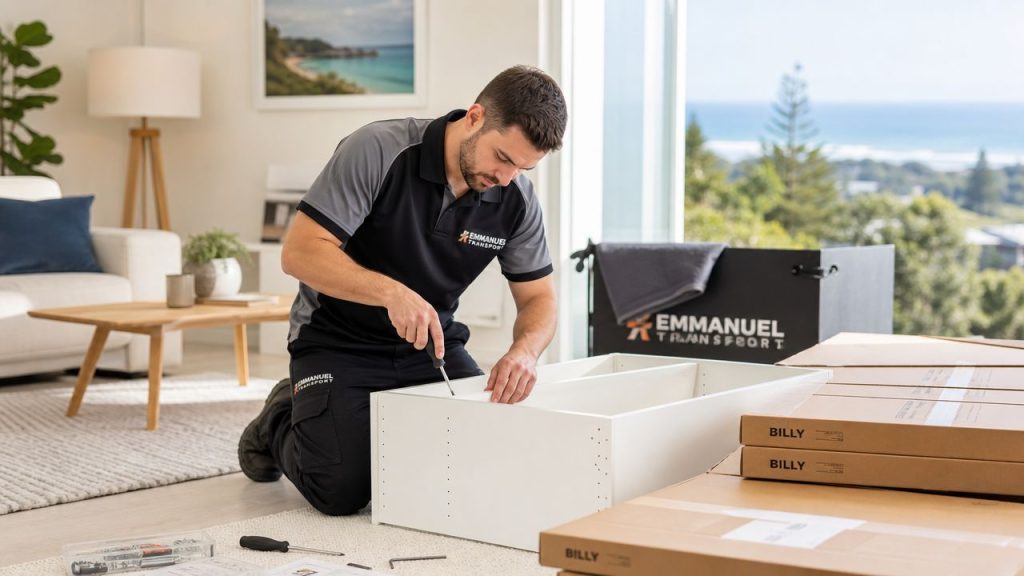

You’ve probably got boxes half-packed, a lease or settlement date getting closer, and one nagging question in the background: who’s going to move the heavy stuff without turning the day into a blow-up. This is when individuals often start searching for perth furniture removalists and get buried in lookalike promises.
Moving in Perth has its own rhythm. Apartment jobs in inner suburbs can be slowed by lifts, laneways and parking. Family homes in outer suburbs need better route planning and tighter loading discipline because travel time starts to matter. Office moves add another layer again, especially when you’re trying to avoid downtime and get desks, screens and files back in place quickly.
A good move isn’t just about a truck turning up. It’s about timing, access, protection, honest quoting, and knowing what can go wrong before it does. If you’re also juggling vacate tasks, it helps to line up practical support early, including Perth end of lease cleaning services so you’re not trying to organise cleaners after the truck has already left.
Table of Contents
- Your Stress-Free Perth Move Starts Here
- What Perth Furniture Removalists Offer Beyond the Boxes
- Decoding Perth Removalist Pricing A Guide to Quotes
- Finding a Trustworthy Mover The Vetting Checklist
- Your Perth Moving Timeline From Four Weeks to Moving Day
- Expert Tips for Navigating Perth From Joondalup to Rockingham
- Frequently Asked Questions About Moving in Perth
Your Stress-Free Perth Move Starts Here
Most bad moving days don’t start badly. They start with small oversights. A customer underestimates how much is in the garage. Nobody books the apartment lift. The truck has to park half a street away. A marble table wasn’t meant to be moved assembled, but no one checked until the crew arrived.
That’s why the best approach is simple. Treat your move like a logistics job, not a last-minute chore. Good perth furniture removalists don’t just lift and load. They identify access risks, work out the right vehicle and crew, protect vulnerable pieces properly, and build enough time into the booking so the job isn’t rushed.
Practical rule: If a mover asks detailed questions before quoting, that’s usually a good sign. The questions are there to prevent surprises, not to make the process harder.
Perth moves also vary more than people expect. A student move in Mount Hawthorn, a family home in Duncraig, and a business relocation to Rockingham might all look local on a map, but they need different planning. The smoother jobs are nearly always the ones where the customer and the removalist share clear information early.
What Perth Furniture Removalists Offer Beyond the Boxes
The biggest misunderstanding about removal work is that people think they’re paying for transport. They’re not. They’re paying for risk control, labour, vehicle capacity, loading judgment, and the ability to get furniture from one property to another without damaging the item, the walls, the floors, or the schedule.

The core job is protection and control
A proper furniture removal service usually covers more than loading a truck. For most household and office moves, the work includes:
- Pre-move assessment: checking volume, access, truck size, stairs, lifts, parking and any awkward pieces before the day.
- Wrapping and protection: using blankets, straps, shrink wrap, padding and the right stacking method inside the truck.
- Dismantling and reassembly: beds, dining tables, desks, modular lounges and some shelving are often safer moved in parts.
- Placement at delivery: putting furniture in the right room saves double handling and lowers the chance of damage after the crew leaves.
- Packing help when needed: for customers who are short on time or moving fragile contents, professional packing services in Perth can make the move far more controlled.
What doesn’t work is treating every item the same. A flat-pack desk, a stone top table and a timber antique cabinet shouldn’t be loaded or protected in the same way. The better the crew, the more they adjust their method item by item.
Specialist handling is where experience shows
Heavy and delicate items separate average operators from capable ones. In Perth’s furniture removal industry, specialised handling of pianos, pool tables and safes requires certified equipment and techniques. Improper disassembly leads to 25 to 30% higher damage claims in WA moves, while expert removalists reduce transit damage by up to 40% using hydraulic tail lifters, piano trolleys and specialised packing protocols, according to Mike Murphy Removals.
That matters because the damage often starts before transport. A piano moved without the right trolley, a slate table separated incorrectly, or a safe dragged without proper floor protection can create avoidable problems in minutes.
A few examples of where specialist handling matters most:
| Item type | What usually works | What usually fails |
|---|---|---|
| Piano | Tail lifter, piano trolley, controlled team lift, secured upright transport | Improvised lifting, poor tie-downs, loading by hand only |
| Pool table | Careful disassembly, labelled parts, slate protection, correct reassembly | Moving it partially assembled, poor slate padding |
| Marble or granite top | Separate top from base where appropriate, edge protection, vertical support when required | Leaving top attached, blanket-only protection |
| Antique furniture | Soft wrapping, low-pressure strapping, careful stacking away from crush zones | Tight over-strapping, loading under heavier items |
Some of the most expensive damage on a move happens during disassembly, not on the road.
Commercial moves also need a different mindset. Offices aren’t just about desks and chairs. There are monitors, cabling, documents, reception counters, boardroom tables and timing constraints. A residential crew can do commercial work if they’re organised, but only if they understand sequencing, labelling and what has to be unpacked first for the business to function again.
Decoding Perth Removalist Pricing A Guide to Quotes
People usually want one number. Removal pricing doesn’t work that way. A quote reflects time, crew size, truck size, item volume, access, and any tasks outside standard loading and unloading.

What a Perth quote usually includes
Perth is still a comparatively affordable market for local moves. Typical hourly rates are $90 to $150, a 2-bedroom unit move may cost $300 to $450, and a 3-bedroom house move over 5 to 8 hours can total $1,090 to $1,790. Some companies also offer transparent pricing from $75 per half-hour, as outlined in this Perth removalist hourly rate guide.
Those figures are useful, but they only make sense if you understand what drives them. The same house can cost less or more depending on the conditions around it.
The big cost drivers are usually these:
Volume of furniture and boxes
If the truck fills quickly or needs a second run, time climbs. Garages, sheds and balconies are often forgotten during quoting.Access at both ends
Stairs, long walks, apartment corridors, loading dock rules and low-clearance parking all slow the job down.Distance and travel path
Even within Perth metro, suburb-to-suburb travel can affect how the day is scheduled.Special items
Packing, antiques, pianos and other difficult pieces can add labour and handling time.Timing of the booking
Weekday jobs are usually easier to schedule than weekends and after-hours moves.
A clear quote should spell out what’s included, what isn’t, and what can change on the day if the information supplied turns out to be incomplete. If you want a benchmark before booking, a practical place to start is requesting a Perth removalist quote with a detailed inventory and access notes.
How to compare quotes properly
The cheapest quote is often just the shortest estimate. That’s not the same thing as value.
Use this short checklist when comparing movers:
- Ask what crew and truck are included: A low hourly figure can hide an undersized setup that takes longer.
- Confirm minimum booking times: Some jobs look cheap until the minimum hire period is applied.
- Disclose stairs, lifts and parking limits: If you leave these out, the quote won’t reflect the actual job.
- List bulky and fragile items separately: Don’t bury pianos, stone tops or safes inside a general furniture list.
- Check whether wrapping materials are included: Some providers include standard protection. Others charge separately.
A good quote isn’t the lowest number. It’s the one that still makes sense after the crew sees the property.
One more point customers often miss. Quotes are only as accurate as the information behind them. Sending photos of the biggest items, the front access, stairwells and any tight corners helps far more than writing “standard 3-bedroom house.”
Finding a Trustworthy Mover The Vetting Checklist
A smooth move starts before the truck is booked. Most customers spend more time comparing prices than checking whether the mover is accountable if something goes wrong. That’s backwards.
In Perth, trust usually shows up in a few visible ways. The company communicates clearly. The quote is transparent. The team asks practical questions. They can explain how they protect goods, what insurance they carry, and how they deal with complaints or breakages if they happen.
Insurance and accountability matter
Two insurance terms matter more than is often acknowledged: Public Liability and Goods in Transit.
Public Liability is about damage or injury connected to the job itself. Goods in Transit relates to items being transported. They are not interchangeable, and customers should know which cover applies to which situation.
Online reviews help too, but only when read properly. Look for patterns, not just star ratings. If customers repeatedly mention punctuality, careful handling, clear communication and fair invoicing, that’s more useful than a generic “great service” comment.
One concrete example in Perth is that Emmanuel Transport holds a 4.9-star rating from over 130 Google reviews and operates as a fully insured, family-owned service, which is a practical signal of consistency and public accountability in the local market, as shown on their Perth removalist reviews page.
A review profile doesn’t replace vetting, but it does tell you whether a company has handled enough real jobs for trends to show up.
Questions worth asking before you book
If you only ask one question, make it this: “What tends to cause extra charges on the day?” A reputable mover should answer directly.
Use this checklist before confirming:
- Insurance: What cover do you hold for the move, and what does it apply to?
- Item handling: How do you move antiques, stone tops, pianos, artwork or safes?
- Access issues: Have you allowed for stairs, lift bookings, long carries or parking restrictions?
- Pricing clarity: Are there call-out fees, minimum hours, fuel charges or weekend differences?
- Crew details: How many movers will attend, and what size truck is allocated?
- Timing: What happens if the previous job runs late or building access is delayed?
- Claims process: If an item is damaged, who documents it and what happens next?
If a mover gets vague when you ask about fragile or high-value items, keep looking.
Industry affiliations can also be useful. When a company follows recognised handling and packing standards, that’s generally a safer sign than a business that only talks about speed. Fast is helpful. Controlled is better.
Your Perth Moving Timeline From Four Weeks to Moving Day
Moves go bad when everything is left for the final week. Most stress drops away once the job is broken into stages and each stage has a purpose. If you’re selling before moving, this is also the point where presentation matters, and a practical Preparing House For Sale Checklist can help you sequence cleaning, garden work, repairs and packing without tripping over one task with another.

Four weeks to two weeks out
At four weeks, start with decisions that affect the quote and the truck space. Declutter first. Don’t pay to move furniture you already know won’t fit, won’t be used, or should have been sold months ago.
Then lock in the practical details:
- Request quotes early: especially if you need a weekend, month-end, or after-hours booking.
- Build an item list: include outdoor furniture, garage storage, whitegoods and anything unusually heavy.
- Check property access: measure stairs, doorways, balconies, laneways and driveway clearance if anything looks tight.
- Sort documents and keys: keep contracts, ID, tenancy papers and remotes together in one folder.
At around two weeks, packing should begin with non-essentials. Seasonal items, books, spare linen, décor and archived paperwork can be boxed well before the final days.
A simple packing rule saves time. Label by room first, contents second. “Kitchen. Glassware” is more useful on moving day than “Fragile.”
One week out to moving day
By one week out, the move should feel structured, not rushed. Confirm booking times, make sure utility changes are in hand, and prepare the property so the crew can work safely and continuously.
A strong final-week checklist looks like this:
| Timeframe | Priority jobs |
|---|---|
| 7 days out | Confirm mover, continue packing, separate valuables and essentials |
| 3 days out | Empty and defrost fridge if needed, finish most packing, disassemble simple furniture if agreed |
| Day before | Charge phones, pack personal overnight bag, clear walkways, reserve parking where possible |
| Moving day | Keep keys handy, do a final walkthrough, direct room placement at delivery |
Before the day arrives, it helps to watch a practical walkthrough of moving preparation and day-of expectations:
On moving day itself, keep one box or bag separate for the first night. Include chargers, medication, paperwork, basic kitchen items, toilet paper, children’s essentials and anything you don’t want buried behind twenty sealed cartons.
The first delivery instruction should be where the beds go. The second should be where the fridge goes. That alone makes the first night easier.
If you’re in an apartment, confirm lift access and loading bay rules again the day before. Building management details go stale surprisingly often.
Expert Tips for Navigating Perth From Joondalup to Rockingham
Perth’s metro area looks straightforward until you start moving through it with a loaded truck, a booking window, and a customer who needs to be out by a certain time. Local knowledge matters because the job changes from suburb to suburb.

Perth removalists with local expertise, including Emmanuel Transport and KEYS, use real-time routing across the metro area to cut downtime by 20 to 35% across the roughly 100 km Joondalup-to-Rockingham span, according to Grace Removals Perth guidance. For customers, that doesn’t just mean a faster truck route. It means better scheduling, better crew use, and fewer avoidable hold-ups.
If you’re moving north of the river, Joondalup removalists with local suburb knowledge can often spot access and timing issues before the booking is locked in.
Inner suburbs need access planning
Inner and established suburbs often create the most friction. The challenge usually isn’t distance. It’s access.
Common issues include:
- Narrow streets and limited parking: the truck may not stop directly outside the property.
- Apartments and grouped dwellings: lift bookings, strata rules and loading windows can all affect start time.
- Tight turns and older staircases: larger items may need partial disassembly before they can come out safely.
Mount Hawthorn, Subiaco, Leederville and similar pockets reward early checks. If there’s a laneway entrance, a steep driveway or a shared access point, mention it before the quote is finalised. Crews can work around difficult access. They just need to know about it.
Outer suburbs reward better route planning
Longer suburban runs create a different kind of problem. Joondalup, Baldivis, Rockingham and other outer-metro areas can be straightforward once loading starts, but travel timing becomes more important.
The biggest gains usually come from simple planning choices:
- Book outside the worst commuter windows if you have any flexibility.
- Have the house packed before the truck arrives so loading starts immediately.
- Use one clear contact person at pickup and drop-off to avoid delays in room placement.
- Reserve space for the truck where possible at both properties.
Business relocations benefit even more from this approach. If desks, screens, chairs and boxed files are staged properly before the crew arrives, the move can be sequenced so the business gets back online faster. After-hours or weekend bookings can also help when parking, staff access and building disruption are concerns.
In Perth, the distance between suburbs matters less than the time lost at the kerb, in the lift, or waiting for access.
That’s why the best local advice is usually practical, not flashy. Send photos. Mention restrictions. Confirm parking. Tell the mover about the stone table, the steep driveway and the apartment lift. Those details save more time than any generic moving tip ever will.
Frequently Asked Questions About Moving in Perth
| Question | Answer |
|---|---|
| How far in advance should I book perth furniture removalists? | Earlier is safer, especially if you need a weekend, end-of-month, or after-hours booking. Once you know your date, start requesting quotes and lock in the mover when access details and inventory are reasonably clear. |
| Is it cheaper to move on a weekday? | Often, yes. Weekday scheduling is usually simpler than weekends. The main point is availability and smoother logistics, not just headline price. |
| Should I dismantle furniture myself? | Only if you’re confident it can be reassembled properly and the mover has agreed that it helps. Some items are safer dismantled by the crew because they can label, wrap and reload the parts correctly. |
| What should I pack separately from the main move? | Keep essentials with you. That includes keys, chargers, medication, important documents, wallets, children’s items, pet supplies, and basic overnight needs. |
| How do I prepare for an apartment move? | Confirm lift bookings, loading bay access, parking rules and any move-in or move-out windows with building management. Give those details to the mover before the day. |
| Can removalists move antiques and delicate items? | Yes, but ask about method, wrapping, disassembly and insurance before booking. Delicate and high-value pieces shouldn’t be treated like standard furniture. |
| What makes a quote more accurate? | A full inventory, clear photos, honest access notes, and disclosure of heavy or awkward items. Vague descriptions nearly always lead to vague pricing. |
| Do I need to be present during the move? | It helps if one decision-maker is available at pickup and delivery. That person can answer questions, confirm room placement and deal with any access issues quickly. |
If you want a move handled with clear quoting, careful furniture protection, and local Perth route knowledge, Emmanuel Transport is one option to consider for residential, apartment and office relocations across the metro area.