
You’ve probably got the same scene running through your head right now. Boxes half-packed in the spare room. The fridge still full. A settlement date that feels fixed until it suddenly doesn’t. Someone in the family asking where the kettle is, while you’re still trying to work out whether the truck can get close enough to the front door.
That’s what most moves in Perth look like before they’re organised properly. The stress usually isn’t caused by the heavy lifting alone. It comes from unclear timing, unclear pricing, and small access problems that turn into long, expensive delays on the day.
That pressure has only grown as Perth has got busier. Perth recorded a net migration gain of +54% as of September 2023, keeping the highest net migration rate in Australia, which has increased demand for professional moving services across the city, according to Muval’s Australian moving and migration statistics. In plain terms, more people are arriving, more households are reshuffling, and booking a capable local crew matters more than it used to.
A good move isn’t about speed alone. It’s about planning the order of work, knowing the streets, understanding building access, protecting the awkward items properly, and giving people straight answers before moving day arrives. That’s where local removals perth experience makes a real difference.
Table of Contents
- Your Guide to a Seamless Perth Move in 2026
- Your Perth Moving Timeline from Start to Finish
- Decoding the Costs of Removals in Perth
- How to Choose the Right Perth Removalist
- Mastering Packing and Protecting Your Valuables
- Navigating Perth Suburb Logistics from Joondalup to Rockingham
- Your Essential Perth Moving FAQs
Your Guide to a Seamless Perth Move in 2026
A smooth move usually starts well before the first box is taped shut. For families, the pressure points are often school runs, key handovers, and trying to keep daily life functioning while half the house is in cartons. For businesses, it’s different. They’re thinking about desks, server racks, access windows, and how to avoid losing productive time.
The mistake people make is treating every move as if it’s the same job with a different address. It isn’t. A ground-floor move in a newer northern suburb behaves very differently from an inner-city apartment move with tight parking and stairs. A house full of standard furniture is one thing. A home with antiques, oversized lounges, glass cabinets, or a piano is another.
What usually works
The cleanest jobs tend to have three things sorted early:
- Access details are confirmed before quoting, not guessed on the day.
- Packing is staged by room and priority, so the truck isn’t loaded around loose items and last-minute bags.
- The moving plan matches the property, including parking, stairs, lifts, driveways, and travel timing.
Practical rule: If a removalist doesn’t ask detailed questions about access, inventory, and timing, the quote is probably too rough to trust.
People often ask what separates a decent move from a chaotic one. In practice, it’s rarely brute force. It’s process. The crew needs to know what goes first, what must stay accessible, what needs wrapping before it leaves the room, and what can’t be stacked under any circumstances.
What doesn’t work
Some patterns cause trouble again and again:
- Underestimating volume: This leads to cramped loading, double-handling, or an extra run.
- Leaving fragile packing to the last night: That’s how lamp shades get crushed and kitchenware ends up mixed with pantry items.
- Booking on price alone: Cheap quotes often hide missing detail around access, timing, or protection.
For removals perth households and businesses, local knowledge matters because the city isn’t uniform. The practical side of moving in Perth is street by street, suburb by suburb. That’s why the rest of the job should be broken down into timing, cost, vetting, packing, and local logistics.
Your Perth Moving Timeline from Start to Finish
A move feels manageable when each stage has a clear job. The timeline below is the version that works in real houses and real offices, not just on paper.

Eight weeks out
Start with the decisions that affect everything else. Confirm your likely moving window, work out whether access at either property is simple or difficult, and build a realistic inventory of what’s coming with you.
This is also the right time to declutter hard. Don’t pay to move furniture you already know won’t suit the new place. The same goes for broken outdoor items, duplicate kitchen gear, and storage boxes you haven’t opened in years.
A solid early checklist looks like this:
- List large items first: Beds, fridges, sofas, dining tables, desks, outdoor furniture.
- Identify problem items: Fragile pieces, oversized furniture, antiques, electronics, gym gear.
- Measure access points: Front doors, stairwells, lifts, tight corners, and driveways.
- Shortlist removalists: Ask how they quote, what wrapping is included, and how they handle changes.
Four weeks out
By this point, you want the booking locked in and your packing started. Non-essential items should already be going into cartons. Seasonal clothing, books, spare linen, décor, archived paperwork, and rarely used kitchenware can all go early.
If you’re moving a business, this is when departments should label equipment by destination, not just by current desk or room. “Accounts office, north wall” is useful. “Office stuff” is not.
A move gets slower every time the crew has to stop and ask where something belongs.
If you want a pricing guide before booking, use a proper Perth removalist cost calculator and compare that estimate against the detail in your quote, not just the headline number.
Two weeks out
This is admin week. Redirect mail, update service providers, confirm building access, and start packing the rooms you still use every day.
For households, that usually means leaving only the essentials unpacked in the kitchen, bathrooms, and bedrooms. For offices, it means backing up important files, labelling cables, and confirming who is responsible for shutting down and reconnecting key equipment.
Focus on these jobs:
- Utilities and internet: Arrange connection and disconnection dates.
- Access bookings: Reserve lifts, loading bays, or strata time slots where needed.
- Labelling: Mark boxes by room and by priority. “Open first” beats “misc”.
- Consumables: Keep tape, markers, labels, and basic cleaning supplies in one crate.
One week out
The final week is about reducing friction on the day. Your goal isn’t to keep packing randomly until midnight before the move. Your goal is to leave only the items that are still in use.
Pack a first-night box or two. One for the kitchen, one for daily living, and one for children or pets if needed. Include chargers, medication, a kettle, toilet paper, cleaning cloths, bin bags, snacks, and a change of clothes.
Moving day
Keep pathways clear and keep decisions simple. Walk the crew through the property once at the start. Point out anything fragile, anything staying behind, and anything that needs special placement at the destination.
Then let the loading sequence happen properly. The best moving days are calm because the heavy thinking was done earlier.
- Do a final walk-through: Check cupboards, sheds, linen closets, garage shelves, and behind doors.
- Keep documents with you: IDs, keys, contracts, and anything irreplaceable.
- Separate essentials: Don’t load your overnight bag by accident.
- Stay reachable: One person should be available for quick decisions from first load to final unload.
Decoding the Costs of Removals in Perth
Removal pricing confuses people because two quotes can look similar at first glance while covering very different work. The main issue isn’t the hourly rate by itself. It’s how accurately the job has been assessed before the truck turns up.
In Perth, hourly rates for two movers and a truck typically range from $120 to $166, and poor access such as stairs can add 1 to 2 hours, or $120 to $332 extra, because the crew spends more time on manual handling, according to Emmanuel Transport’s Perth home removals guide.
What you’re actually paying for
The rate covers labour, truck use, loading method, travel handling, and unloading. What changes the final figure is the complexity wrapped around those basics.
The biggest cost drivers tend to be:
- Volume of belongings: More items means more loading time and more truck space pressure.
- Access problems: Stairs, long carries, narrow hallways, poor parking, and apartment lift delays all slow the job.
- Disassembly and reassembly: Beds, large tables, modular lounges, and office workstations take time if they need to come apart.
- Packing standard: Loose or poorly packed items slow crews down because they must be made transport-safe before loading.
- Distance between properties: Travel affects the day’s structure, especially when timing windows are tight.
Cost warning: A quote can look cheap until awkward access, extra packing, or last-minute additions start adding labour time.
There’s also a trade-off between hourly charging and fixed quotes. Hourly pricing can be fair when the inventory is straightforward and access is clear. Fixed pricing can suit jobs with lots of variables, because both sides know the scope in advance. Neither model is automatically better. The quality of the assessment matters more.
A simple cost guide by home size
The guide below uses the verified Perth hourly range above. Actual totals still depend on access, packing quality, and how organised the property is on the day.
| Home Size | Average Move Time | Estimated Cost Range |
|---|---|---|
| Small apartment or studio | 3 to 4 hours | $360 to $664 |
| 2-bedroom home | 4 to 5 hours | $480 to $830 |
| 3-bedroom home | 4 to 6 hours | $480 to $996 |
A few practical observations matter here. If your home has stairs, long walks from the truck, or difficult parking, treat the lower end of any estimate with caution. If you’ve packed well, reduced clutter, and given accurate access details, the move usually runs much closer to plan.
The best quotes are specific. They mention truck size, crew size, access assumptions, what wrapping is included, whether travel time is charged, and how extra labour is handled if the scope changes.
How to Choose the Right Perth Removalist
Choosing a removalist isn’t the same as comparing appliance deliveries. You’re not buying a slot in a truck. You’re trusting a team to handle furniture, electronics, sentimental items, access restrictions, and timing that may already be under pressure.
The biggest mistake is treating all operators as interchangeable. They aren’t. Some crews are careful loaders with a clear system. Others are available. You usually see the difference when something awkward appears, such as a narrow staircase, a delayed key release, or a fragile item that can’t be blanket-wrapped and stacked like everything else.

What to check before you book
Start with the basics, but don’t stop there. Insurance, operating standards, and communication quality all matter because problems in moving rarely arrive one at a time.
Use this checklist:
- Insurance clarity: Ask what’s covered in transit, what isn’t, and whether extra cover is needed for high-value items.
- Real reviews: Read the comments for patterns. Were crews punctual, careful, and clear when plans changed?
- Local experience: Perth knowledge matters when parking, access, and route timing can change the whole day.
- Packing capability: If you need wrapping, dismantling, or specialist handling, confirm it before booking.
- Professional standards: Ask whether they follow recognised industry practices and how they train crews for difficult items.
If you want a deeper comparison framework, this guide on choosing house movers in Perth is a useful starting point.
Questions that expose problems early
One of the most overlooked checks is flexibility around booking changes. In Perth, 35% of moves are delayed by settlement issues, and a no-fee change policy with 72-hour notice is a strong sign that the operator is set up to work with real-life moving pressures, as noted in this Perth removalist booking questions guide.
That matters because a rigid policy often creates a second problem on top of the first. If your keys are delayed, you need a process that deals with the delay cleanly rather than punishing you for something outside your control.
Ask direct questions such as:
- What happens if settlement shifts?
- How much notice do you need for rescheduling?
- Do you charge extra for stairs, long carries, or difficult parking?
- Who decides if more crew time is needed?
- How are fragile or high-value items documented before loading?
A capable local operator should answer those questions without dodging them. Emmanuel Transport is one Perth option that handles residential and commercial moves, packing, wrapping, dismantling, reassembly, and local metro relocations with transparent quoting. That sort of service scope is useful when the job includes more than basic furniture lifting.
If a company is vague before you book, don’t expect sharp communication when the truck is outside and the clock is running.
Mastering Packing and Protecting Your Valuables
Packing is where many moves are won or lost. A truck can be loaded carefully, but if the carton is weak, the contents are loose, or the item was wrapped with the wrong material, the damage often started in the house, not on the road.
Good packing isn’t about using more material. It’s about using the right material in the right way. Heavy books belong in small cartons. Linen and clothing can fill voids around lighter items. Plates should be packed vertically with padding between each one. Lamps need separate treatment for bases and shades. Cables should be bagged and labelled at the point of disconnection, not thrown into one tub later.

Packing methods that hold up in a truck
Inside a moving truck, items shift, settle, and carry vibration across the full trip. That’s why cartons need internal fill, not just tape on top. It’s also why soft goods shouldn’t be used as the only protection for breakables.
Reliable packing habits include:
- Use purpose-fit cartons: Book boxes for books, reinforced cartons for kitchenware, wardrobe cartons for hanging clothes.
- Wrap before boxing: Don’t rely on the box to do the protection work on its own.
- Label for handling, not just room: “Fragile glass upright” is more useful than “Dining”.
- Keep weight sensible: Overpacked cartons split or become unsafe to stack.
- Seal in stages: Build the carton, pad the base, load tightly, fill voids, then tape fully.
For people packing themselves, proper bubble wrap for moving fragile items is one of the few materials worth getting right from the start. The wrong wrap or too little of it leads to pressure points and cracked surfaces.
Antiques artwork and sensitive equipment
This is the part most generic moving guides skim over. They’ll say “special care” and leave it there. That isn’t enough if you’re moving ceramics, framed art, old timber furniture, collectibles, or sentimental pieces with delicate joins.
Handling antiques is a specialised job. After the Perth housing boom, antique move claims rose 18%, and best practice includes pre-move valuations, custom crating, and specific insurance riders, according to Emmanuel Transport’s guide on questions to ask when hiring a removalist.
That tells you two things. First, high-value items need a plan before moving day. Second, standard transit arrangements may not be enough on their own.
For antiques and valuables, the practical process should include:
Condition check before packing
Photograph existing marks, weak joints, chips, or repairs.Material-specific protection
Timber, marble, glass, porcelain, and canvas don’t all respond well to the same wrapping method.Custom support where needed
Crates, corner protection, foam blocking, and separation from general household load lines.Insurance review
Confirm whether the item needs a separate rider rather than relying only on general transit cover.
Commercial clients have another category of sensitive cargo. Specialist office movers use anti-static wraps, foam inserts, and controlled handling methods for server gear and networking hardware. The principle is the same as with antiques. Sensitive items shouldn’t be treated like standard furniture just because they fit in a box.
Pack for movement, not storage. A carton can sit safely in a spare room for weeks and still fail in a truck if the contents weren’t immobilised.
Navigating Perth Suburb Logistics from Joondalup to Rockingham
A removalist can know how to lift and load properly and still lose time badly if they don’t know Perth. Local knowledge shows up in the small decisions. Where the truck can stop without creating a long carry. Which streets tighten up at school pickup. Which apartment blocks need lift bookings. Which older properties have rear-lane access that works better than the front.
That’s why removals perth planning is never just about suburb names on a booking sheet. Joondalup, Mount Hawthorn, Fremantle, the Hills, and Rockingham all behave differently on the day.

Why suburb knowledge changes the move
In newer estates around the northern corridor, access can be simpler in one sense because roads are wider and homes often have more predictable layouts. But there can still be issues with garage-heavy frontages, multiple cars, or long internal walks from the truck to the main living area.
Inner and older suburbs create a different set of problems. Streets can be tighter, parking less forgiving, and older homes often have awkward entry points, raised verandas, or narrow side access. A quote that ignores those details is asking for trouble.
Some common Perth examples include:
- Joondalup and surrounding northern suburbs: Often easier truck positioning, but not always easy loading distances.
- Mount Hawthorn and similar inner suburbs: Narrower streets, tighter parking, and homes that need more careful furniture manoeuvring.
- Perth Hills areas: Steep driveways, split levels, and extra handling effort for heavy items.
- Rockingham and southern runs: Longer metro travel legs that need tighter timing and cleaner sequencing.
Common local problems and the practical fix
The fix is usually straightforward if the crew plans for it early. Site questions should cover parking, driveway slope, stairs, lift access, loading bay restrictions, and whether the destination has room for direct unloading or needs staged placement.
A capable local team will also think about how the suburb changes the loading order. If access at the destination is awkward, the truck should be packed so key furniture comes off in the right sequence. That avoids rehandling and cuts down on congestion inside the new property.
The easiest way to waste time on a move is to load the truck in the order things appear, instead of the order they need to come off.
This is where local experience earns its keep. It reduces avoidable labour, avoids poor truck placement, and makes the job feel controlled instead of rushed.
Your Essential Perth Moving FAQs
A few questions always come up late in the process, usually when the boxes are stacked and the move suddenly feels very close.
What people ask close to moving day
What’s the difference between transit insurance and full cover?
Transit cover usually relates to items while they’re being transported. Full cover may extend further, depending on the policy terms. Don’t assume they’re the same. Ask for the exclusions in plain language, especially if you’re moving valuables, antiques, or electronics.
Can I leave clothes in drawers?
Sometimes, but it depends on the furniture, the weight, and the access. Light soft goods may be fine in sturdy drawers for a short local move. Heavy contents often make a chest harder to carry safely and increase stress on joints or runners.
Should I empty the fridge and washing machine fully?
Yes. Fridges need to be emptied, cleaned, and dried. Washing machines should be drained and prepared so water doesn’t create a mess or damage nearby items in transit.
What’s the best day to move?
That depends on building access, work schedules, and settlement timing. In practice, the best day is the one that gives you the cleanest property access and the least time pressure at both ends.
Do removalists dismantle furniture?
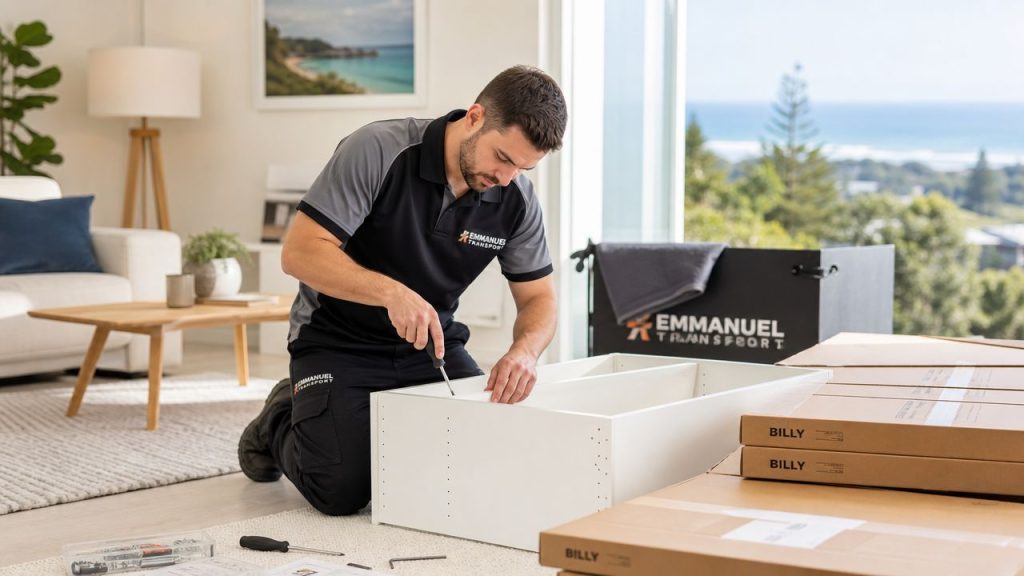
Many do, but don’t assume it’s included automatically. Ask what they’ll dismantle, what tools they bring, and whether reassembly at the destination is part of the quoted scope.
How early should I be packed?
Earlier than you think. By the final few days, only daily essentials should still be out. If half the house is still loose on the morning of the move, the crew ends up waiting or charging extra time while packing gets finished.
A well-run move doesn’t feel mysterious. It feels organised, clear, and properly costed from the start.
If you want a clear plan for your next move, Emmanuel Transport offers Perth metro removals with transparent quotes, packing support, furniture handling, and practical local knowledge from Mount Hawthorn through to Joondalup and Rockingham.